
- SEO: appearing in traditional search results. AEO: being the direct answer. GEO: being mentioned and cited by generative AI systems.
- The foundation is the same: useful, trustworthy content and a technically sound website.
- Put clear, direct answers at the start of each paragraph, and include genuine FAQs.
- Structured data and an llms.txt file help machines understand your entity.
- Your presence beyond your own site (directories, media, reviews) builds the “entity” that models recognise.
Imagine a Saudi procurement manager asking ChatGPT: “I need a company to design a website and identity for a construction firm in Riyadh — who do you recommend?” The answer won’t be ten blue links but two or three names with reasons. The new question for every company is: is your name in that answer?
The three terms, simply explained
| SEO | AEO | GEO | |
|---|---|---|---|
| Name | Search Engine Optimisation | Answer Engine Optimisation | Generative Engine Optimisation |
| Goal | Appearing in search results | Your content being the direct answer | AI systems mentioning and recommending you |
| Where? | Google and Bing | Featured snippets, voice assistants, answer summaries | ChatGPT, Gemini, Perplexity, Google AI Overviews |
| Outcome | A visit to your website | Information from your site inside the answer | A mention or recommendation of your brand |
What do they have in common?
All three reward the same thing: useful, accurate content from an experienced source on a technically sound website. The difference is in how it’s presented.
Practical steps for AEO
- Write the answer first: open the paragraph with a sentence that answers the question directly, then add the detail.
- Genuine FAQs on service pages and articles, with FAQPage markup.
- Clear definitions, lists and tables that are easy to quote.
- A quick summary at the top of each article — as in this blog’s articles.
Practical steps for GEO
- Define your entity clearly: an About page with facts (year founded, cities, services, clients) and Organization structured data.
- Consistent information across your website, social media, directories and Google Business Profile.
- Verifiable proof: case studies naming real clients with live links — like our client pages.
- An llms.txt file summarising the company and its links for language models.
- Allow AI crawlers in robots.txt if you want to be read.
- An external presence: guest articles, interviews, sector directories, reviews.
How do you measure it?
- Search Console: impressions, clicks and queries.
- Ask AI tools about your field and city regularly, and watch whether you’re mentioned.
- Track visits arriving from AI sources in Analytics.
How do answer engines choose their sources?
When a smart assistant or search engine gives a direct answer, it looks for sources that provide a clear, trustworthy and specific answer to the question. The pages that tend to be quoted share certain qualities: they answer the question directly at the start of the paragraph, use headings phrased as questions, provide specific figures and facts with their sources, are written by an organisation with clear expertise in the subject, are organised with lists and tables that make information easy to extract, and are kept up to date. These aren’t new tricks; they’re the same principles of good writing and sound SEO — but their importance has multiplied.
How we applied this on this website
Every article on this blog opens with a summary in clear points, uses headings phrased as the questions customers actually ask, and contains comparison tables, an FAQ section linked to structured data, official sources, and links to service pages and real clients. The website also has an llms.txt file that summarises who we are, what we offer and where we work in plain language for AI models, alongside structured data for the organisation, services and articles. This structure serves the human reader first, and makes it easier for machines to understand the content second.
What is an llms.txt file?
A simple text file placed in the website root that gives language models an organised summary of the site’s most important content and links: who the company is, what its services are, where it works and which pages matter most. It’s a recent proposal rather than a binding standard adopted by every platform, but it costs little and reflects an important idea: make your website as easy for machines to understand as it is for people.
Content that AI finds hard to replace
If an answer engine can summarise general information without anyone needing to visit your website, what makes people visit you? The answer: content that exists only on your site. Case studies from your projects, data from your experience, the views of your specialist team, interactive tools and calculators, and local examples from your market. This is the content that gets quoted with attribution, and that prompts serious prospects to visit you and get in touch.
External signals: what others say about you
AI models don’t rely on your website alone, but also on what’s written about you elsewhere: business directories, press articles, reviews, partner and client websites, and professional platforms. Mentions of your brand in multiple trusted sources with consistent information strengthen your presence in answers. So keep your company details consistent everywhere, contribute to specialist content in your sector, and ask satisfied clients to share their experience.
Common mistakes
- Writing generic, machine-generated content with no real expertise; it offers nothing new to quote.
- Hiding essential information (prices, cities, services) only inside images or PDF files.
- Ignoring structured data and FAQs.
- Unintentionally blocking important search engine crawlers.
- Contradictory company information between the website, directories and social media.
A to-do list for the first month
- Review your ten most important pages: does each one answer a clear question in its first paragraph?
- Add a genuine FAQ section to service pages, with the appropriate structured data.
- Add organisation structured data (name, logo, address, contact methods, profiles).
- Create an llms.txt file summarising the company, its services and its key pages.
- Align your company details on Google, directories, social media and LinkedIn.
- Write at least one case study with real figures and results.
- Ask AI assistants questions about your sector and city, note who they mention, then repeat after three months.
Does this replace traditional SEO?
No. Answer engines rely heavily on the same signals as traditional search: a fast, crawlable website, organised and trustworthy content, and a good reputation in other sources. A website that doesn’t perform well on Google is rarely quoted in AI answers. So think of AEO and GEO as an extra layer on top of a strong SEO foundation, not a replacement for it. Read our SEO guide.
How is the customer journey changing?
Customers used to search on Google, open five websites and compare. Today they might ask a smart assistant a full question such as “What’s the best way to choose a web design company in Riyadh, and how much does it cost?” and receive a summarised answer that mentions a few names and sources. If your company is mentioned or your content is quoted, you’re on the comparison list without the customer visiting five websites. If not, they may never know you exist. That’s why building clear, trustworthy content and a consistent reputation across different sources has become an investment in visibility, not just in rankings.
Should I worry about falling traffic?
You may notice that some simple questions are answered directly without a visit to your site, so traffic to general informational articles drops. That’s a real trend, but it doesn’t mean the end of your website’s value. Visitors who arrive after reading an AI answer are often more serious and readier to get in touch, because they’ve moved past the general-information stage. So focus your measurement on the quality of visits and conversions, not just their number, and focus your content on what prompts contact: expertise, case studies and clear offers.
Start with your most important pages, and make each one the clearest answer to your customer’s question. Clear, trustworthy content shows up in answers; generic content dissolves into them.
The bottom line
SEO puts you in the results, AEO makes you the answer, and GEO makes AI recommend you. The foundation for all three: honest, useful content and a well-organised website. Read our structured data guide or explore our website design service.
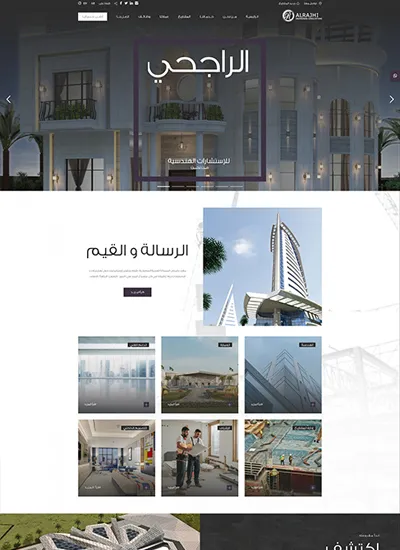
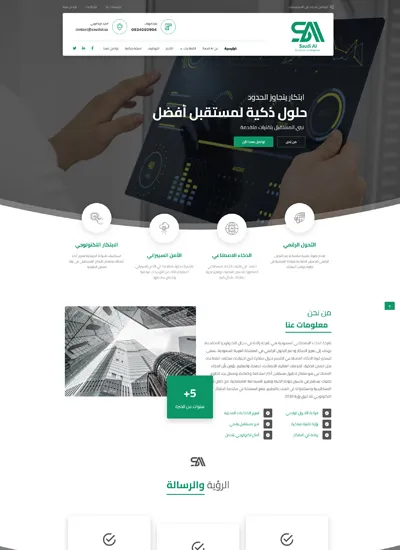
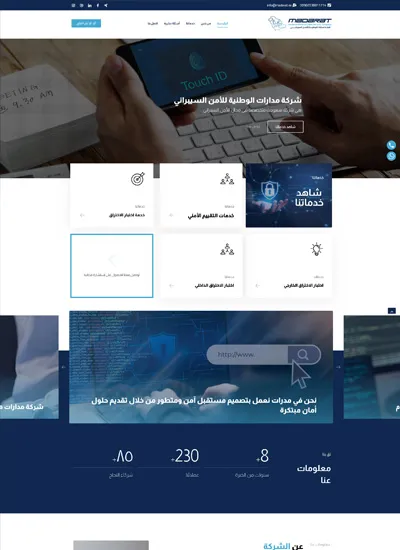
Real projects we delivered
FAQ
Can my company be guaranteed a mention in ChatGPT’s answers?
No, it can’t be guaranteed, but you can raise the probability with clear, trustworthy content, consistent entity data and a presence in the sources AI relies on.
What is an llms.txt file?
A proposed text file in the website root that summarises the company and links to its most important pages in language that’s easy for language models to read. This website provides one.
Does AEO replace SEO?
No; it’s an extension of it. Most answer engines rely on indexed, trusted pages — in other words, on good SEO first.
Sources

Written from 20+ years designing websites and identities for clients in Saudi Arabia and Egypt — every tip here comes from real projects.
Want this applied to your project?
Book a free consultation — we will review your site or brand and propose a clear plan.
Book a free consultation