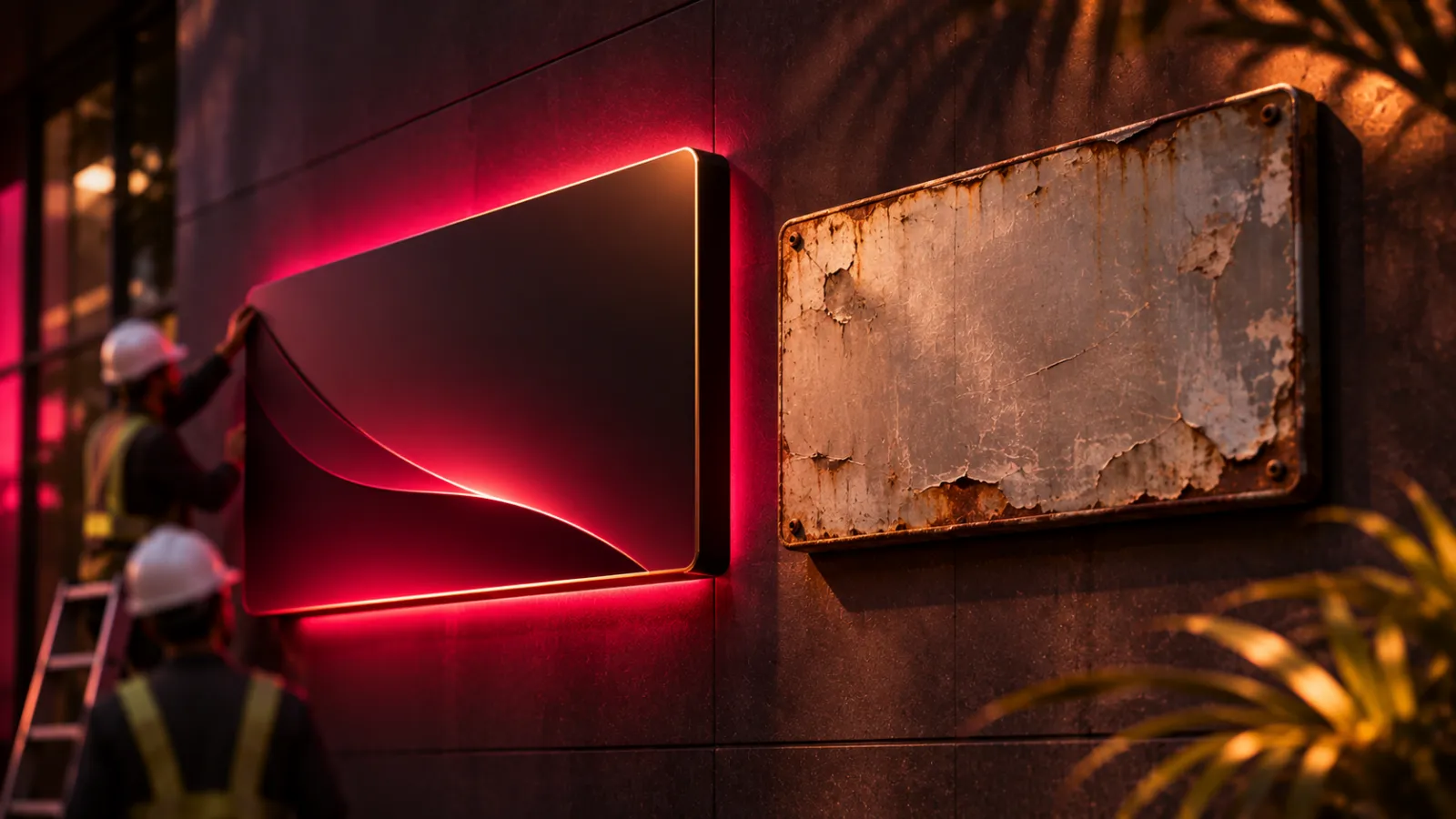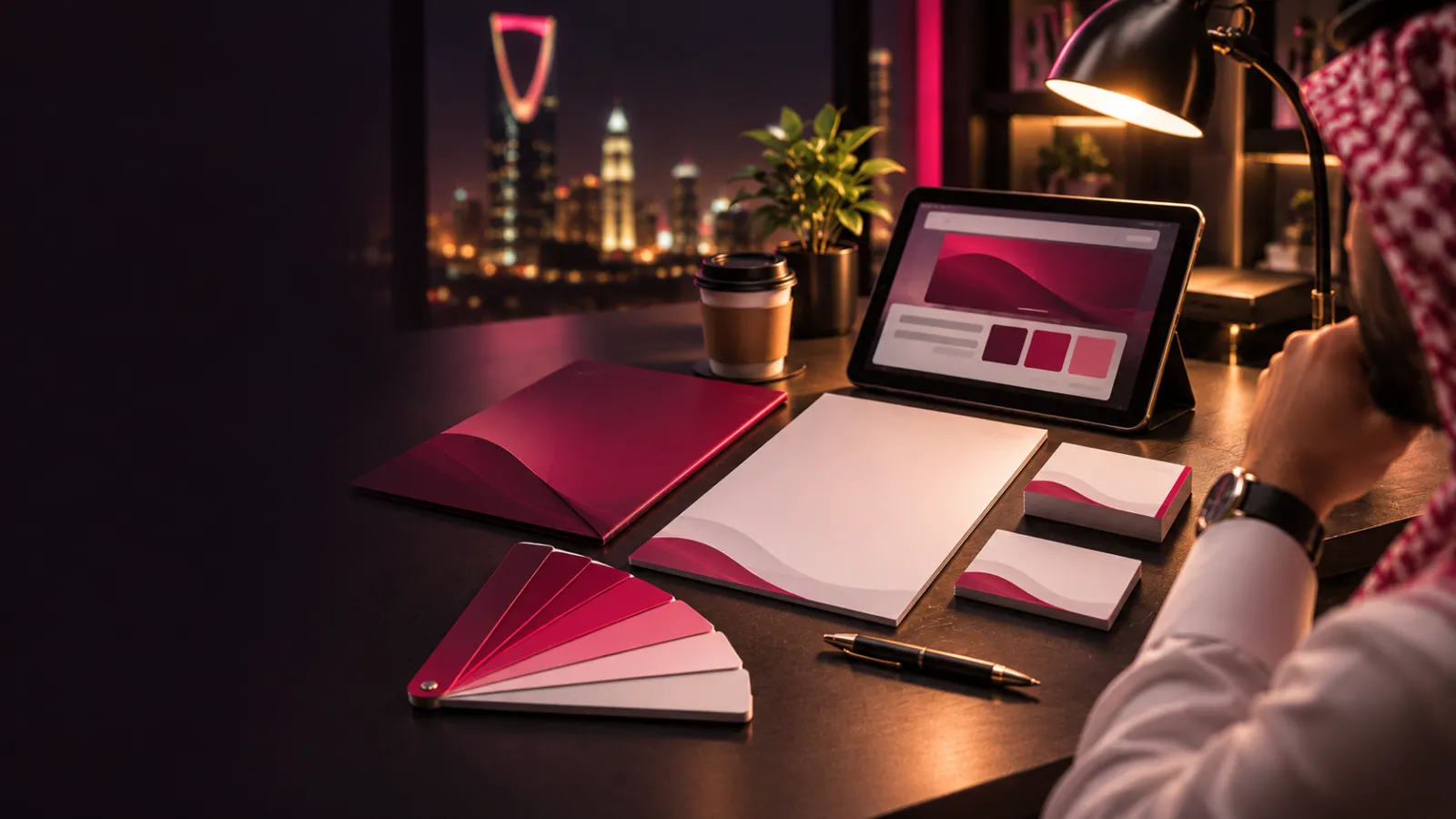
- A visual identity answers the customer’s question “Is this a serious company?” before they even contact you.
- Consistency at every touchpoint (website, WhatsApp, invoice, vehicle) is what builds recognition, not the logo alone.
- Start with the essentials: a logo in its versions, a colour palette, two typefaces, templates for business cards, proposals and social media.
- A short brand guide prevents improvisation when anyone designs in your company’s name later.
- A cheap, copied identity later costs you a redesign and trademark registration problems.
Imagine a customer in Riyadh looking for an insulation contractor or a consultancy. In front of them are two companies with roughly the same experience and prices: the first has a clear logo, a consistent website and an elegantly designed quotation; the second has a different logo everywhere and a quotation on a plain Word page. The decision is usually made before any phone call. That’s the power of visual identity — and it matters more to a small company than to a large one.
What exactly is a visual identity?
A visual identity is the visual system that makes your company recognisable everywhere: the logo, colours, typefaces, photographic and icon style, and the templates these elements are applied to. It’s part of the wider “brand”, which includes reputation, message and customer experience. For the precise distinction between the terms, read the difference between a logo, an identity and a brand.
Why does identity matter more for small and medium-sized businesses?
Because you don’t have time to persuade the customer
People already know a large company. You have seconds on the first website visit or the first glance at your business card. A well-crafted identity says on your behalf: “This is an organised, serious company.”
Because consistent marketing is cheaper
When you have ready-made templates for social media, proposals and invoices, every post is faster and cheaper to produce, and its effect accumulates because the customer links it to you immediately.
Because it lets you charge more
Customers associate visual quality with service quality. A professional identity moves you out of the “cheapest” competition and into the “best” one.
Because it makes expansion easier
When you open a new branch, launch a store or enter the Saudi market from Egypt, your identity comes with you in full, with no need to reinvent it.
The minimum a start-up needs
| Element | Why | Priority |
|---|---|---|
| The logo in its versions (horizontal, vertical, icon, black/white) | So it works on the website, a stamp and a profile picture | Essential |
| A colour palette (primary + secondary + neutral) | Consistency across every design | Essential |
| An Arabic and a Latin typeface | The personality of your text | Essential |
| Business card, letterhead and invoice | The first things the customer touches | Essential |
| Social media templates | Fast, consistent posting | Important |
| Presentation and quotation templates | Closing deals | Important |
| A brand usage guide | Preventing improvisation in future | Important |
| Company profile | Tenders and major clients | When needed |
How do we build a small company’s identity at Creative Agency?
- A discovery session: who are your customers? Who are your competitors? What feeling should your name leave?
- Visual research: we review competitors’ identities to make sure you stand apart rather than blend in.
- Several logo concepts: 3 to 8 different directions, each with a clear idea.
- Developing the chosen concept and building the colours and typefaces around it.
- Applications: business cards, stationery, social media and anything else you need.
- Handover: open files in every format, plus a usage guide.
Mistakes that cost small companies dearly
- A logo from a ready-made template: hundreds of others may be using it, and it’s hard to register as a trademark.
- Too many colours: every post in a different colour wipes out recognition.
- A logo full of detail: it can’t be read as an Instagram profile picture or a small stamp.
- Ignoring the Arabic version: in the Saudi market, the Arabic name is a core part of trust.
- Not receiving the open files: so you have to go back to the designer for every change.
Identity and small companies in the Saudi market
Small companies in Saudi Arabia today compete in a market full of professional new brands, and many of their customers are larger companies and organisations that vet their suppliers. A strong identity makes a small company look ready to deal with those customers: a quotation on a professional template, an organised website, official email and consistent accounts. The difference in impression between a small company with a polished identity and one without a clear identity is huge, and can decide opportunities before any price comparison begins. Read how a digital identity builds trust.
An identity that grows with the company
A small company doesn’t need every application from day one. Start with the foundation: a logo in its versions, colours and typefaces, business cards and letterhead, social templates and a short guide. Then add applications as you grow: the company profile, signage, packaging, uniforms and vehicles. What matters is that the foundation is designed from the start to accommodate all these future applications, so you don’t have to rebuild when you expand. Read the cost of a visual identity.
How do you choose your identity designer?
Look for a designer or agency with complete identity work, not just logos, who asks about your business and audience before drawing, presents the identity applied to real uses, and delivers open files and a guide. Avoid platforms that promise dozens of logos in two days; quantity is no substitute for understanding. Read logo, identity and brand.
From our work
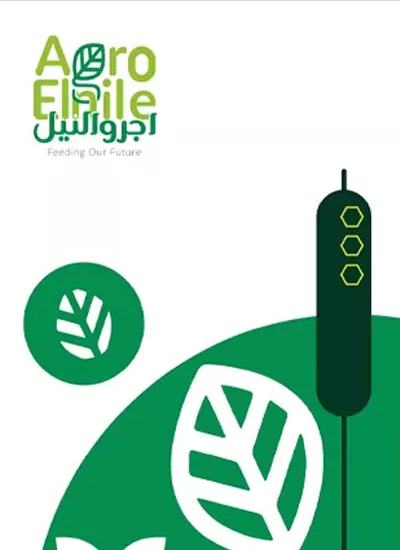
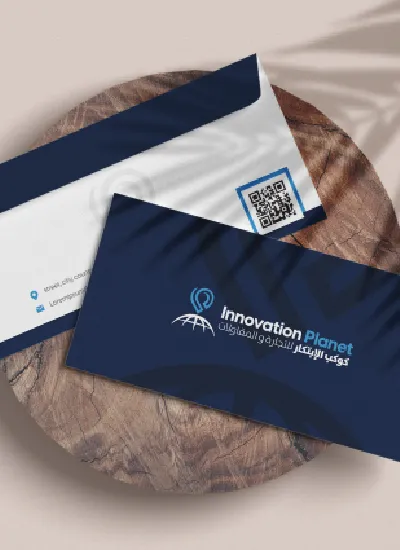
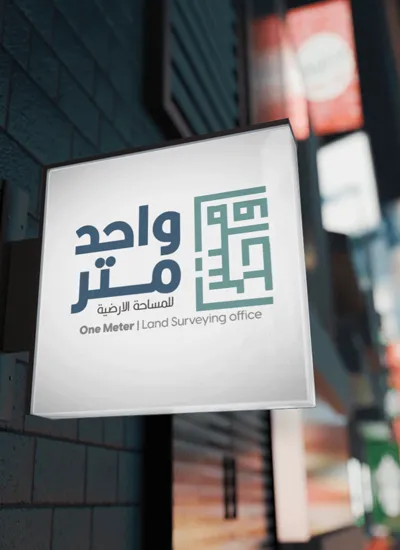
We’ve designed identities for small and medium-sized companies across many sectors, including One Meter Engineering Consultants, Al Qada Al Mutamayizun for simultaneous interpretation and Agro Nile. See the identities in our portfolio, or explore our visual identity service.
Frequently asked questions
Is an identity necessary for a two-person company? Yes, in its well-executed minimum form, because it makes you look ready to deal with large clients from the start.
Should I design the logo myself with free tools? It’s possible as a stopgap, but you’ll usually need to rebuild it as you grow, at a higher cost than building it properly from the start.
How long does an identity take? Usually three to six weeks, depending on scope and how quickly decisions are approved.
Identity and social media for small companies
Small companies often start their marketing on social media, so make post templates part of the core identity from day one. Ready-made templates in your identity make every post look professional, even if the owner designs it themselves in a few minutes. Read designing posts with a unified identity.
The starter list
- A logo in colour, single-colour and simplified versions.
- An approved colour palette and typefaces.
- Business cards, letterhead and an email signature.
- Social media and presentation templates.
- A short brand guide and a file library.
With this pack, a small company starts with a professional, consistent look from day one.
Identity and growth
Today’s small company may be a medium-sized one in three years. An identity built carefully from the start accompanies you through that growth without needing to be torn down; you simply add new applications at each stage. A rushed identity becomes an obstacle at the first expansion. Treat your identity as an investment in the company you’ll become, not just the company you are today — and start with what you actually need this year, neither overdoing it nor cutting corners.
Our experience with small companies
Many of our clients started as small companies with a polished identity from day one, then expanded into larger projects and other cities with the same identity, simply adding new applications. What they had in common was that they treated their identity as an investment in the future rather than a one-off expense. See our clients’ identities to see how identity works across different sectors.
A final word for small business owners
You might think identity is a luxury for large companies, but the truth is the opposite: a large company has a history and a reputation that speak for it, while a small company’s appearance is the first — and sometimes the only — thing a customer judges it by. A well-crafted identity gives you a level playing field against bigger competitors. Start with a well-executed foundation, then let your identity grow with your company year after year.
The bottom line
A visual identity isn’t a luxury for large companies, but a small company’s tool for looking bigger than it is. Start with the essentials done properly, and apply them with discipline everywhere. Explore our visual identity design service, see identities we’ve designed for real clients, or book a free consultation.
Real projects we delivered
FAQ
When does a small company need a visual identity?
From day one, before printing a single business card or launching the website, because changing the identity later means redoing all your print and accounts and confusing customers.
Is designing just a logo enough?
The logo is the starting point, but without colours, typefaces and usage rules every piece of marketing will look different from the last, which weakens recognition.
How long does designing a visual identity take?
Usually two to six weeks, depending on the number of concepts and applications required and how quickly reviews happen.
Can I register the logo as a trademark?
Yes, if it’s original and not similar to registered marks. In Saudi Arabia it’s registered with the Saudi Authority for Intellectual Property, and in Egypt with the Internal Trade Development Authority — which is why we avoid ready-made templates.
Sources

Written from 20+ years designing websites and identities for clients in Saudi Arabia and Egypt — every tip here comes from real projects.
Want this applied to your project?
Book a free consultation — we will review your site or brand and propose a clear plan.
Book a free consultation