- The price depends on the number of logo concepts, the number of applications, the depth of research and whether brand guidelines are included.
- A basic package suits a start; a complete one suits companies that will print, launch a website and advertise.
- Always ask: how many concepts? How many revision rounds? Which files are delivered? Are brand guidelines included?
- A cheap, copied identity may stop you registering your trademark later.
- Combining the identity and the website in one package saves time and money and ensures consistency.
“How much does a logo cost?” The answers you’ll hear start from token amounts on freelance platforms and reach large figures at global agencies. The difference isn’t in “drawing” the logo, but in the research, the thinking, the number of concepts, the applications, the files and the legal responsibility for originality.
The factors that determine the cost of a visual identity
Depth of research and strategy
Does the designer start drawing immediately, or study your business, audience and competitors first? Research adds time, but it’s what makes the identity fitting and distinctive.
Number of logo concepts
One concept with revisions is cheaper, but several considered directions (3–8) give you a real choice. For Happiness Makers we presented 8 concepts before approval.
Number of applications
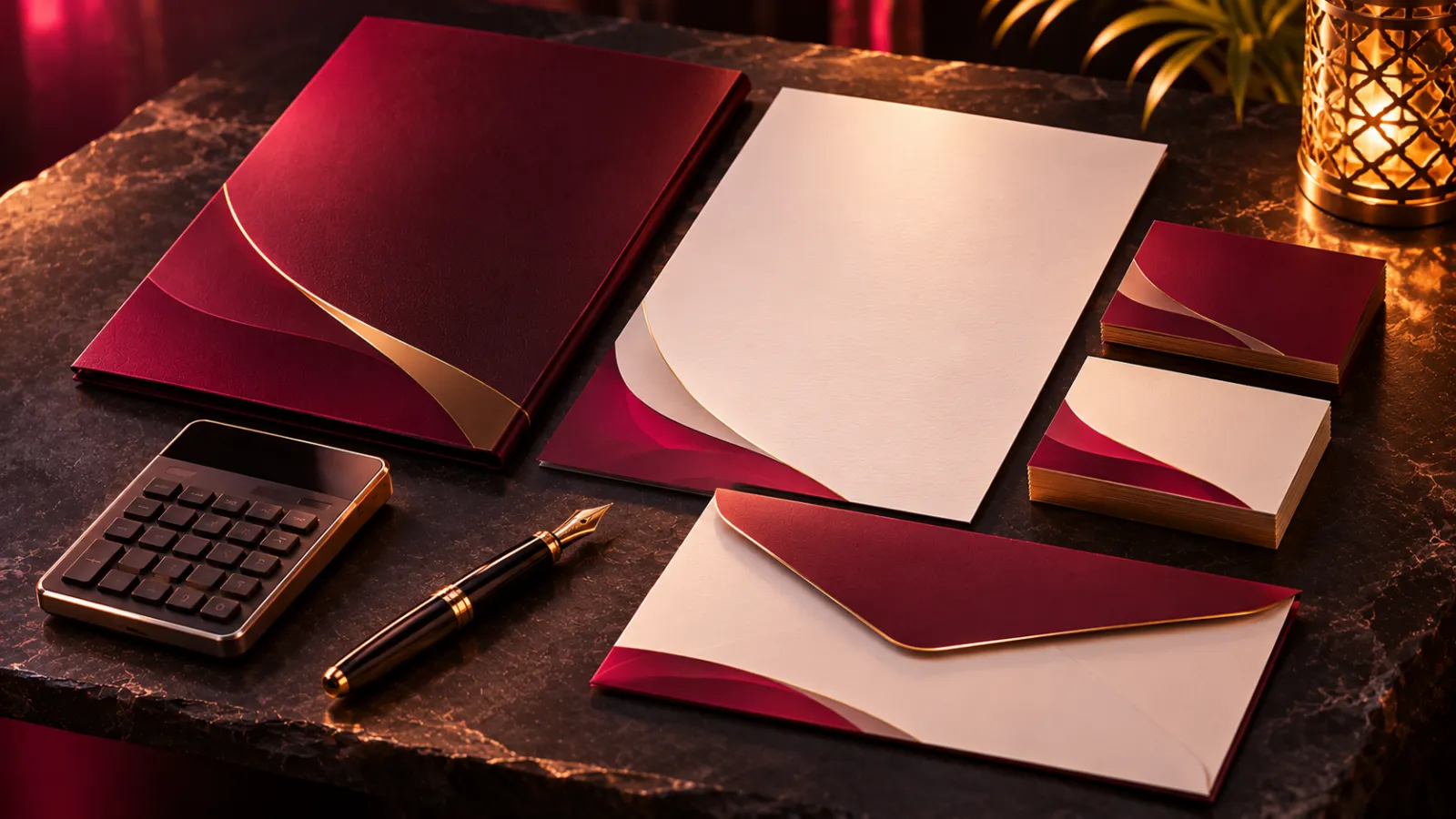
Business card, letterhead and envelope? Or also invoices, stamps, folders, social media templates, presentations, signage, uniforms and vehicles? Every application is extra design time.
Brand guidelines
From a few pages to a detailed guide. Read the components of brand guidelines.
Languages
A bilingual identity requires designing the Arabic and Latin names in balance.
Ownership and files
Receiving the vector source files and full usage rights is part of the value.
Common package levels
| Package | Usually includes | Suitable for |
|---|---|---|
| Logo | 2–3 concepts, limited revisions, logo files | A very small project or testing an idea |
| Basic identity | 3–5 concepts, colours and typefaces, business card and letterhead, social templates, short guidelines | Most startups and small businesses |
| Complete identity | 5–8 concepts, wide applications (invoices, stamp, folders, signage, presentations), detailed guidelines | Established companies, expansions and tenders |
| Complete digital identity | The identity + website + business email + profile + social media | A company that wants a full launch from one team |
The last package is what we call the complete digital identity, as we delivered it for Madarat.
How do you compare quotes?
- How many logo concepts? And are they genuinely different directions?
- How many revision rounds?
- Exactly which applications are included?
- Are brand guidelines included?
- Which file formats are delivered? (AI/SVG/PDF/PNG)
- Does the designer guarantee the work is original?
- What is the timeline?
Costs nobody mentions
- Early redesign: a cheap identity replaced after a year costs more.
- Reprinting: every change means printing everything again.
- Trademark registration: separate registration fees, and registration is refused for unoriginal logos.
What actually happens in an identity project?
To understand the cost, it helps to know where the time goes. The project starts with research and understanding: a meeting with management to understand the company, its vision and audience, a study of competitors and their identities, and defining the personality the brand should express. Then the ideas stage: initial sketches and exploring several directions, before choosing the best and developing them digitally. Then refinement: fine-tuning the logo, testing it at small and large sizes and in colour and single-colour versions, and building the palette, typefaces and elements. Then applications: designing the print items, digital templates and agreed identity applications. Finally documentation and delivery: the brand guidelines and preparing the files in every format.
A designer who jumps straight into design software and sends three logos in two days skips most of these stages, which is why they’re much cheaper. But what you usually get is a nice drawing, not a considered identity system.
An illustrative example of three levels
| Level | What it usually includes | Suits |
|---|---|---|
| Basic | Logo in its versions, colours and typefaces, business card and letterhead, short guidelines | A startup or small project |
| Complete | All the above + wider print, social and presentation templates, digital applications, detailed guidelines | A growing company dealing with many clients and partners |
| Corporate | Deeper research, brand strategy, sub-brands, signage, vehicles and uniforms, comprehensive guidelines | Large or multi-branch companies |
Prices vary with scope, market and experience, so always ask for a breakdown of the deliverables at each level so you can compare fairly.
The identity as part of a larger package
If you’ll need a website, business email, a profile and social media accounts in the same period, consider doing them as one package. Designing them together saves coordination time, ensures the identity is designed knowing where it will be used, and the total cost is often lower than commissioning each element separately from different suppliers. Read the cost and return of a digital identity and what a complete digital identity is.
Does a cheap identity really save money?
Calculate the cost of an identity over its lifetime. A considered identity that lasts seven or ten years with minor updates has a very small annual cost compared with its effect on every quote, every sign and every website visit. A weak identity is usually replaced within two or three years, with the cost of reprinting every material, changing the signage and rebuilding recognition among clients. The real saving is building it right once.
From our work
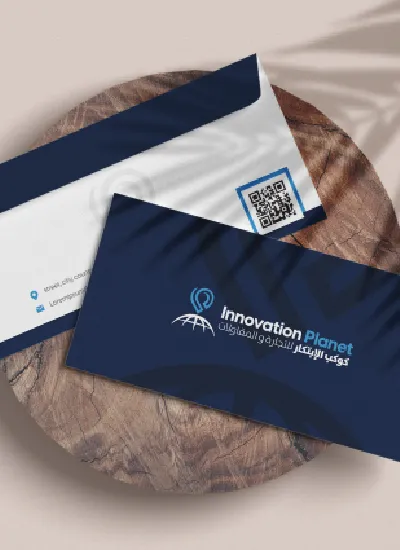
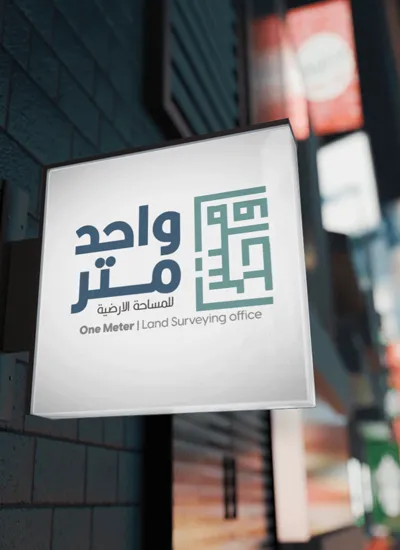
We’ve designed identities for companies in different sectors, including Happiness Makers (eight logo proposals before approval, then the complete identity and website), One Meter Engineering Consultants and Al Qada Al Mutamayizun for simultaneous interpretation. You can see each identity’s complete applications on our work pages.
Questions to ask before signing
- How many initial logo proposals will I see? And how many revision rounds are included?
- Does the identity include written guidelines? Roughly how many pages?
- Exactly which applications are included (print, digital, signage)?
- Will I receive the open files in every format?
- Who owns the rights after payment?
- Are the typefaces used licensed, and who pays for the licence?
- What is the expected timeline, and what’s required of me at each stage?
Clear answers to these questions make comparing quotes fair, and prevent surprises after the project starts.
Cost by company size and sector
A small consultancy dealing with a limited number of clients needs an elegant, precise identity with basic office and digital applications. A contracting company needs many site applications on top: hoardings, signage, helmets, vehicles, uniforms. An online store needs a focus on packaging, social templates and ads. A restaurant or café needs wide interior applications: menus, cups, bags, signage, décor. That’s why the same “visual identity” varies so much in cost by sector — the number and nature of the applications are completely different. Define the applications you actually need in the first year, ask for them to be priced clearly, and leave the rest for later phases.
When is a cheaper identity acceptable?
If you’re testing a project idea that hasn’t proven itself yet, or launching a trial product for a limited period, a simple, well-crafted identity is enough until the picture becomes clear. What matters is that it isn’t clichéd or copied, and that it’s built on a name and colours that can be developed later without starting over. A company that will deal with large organisations and clients from day one loses far more in opportunities from a weak identity than the price difference.
How do you protect your investment in the identity?
After delivery, store the open files in more than one safe place, register the logo as a trademark with the relevant authority in your country, distribute the guidelines to everyone who needs them, and appoint someone to review any new material. An identity that was well paid for and then neglected erodes within a year, while a protected identity works for you for many years.
In the end, a good identity is neither the most expensive nor the cheapest, but the one built on a real understanding of your company and its audience, delivered complete and documented, and used consistently for years. Start by asking for a detailed quote for your real needs, and compare deliverables, not just the total figures.
The bottom line
Choose the package according to what you’ll actually use in the coming year, and insist on originality and source files. If you’re launching a website too, consider the complete package. Explore our visual identity service or ask for a clear quote.
Real projects we delivered
FAQ
What is the cheapest way to get a professional identity?
Start with a basic package covering a strong logo in its versions, colours, typefaces, core applications and short guidelines, then add applications when you need them.
Do the prices include printing?
Usually not; design is one thing and printing is a separate cost depending on quantities and materials. The designer can prepare print-ready files.
How many revision rounds are reasonable?
Two to three rounds on the chosen concept are usually enough if the initial brief is clear.

Written from 20+ years designing websites and identities for clients in Saudi Arabia and Egypt — every tip here comes from real projects.
Want this applied to your project?
Book a free consultation — we will review your site or brand and propose a clear plan.
Book a free consultation