
- The cost is set by the number and depth of components, not by the name of the package.
- Delivery by one team saves the costs of coordination and rework between suppliers.
- Calculate the return from the value of one customer and the number of extra customers needed to recover the cost.
- Annual costs (hosting, email, domain, maintenance) belong in the budget from day one.
- The cheapest option at the start can be the most expensive a year later if you need to rebuild.
“How much does a digital identity cost?” is one of the questions we’re asked most, and the honest answer is: “It depends on what you actually need.” But that answer alone doesn’t help a decision-maker who needs to set a budget and convince their partners. So in this article we explain how the cost is built up, where the difference between one quote and another comes from, and how to calculate the return in a simple way based on your own company’s numbers rather than general promises.
What does a complete digital identity include?
A complete digital identity is the set of elements through which customers see your company online and offline, designed as one system. For the concept in detail, read what a complete digital identity is. The core components:
| Component | What it includes | What affects its cost |
|---|---|---|
| Logo and visual identity | Logo, colours, typefaces, elements, brand guidelines | Number of concepts, depth of the guidelines, number of applications |
| Website | Design, development, content, basic SEO | Number of pages, languages, custom systems, a store |
| Official email | Setting up email on the domain, signatures | Number of accounts and the platform (hosting, Google, Microsoft) |
| Stationery | Business cards, letterhead, envelopes, invoices | Number of items |
| Company profile | Design and content of the company profile | Number of pages, copywriting, photography |
| Social media | Setting up accounts and templates, optional monthly management | Number of platforms and posts per month |
| Photography and content | Photographing the team and projects, writing the copy | Number of days and locations |
The factors that push the cost up or down
- Languages: a bilingual website roughly doubles the content and review, but it’s usually essential in Saudi Arabia.
- Content readiness: if you already have real copy and photos, the cost and timeline drop considerably.
- Special features: appointment booking, a client portal, a store, integration with internal systems.
- The number of decision-makers: every extra review round means extra time.
- Timeframe: a rushed delivery requires a larger team.
- Existing work: developing an existing identity costs less than building one from scratch.
One project versus piecemeal delivery
Many companies start with a freelance designer for the logo, then another company for the website, then an employee for social media, then a printer who designs the profile. On paper this looks cheaper, but in practice hidden costs appear:
| The hidden cost | What happens |
|---|---|
| Rework | The website reveals that the logo doesn’t work small or on a dark background, so it’s modified again |
| Coordination | Your own time passing files and feedback between four suppliers |
| Inconsistency | Each supplier interprets the identity in their own way, so the company looks fragmented |
| A delayed launch | Each party waits for the other, and the market doesn’t wait |
| Responsibility | When anything goes wrong, each party blames the other |
In an integrated project, the same team designs the identity knowing where it will be used: the favicon, the profile picture, the invoice stamp, the profile cover. The result is faster and more consistent, and often cheaper overall.
How do you calculate the return with your own numbers?
You don’t need a complex financial model. Use four numbers:
- Average customer value: how much does one customer pay over a year or over the contract?
- Profit margin: how much of that value is left after direct costs?
- Project cost: what you’ll pay for the digital identity plus the annual costs.
- Break-even point: project cost ÷ (customer value × profit margin) = the number of extra customers needed to recover the investment.
An illustrative example: a consultancy whose average contract with a client is 60,000 riyals, with a 40% margin — 24,000 riyals of profit from each client. If the project costs 48,000 riyals, it needs just two extra clients in a year to recover the cost. The realistic question is: can a professional website, a strong profile and an active LinkedIn bring two extra clients a year? For most service companies, the answer is yes, and more. (The figures are for illustration only; use your own company’s numbers.)
The return that doesn’t appear in the equation
- A higher close rate: the same number of proposals, but more of them become contracts because trust is higher.
- Justifying a higher price: a company that looks professional can price with confidence. Read how a digital identity builds trust.
- Saving sales time: clients arrive at the meeting having read about you and understood your services.
- Recruitment: strong candidates look you up too.
- Tenders and partnerships: an organised presence makes prequalification easier. Read digital identity and tenders.
The annual costs to factor in
| Item | Frequency | Note |
|---|---|---|
| Domain | Annual | Set it to renew automatically so you don’t lose it |
| Hosting | Annual or monthly | Quality affects speed and security. Read choosing hosting |
| Official email | Monthly per user, or with hosting | Depends on the platform |
| Website maintenance | Monthly or annual | Updates, backups, protection |
| Social media management | Monthly (optional) | Content, design, publishing, reports |
| Advertising | Per campaign | A budget separate from fees |
How do you compare quotes?
- Ask for each component and its price to be itemised, not just a total.
- Ask: who writes the content? Is photography included? How many revision rounds?
- Make sure the open identity files and the rights to the website and domain will be in your name.
- Ask for real examples of integrated projects the company has delivered, and visit their live websites.
- Ask about post-launch support, its duration and its cost.
For more, read how to choose a web design company and the cost of a visual identity.
When isn’t the investment justified?
To be honest: not every company needs a complete digital identity right now. If your business depends entirely on a limited circle of personal relationships who don’t look you up online, if you’re still testing an unproven idea, or if your cash flow can’t support an investment now, start with a well-executed minimum: a good logo, official email, a clear introductory page and a Google listing. Then invest in the full system when you start to expand or deal with companies and bodies that will check you out. The right investment at the right time matters more than a big investment at the wrong time.
How do you track the return after launch?
Before launch, set a baseline: the number of monthly enquiries, their sources, the share that become contracts, the average contract value and the length of the sales cycle. Then compare every quarter. Add the question “How did you hear about us?” to every form and first call. After six months you’ll have a realistic picture of the investment’s effect, and of what needs strengthening: content, ads, social media or sales follow-up. Read our GA4 guide.
From our work
We give every client a detailed quote that itemises each component, its price and its deliverables, so they can see clearly where their investment goes and choose what suits their stage. It’s possible to start with a first phase and then expand. Explore the complete digital identity service and see our work. Smart investment starts with what has a clear effect, then expands based on the results.
The practical summary
Calculate the break-even point with your numbers, add the indirect return from trust and time, plan for the annual costs, and compare quotes by deliverables rather than totals. A decision based on these numbers is far clearer than one based on price alone. If you need help calculating the break-even point for your company, we do that with every client before presenting a quote.
The bottom line
The cost of a digital identity isn’t a single figure but the sum of components you choose according to your company’s stage. The right way to judge it is by the return: how many extra customers you need to recover the investment, how much time it will save, and how much you’ll gain from higher trust. In our complete digital identity service we give you a detailed quote for every component, and you can start with what suits you, then expand. Get in touch for a tailored quote.
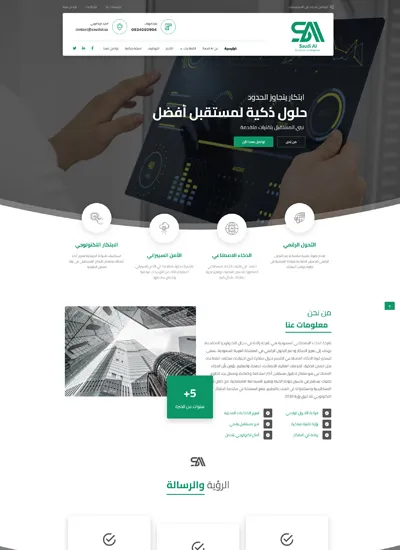
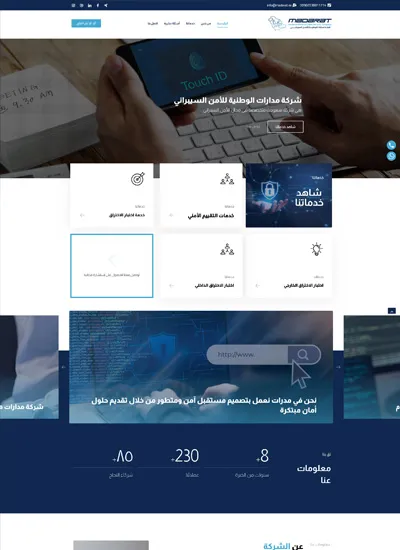
Real projects we delivered

FAQ
Why don’t you give a fixed price?
Because a digital identity for a start-up with a five-page website is completely different from one for a company with several branches, a bilingual website and a store. We give a detailed quote after understanding the need, with each component and its price listed separately.
Can the project be delivered in phases?
Yes. Many clients start with the identity, website and email, then add the profile and social media later, provided the identity is designed from the start to cover every application.
What are the recurring costs after launch?
The domain, hosting and email annually, website maintenance and updates, social media management if you want it, and any paid advertising.
When will I start to see a return?
The effect on trust and the quality of your proposals is almost immediate; search traffic usually takes 3 to 6 months of regular content.
Sources

Written from 20+ years designing websites and identities for clients in Saudi Arabia and Egypt — every tip here comes from real projects.
Want this applied to your project?
Book a free consultation — we will review your site or brand and propose a clear plan.
Book a free consultation