
- Prequalification committees look your company up online before and during the technical evaluation.
- The profile and prequalification file must match the website in names, figures and projects.
- A projects page organised by sector, value and year beats a random photo gallery.
- Official email and consistently formatted documents reflect administrative discipline.
- Update your digital presence before tender season, not after it.
A medium-sized contractor bids for a tender. The price is competitive, the experience is there and the documents are complete. But when a member of the evaluation committee types the company’s name into Google, they find a website that stopped years ago, a Facebook page whose last post was three years ago, or nothing at all. The bid won’t be formally excluded for that, but an impression has formed: “Is this company actually active?” In close tenders, impressions like that make the difference.
In this article we treat digital identity as a prequalification tool, not just a marketing tool, and explain how to use it to prepare for tender season.
Who reviews your company, and when?
| Stage | Who reviews | What they look for |
|---|---|---|
| Supplier registration | Procurement | Company details, activity, registrations, website and official email |
| Invitation to a restricted tender | The project manager or technical department | Similar projects, company size, stability |
| Technical evaluation | The technical committee | Experience, team, methodology, document quality |
| Clarifications | The committee and the consultant | How quickly and professionally you reply |
| Award and contracting | Legal and finance | Consistency between the trading name, documents and addresses |
At every stage there’s someone who might open your website or LinkedIn, and every stage is a chance to strengthen trust or weaken it.
The elements of your digital presence that serve tenders
A projects page organised like a database
Instead of a photo gallery, give each project a card with: the project name, the client (with permission), the sector, the location, the year, the scope of work and real site photos. Add filters by sector (residential, commercial, government, infrastructure). This lets a committee member find “similar experience” in seconds — exactly what tender documents ask for.
An About page with verifiable figures
The year founded, the number of engineers and technicians, your classification if you have one, quality and safety certifications, and branches. Avoid inflated figures; committees compare what’s on the website with what’s in the documents, and any contradiction raises doubts.
A certifications and accreditations page
Clear images of ISO certificates or professional accreditations with their expiry dates — and remember to update them on renewal.
Official email and a consistent signature
A bid arriving from an address on your company’s domain, with a signature showing the name, title, phone and address, is fundamentally different from one arriving from free email. See our domain and business email guide.
Document templates in your identity
The cover letter, methodology, programme and CVs should all come out in one template: the same typefaces, colours and letterhead. The committee reads dozens of bids, and a visually organised bid is easier to read and evaluate.
An active LinkedIn
A company page with posts about project progress, handovers and certifications, and personal profiles for project managers showing their experience. This isn’t advertising; it’s a public record of your activity.
Company profile versus prequalification file
| Company profile | Prequalification file | |
|---|---|---|
| Purpose | Introduction and impression | Proving eligibility for a specific tender |
| Length | 12–20 pages | Can exceed 50 pages |
| Updating | Annually | For every tender |
| Content | Overview, services, highlight projects | Detailed similar experience, CVs, equipment, completion letters, certificates |
| Format | A designed PDF | A designed PDF from an editable template |
Our advice: have a prequalification template designed professionally once, then your team can adapt it for each tender without losing the identity. Read company profile design.
An audit checklist before tender season
- The website is fast on mobile and its SSL certificate is valid.
- Your last five projects are published with real photos and clear details.
- The trading name on the website matches the commercial registration in Arabic and English.
- Phone numbers and addresses are up to date on the website, Google and LinkedIn.
- The company profile is dated this year.
- The prequalification template is ready and in the company’s identity.
- Official email for everyone who deals with clients, with a consistent signature.
- An up-to-date certifications page.
- The last LinkedIn post is less than a month old.
Mistakes that weaken your file without you noticing
- Contradictory figures: the website says 20 years’ experience and the profile says 15.
- Projects without photos: a list of names alone won’t persuade a technical committee.
- Photos taken from the internet: someone may recognise them and put a question mark over everything.
- A low-quality logo in documents: it suggests a lack of attention to detail — exactly what committees fear in delivery.
- A single contact number that doesn’t answer: clarifications have deadlines, and a slow reply can cost you the tender.
What about start-ups and new entities?
If your company is new and doesn’t have a long track record, rely on your team’s experience: present the CVs of your engineers and managers and their previous projects clearly, stating that this is personal experience. Start with smaller tenders to build a documented record, and publish every project as soon as it’s handed over. An organised digital presence makes a small company look ready to grow rather than fragile.
The return: why it’s worth the investment
A single contract from a medium-sized tender usually covers the cost of building a complete digital identity several times over. More importantly, an organised presence reduces the time your team spends preparing each bid, because the content, photos and templates are ready and up to date. Also read the cost and return of a digital identity and website design for construction companies.
The digital transformation of tendering in the Kingdom
Many government tenders in the Kingdom are run through electronic platforms, from registration and purchasing tender documents to submitting bids, clarifications and award. That means your digital readiness is no longer optional: well-organised electronic documents, prequalification files in the company’s identity, official email used for registration and correspondence, and a team that knows how to handle the platforms and deadlines. Large and semi-government companies are moving the same way with their supplier registration portals.
Because submission is electronic, the look and organisation of files matter even more: a clear PDF with a contents page and links, high-quality project photos at a sensible size, well-named files, and documents in a consistent identity. The committee opens dozens of files on screen, and a tidy file is easier to read and leaves a better impression.
From search to award: the website’s role
In restricted tenders and direct invitations, things often start with a search: a project manager looks for “insulation contractor in Riyadh” or “engineering consultant for industrial projects”, finds your website and adds you to the invitation list. So detailed service pages, local SEO and an organised projects page work as a channel for winning invitations, not just as a front for verification. Read local SEO and our SEO guide.
Who prepares your digital files?
Many companies leave tender files to an administrator working under deadline pressure with basic tools. It’s better to have a professionally designed template for the prequalification file and technical proposals, a ready library of project photos, and up-to-date CVs in the same template, so preparing each tender becomes filling in content rather than designing from scratch. This raises quality and saves days on every tender. Every tender lost because of a poorly organised file is a loss a good template could have prevented.
The practical summary
A website with organised projects, a profile and prequalification template in the company’s identity, official email, an active LinkedIn, consistent figures everywhere, and an update before tender season. That’s what turns your digital presence into an open prequalification file working in your favour. Remember: the committee reads your file before it meets you.
The bottom line
Tenders are won on price and experience, but trust is built before the envelopes are opened. Make your website, profile, email and LinkedIn an open prequalification file that works for you every day. In our complete digital identity service, we prepare all of this as one consistent system. You can see our work for construction and consultancy firms or request a review of your current presence.
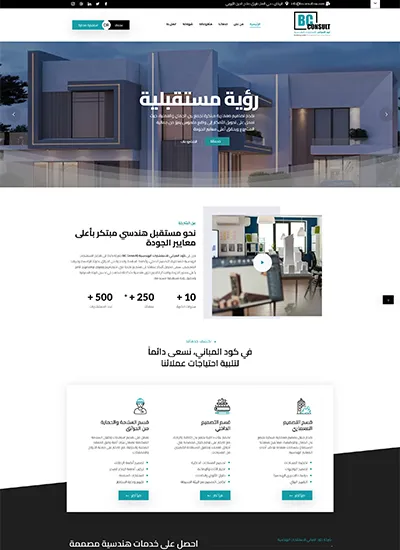
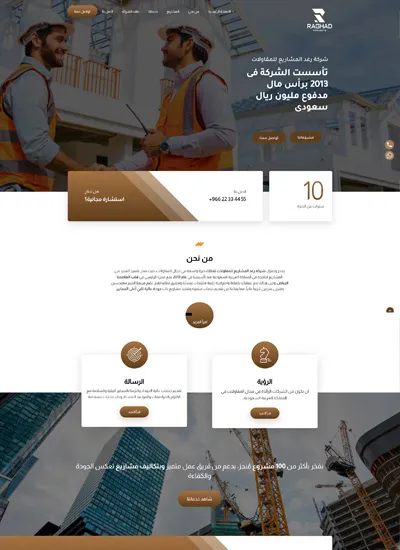
Real projects we delivered
FAQ
Does the website really affect a tender evaluation?
The formal evaluation follows the tender’s criteria, but committee members and procurement officers look the company up to verify that it exists and has experience, and the impression they form affects their questions and clarifications, and your chances of being invited to restricted tenders later.
What’s the difference between a company profile and a prequalification file?
The profile is introductory, promotional and short; the prequalification file is detailed and prepared for a specific tender: similar experience, CVs, certificates, equipment and completion letters.
Should I put contract values on the website?
You can mention a project’s scope and size without sensitive figures, and it’s best to get the client’s approval before publishing their name or project details.
Sources

Written from 20+ years designing websites and identities for clients in Saudi Arabia and Egypt — every tip here comes from real projects.
Want this applied to your project?
Book a free consultation — we will review your site or brand and propose a clear plan.
Book a free consultation