
- Start with your customers’ real questions, not keyword tools.
- Arabic has multiple spellings (ة/ه, ى/ي, أ/ا) and dialects; test them all.
- Classify keywords by intent: informational, commercial, transactional, local.
- One main keyword per page, with natural supporting terms.
- Longer, more specific phrases are easier to compete for and convert better.
A company writes “integrated construction solutions” on its website, while the customer types “villa building contractor Riyadh” into Google. The gap between the company’s language and the customer’s language is why so many websites go unseen. Keyword research closes that gap.
Start inside the customer’s head
- What questions do customers ask on the phone and on WhatsApp?
- What words do they use to describe their problem?
- What do they compare you with?
Write an initial list of 30–50 phrases before you open any tool.
Expand the list with tools
- Google autocomplete: type the start of a phrase and look at the suggestions.
- “Related searches” at the bottom of the results, and “People also ask”.
- Google Ads Keyword Planner to estimate search volume.
- Search Console for your current website: the keywords you already appear for.
- Google Trends to compare two phrasings.
The particularities of Arabic
| Challenge | Example | What to do |
|---|---|---|
| Spelling | شركه / شركة (“company” with ه or ة), تصميم موقع / تصميم مواقع (“website” singular or plural) | Test the variants and use the most popular in headings |
| Dialects | «كم سعر» / «بكام» / «تكلفة» (Gulf, Egyptian and standard ways to ask the price) | Include synonyms naturally in content and FAQs |
| Arabic and English | «سيو» / SEO | Use both terms in the article |
| City | الرياض / بالرياض / في الرياض (Riyadh, “in Riyadh” in two forms) | Local pages and phrasing |
Classify by search intent
| Intent | Example | The right page |
|---|---|---|
| Informational | What is a visual identity? | A blog article |
| Commercial (comparison) | Best web design company | A comparison article + the service page |
| Transactional | Construction company website design price | The service page with a “Get a quote” button |
| Local | Web design company in Riyadh | The service page + Google Business Profile |
Build a keyword map
A simple table: page → main keyword → supporting keywords → intent. This way you avoid two of your own pages competing for the same keyword, and you can see which articles are missing. This blog is built on a similar map: each group of articles supports a service page.
Free tools are enough to start
You don’t need expensive subscriptions to begin. Google’s own search suggestions (what appears as you type), the “People also ask” section and the related searches at the bottom of the page reveal how people actually write. Google Trends compares the popularity of different phrasings by region and time, which is very useful for comparing close Arabic variants or Arabic against English. The Keyword Planner in Google Ads gives search volume estimates. And the most important tool of all is Search Console for your own website, because it shows the queries your pages have actually appeared for — many of which you wouldn’t have expected.
Dialects and local phrasing
Arabic isn’t a single search language. A Saudi might type “design a website”, “make me a website” in Gulf dialect, or “website programmer”, while an Egyptian might use the Egyptian phrase for “make a website” or “a company that makes websites”. The same term may be written with or without a hamza, with ة or ه, and with Arabic or Eastern Arabic numerals. Technical terms are often written in English or in Arabic transliteration (“سيو” and “SEO”). You don’t need to repeat every variant artificially; Google understands many of these variations. But know the phrasings your audience uses most, use them naturally in headings and text, and cover the other important variants in FAQs and articles.
Long-tail keywords: the real opportunities
Short, general phrases such as “web design” are highly competitive, and the searcher’s intent is unclear. Longer phrases such as “construction company website design in Riyadh” or “how much does an online store cost in Saudi Arabia” have lower volume, but the searcher knows exactly what they want, competition is weaker and conversion is higher. Small and medium-sized companies get their best results from building pages and articles that target dozens of specific long-tail phrases, rather than chasing a single general phrase dominated by large companies.
From keywords to content
Once the map is built, turn it into a plan: the service page targets the core commercial phrase and its variations, articles target questions and informational phrases, and FAQs capture short, specific questions. Link the articles to the service pages. And don’t write two pages targeting the same phrase with the same intent, because they’ll compete against each other. Read content marketing for companies.
Review and update every quarter
Search changes: new phrases emerge with new services and technologies, seasons shift demand, and customers ask new questions. Review Search Console every three months to see the new queries your pages appear for, the pages that appear often but have a low click-through rate (an opportunity to improve the title and description), and the phrases that are close to the first page (an opportunity to strengthen the content). This regular review turns keyword research from a one-off task into an ongoing competitive advantage.
A worked example: a keyword map for an insulation company
An insulation company in Riyadh starts with a list: “roof insulation”, “waterproofing”, “thermal insulation”, “insulation company in Riyadh”, “roof insulation prices”, “best type of roof insulation”, “foam insulation”, “bathroom waterproofing”. After classifying by intent, the commercial phrases (“insulation company in Riyadh”, “roof insulation prices”) go to service pages; the informational ones (“best type of roof insulation”, “when should I insulate my roof?”) become articles that link to the services; and short questions (“How long does waterproofing last?”) go into the FAQs. The result is a clear content plan for several months, built on what customers actually search for rather than on what the company assumes.
Common keyword research mistakes
- Relying on your instinct instead of actual search data.
- Chasing only the highest-volume phrases despite fierce competition.
- Ignoring search intent, so you write an article for a commercial phrase or a service page for an informational one.
- Artificial keyword stuffing that weakens readability.
- Neglecting English in sectors where the audience searches in it.
- Not reviewing Search Console after publishing.
Keyword research is a skill that improves with practice; every month of monitoring reveals new phrasings and opportunities you didn’t expect in your market.
Keywords and bilingual content
If your website is in two languages, research keywords for each language separately, because English-language searchers in Saudi Arabia may use completely different phrases from a literal translation of the Arabic. “Web design company Riyadh” isn’t an exact equivalent of its Arabic counterpart in terms of search volume and competition. Build a separate keyword map for English, and make matching pages target the best phrasing in each language. Read bilingual websites.
Keywords in the age of AI answers
With the spread of full-question search and smart assistants, people now type longer, more natural sentences: “How do I choose a reliable web design company in Jeddah?” instead of “web design Jeddah”. That makes your customers’ real questions more important than ever. Collect them from your sales team, messages and comments, turn them into subheadings and FAQs on your pages, and answer them directly in the first sentence. Read SEO, AEO and GEO.
Start with a list of twenty phrases your customers actually type, classify them by intent, and match each to a page. That simple step alone changes the way your website is written.
From our work
Before writing the content for any website, we build a simple keyword map in Arabic and English for each service, so the pages are written in the customer’s real language rather than the company’s internal jargon. Ongoing research into how your customers phrase things keeps your website connected to their changing language.
The bottom line
Keywords are your customer’s language. Speak it in your headings, pages and articles. Read our SEO guide and writing website content.
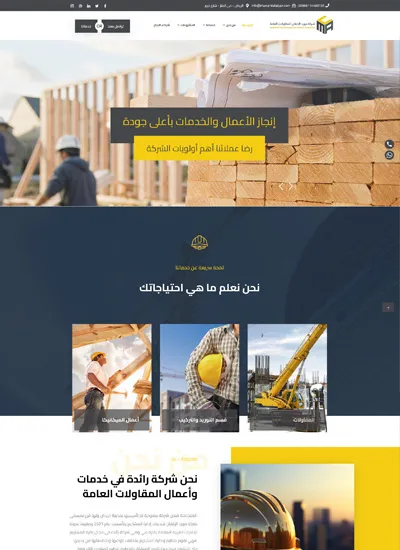
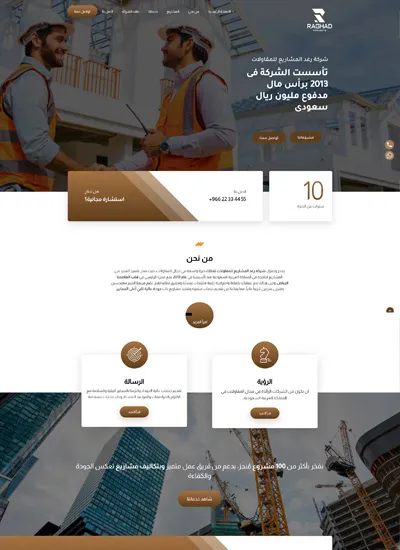
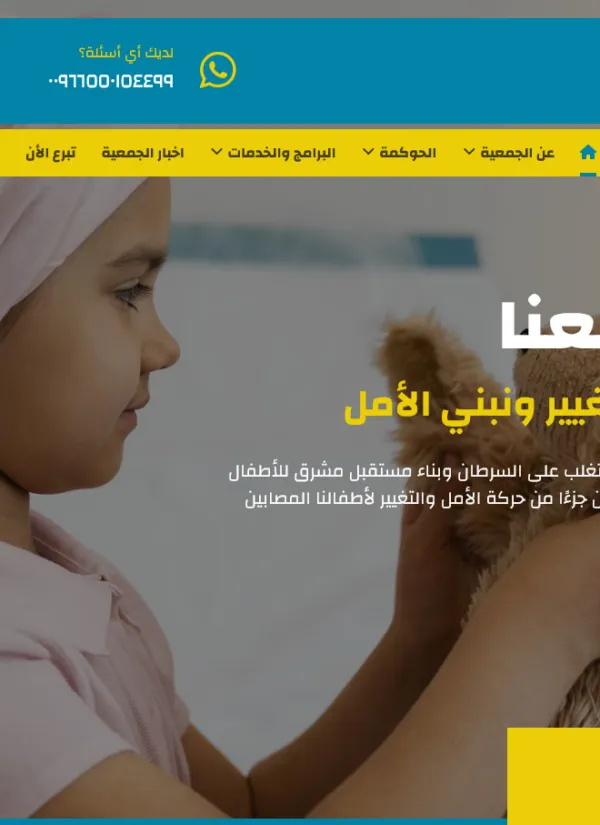
Real projects we delivered
FAQ
What’s the best free tool for Arabic keywords?
Google Search Console for your existing site, Google’s autocomplete suggestions, the “Related searches” section, and the Keyword Planner in Google Ads.
Should I target Modern Standard Arabic or dialect?
Usually headings and content in simplified standard Arabic, with common expressions included naturally where people search with them, such as the different words for “price”, “cost” and “how much”.
How many keywords per page?
One main keyword plus a number of synonyms and related questions, without stuffing.
Sources

Written from 20+ years designing websites and identities for clients in Saudi Arabia and Egypt — every tip here comes from real projects.
Want this applied to your project?
Book a free consultation — we will review your site or brand and propose a clear plan.
Book a free consultation