- Register developer accounts in your company’s name well before launch; verification can take days.
- The store page (name, description, screenshots) directly affects downloads.
- Privacy and data-safety disclosures are mandatory and must match the app’s actual behaviour.
- Most rejections relate to missing content, privacy, payments or crashes.
- Use beta testing and staged rollouts to reduce risk.
After months of development the app is ready, the team is excited and the launch announcement is scheduled. Then a message arrives from Apple: “Your app has been rejected.” Or two days before launch the team discovers the developer account isn’t open yet, because verifying the company’s details takes time. These situations are very common, and all of them can be avoided with early preparation.
In this guide we explain the steps for publishing on the App Store and Google Play as we carry them out in our mobile app service. Both stores update their policies continuously, so always rely on the latest official guidelines.
1. Developer accounts
| Apple Developer Program | Google Play Console | |
|---|---|---|
| Account type | Individual or organisation | Personal or organisation |
| Fees | Annual subscription | One-time registration fee |
| Organisation requirements | A legal entity, a D-U-N-S number and a website | Organisation details and identity verification |
| Activation time | Verification can take days | Verification can take days |
Important tip: register the accounts in your company’s name with an official email that more than one person controls, and start registration early in the project — not in the final week. Then add the developers as members with specific permissions, instead of publishing from a developer’s personal account. That way the app, its ratings and its data stay yours.
2. Preparing the store page
The store page is your app’s “home page”, and it directly affects the download decision and visibility in in-store search:
| Element | Tips |
|---|---|
| App name | Clear and short, combining the brand name with a word explaining the function where possible |
| Subtitle / short description | A sentence summarising the core value |
| Icon | Simple, distinctive and recognisable at a small size, in the brand identity |
| Screenshots | Designs highlighting the core features with short headlines, in Arabic for the Arab market |
| Preview video | Optional, showing the app in use |
| Full description | The benefit first, then the features, with words your audience searches for |
| Category and keywords | The most suitable category, and researched keywords on the App Store |
| Support and privacy links | Real pages on your website |
Prepare the page in both languages if the app is bilingual; both stores support localised pages. Read app marketing and ASO.
3. Privacy and data safety
Privacy has become a central part of review:
- Privacy policy: a working link to a page explaining what data the app collects and how it is used and protected.
- App Store privacy details: disclosure of the types of data collected and whether they are linked to the user or used for tracking.
- Google Play’s Data safety section: a similar disclosure about collection, sharing and security practices.
- Device permissions: request only what you need, with text explaining why (why the app needs location or the camera).
- Account deletion: if the app lets users create an account, it must provide a way to delete it, per both stores’ requirements.
- Tracking: on iOS, tracking users across other apps and websites requires permission through the App Tracking Transparency framework.
Most importantly, the disclosures must match the app’s real behaviour, including third-party libraries such as analytics and advertising tools. Read app security and data protection.
4. Beta testing
Before submitting for public review, distribute the app to testers: TestFlight in Apple’s ecosystem, and the internal, closed and open testing tracks in Google Play. This reveals crashes on real devices, tests installation and updates, and gives you feedback before it becomes public reviews. Note that Google Play may require some new accounts to run a closed test with a certain number of testers before public availability; check the current requirements when registering.
5. Common rejection reasons and how to avoid them
| Reason | Prevention |
|---|---|
| Crashes or features that don’t work during review | Thorough testing, and a demo account for the reviewer with clear details |
| Incomplete content or placeholder text | Review every screen: no broken links and no “coming soon” |
| An app that is too simple or just a website wrapper | Deliver real value and a genuine app experience, not a website inside a frame |
| Privacy disclosures that don’t match | An accurate inventory of the data and every library used |
| Unjustified permission requests | Request the minimum, with a clear explanation |
| Breaking payment rules | Understand when in-app purchase is required for digital content and services, and when external payment is allowed for physical goods and services |
| No account deletion | Provide a delete option within the app |
| Misleading metadata | Screenshots and descriptions that reflect the actual app |
| Using trademarks without rights | Use only your logo and names you own |
6. Staged rollout
After approval you don’t have to release to everyone at once. Google Play allows staged rollouts to a percentage of users, and the App Store allows phased release of automatic updates over several days. Use this to watch for crashes in tools such as Firebase Crashlytics before expanding. You can also schedule the release manually to coincide with your launch campaign.
7. After publishing
- Monitor ratings and reviews daily in the first weeks, and reply politely.
- Follow crash and performance reports in both stores’ consoles.
- Have a quick update ready to fix any critical issue.
- Update screenshots and the description with every major feature.
- Comply with the stores’ evolving requirements, such as targeting recent OS versions within the set deadlines. Read app maintenance.
In-app payments: the most sensitive point
Among the most complex rejection reasons are the payment rules. The general rule in both stores is that digital content and features consumed inside the app (subscriptions, digital educational content, extra features) usually go through the store’s in-app purchase system and its commission, while physical goods and services delivered outside the app (ordering a product, booking a technician, delivery, a clinic appointment) can be paid through ordinary payment gateways. There are exceptions and details that vary by app type and region and change over time, so the payment model must be settled at the planning stage, not at publishing, because it affects design, pricing and revenue. If you’ll use Saudi or Egyptian payment gateways, make sure they officially support mobile apps. Read payment gateways in Saudi Arabia.
The app name and the trademark
Before adopting the app’s name, search both stores for similar names and make sure the name doesn’t conflict with someone else’s trademark. A distinctive name makes searching and remembering easier and prevents confusion. Consider using the same name across both stores, your social accounts and your website, so clients find the app easily wherever they hear about it. If your company name is generic, add a word describing the service to help it appear in in-store search results.
Finally, keep a copy of everything you submitted to the store (texts, images and disclosures) in the project folder, to make later updates easier and to review any note from the review team.
A pre-submission checklist
- Developer accounts active in the company’s name.
- The icon in every required size.
- Screenshots for the required device sizes and in the target languages.
- Working privacy policy and support page links.
- Privacy and data-safety disclosures complete and accurate.
- A demo account for the reviewer, with instructions.
- No placeholder content or broken links.
- An account deletion option if there is sign-up.
- The age rating questionnaire completed.
- Countries and pricing set.
The bottom line
Successful publishing starts early: accounts in the company’s name, a persuasive store page, accurate privacy disclosures, beta testing, knowing the common rejection reasons, and a staged release. We handle this whole stage within our mobile app service. Read development stages, or get in touch.
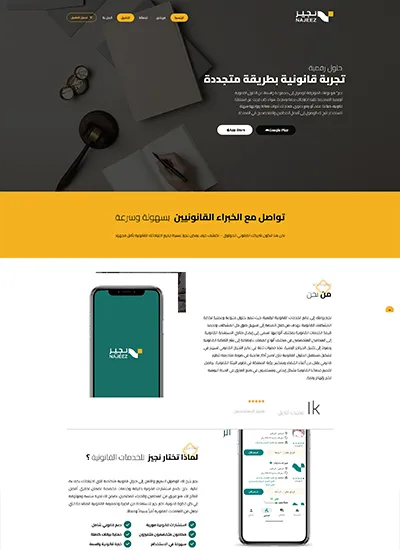
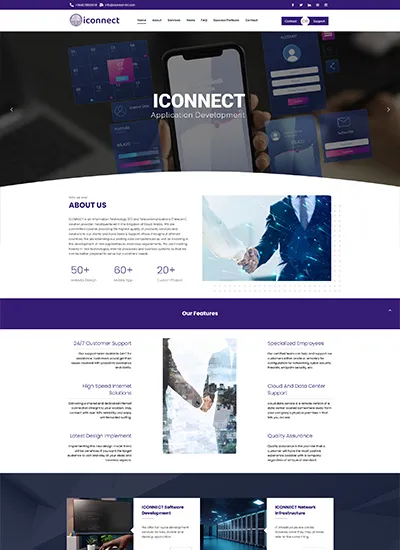
Real projects we delivered

FAQ
Should I register the developer account in my name or the company’s?
In the company’s name as an organisation account, because the developer name appears in the store and so the app stays owned by the company. Apple’s organisation account requires the company’s legal details and a D-U-N-S number.
How long does review take?
It varies by app and over time. Many reviews finish within a few days, but plan a time buffer for a possible rejection, fix and resubmission.
Can the app be published in specific countries only?
Yes. You can choose the countries and regions where the app is available in both stores.
What do I do if the app is rejected?
Read the reason carefully, fix what was requested, and explain in your reply what changed. You can contact the review team for clarification if needed.
Sources

Written from 20+ years designing websites and identities for clients in Saudi Arabia and Egypt — every tip here comes from real projects.
Want this applied to your project?
Book a free consultation — we will review your site or brand and propose a clear plan.
Book a free consultation