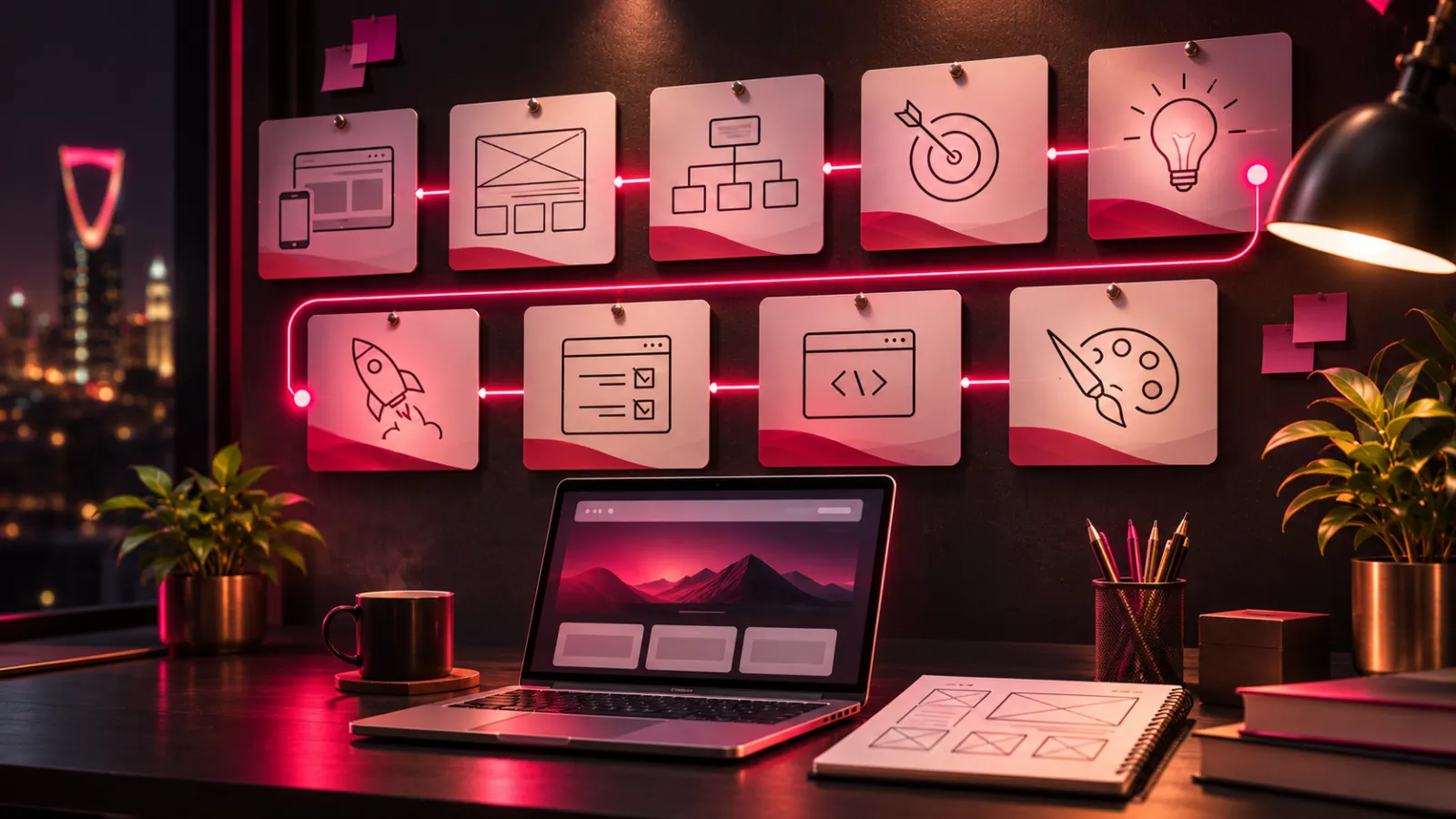
- Start with goals and audience before colours and shapes.
- The page structure (sitemap) and content come before the design, not after it.
- Designs are reviewed on mobile first, then desktop.
- Pre-launch testing covers speed, forms, languages and SEO.
- Launch is a beginning: measurement and improvement continue afterwards.
Many website projects stumble because they start with the wrong question: “Which colours do we want?”. The right question is: “What should a visitor do when they arrive?”. This is the roadmap we have followed for years, and it makes launch predictable and organised.
Stage 1: Discovery and goals (one week)
We answer the basic questions: Who is your ideal client? What do they search for on Google? What action do we want from them (a call, WhatsApp, a quote request, a purchase)? Who are your competitors, and where are their websites weak? The result is a short goals document that becomes the reference for every later decision.
- You prepare: your list of services, key clients and projects, and websites you like.
Stage 2: Keyword research
Before drawing a single page, we learn what your clients actually type: “contracting company in Jeddah” or “villa construction contractor”? This sets the page names and headings. Read our guide to Arabic keyword research.
Stage 3: Site structure (sitemap)
We draw the page tree: home, about, one page per service, work or clients, blog and contact. The rule: every important service deserves its own page targeting its own keyword. See the essential pages of a company website.
Stage 4: Content (in parallel)
We write the copy in your clients’ language and define the images needed: project photography, team photos, or scenes designed from your real work. Content is written before the final design, because the design must serve the content. Details in writing website copy.
Stage 5: Wireframes
Black-and-white layouts showing the order of sections on each page, starting with the mobile screen. This is where we decide where the contact button appears and what the visitor sees on the first screen.
Stage 6: Visual design (1–2 weeks)
We apply the identity: colours, fonts, images and icons. We design the home page and one typical inner page first, review them with you on mobile and desktop, then roll the style out to the remaining pages.
Stage 7: Development (2–4 weeks)
We build the site on WordPress with an easy dashboard, connect the forms, WhatsApp, Google Maps and analytics, and add structured data, correct URLs and languages.
Stage 8: Testing
| What we test | How |
|---|---|
| Mobile and tablet | Real devices plus emulators at several sizes |
| Speed | PageSpeed Insights and Core Web Vitals |
| Forms | Real submissions and email delivery |
| Languages | Direction, translation and switcher links |
| SEO | Titles, descriptions, sitemap and structured data |
| Accessibility | Contrast, alt text and keyboard navigation |
Stage 9: Launch and beyond
We move the site to its final hosting, enable SSL and backups, submit the sitemap to Google, and train your team to edit it. Then we follow the numbers: where do visitors come from, and which page brings in requests? We improve based on that. Read our guide to measuring performance with GA4.
Mistakes that delay launch
- Changing goals or adding pages after the design is approved.
- Content and images arriving late from the company.
- Too many reviewers and no single decision-maker.
- Postponing SEO until after launch.
Your role as project owner at each stage
A project’s success doesn’t depend on the design team alone. At every stage there is something we need from you, and the sooner it is ready, the faster the launch. In discovery we need an hour or two of the decision-maker’s time to understand the goals, clients and competitors. In content we need the raw information: services, projects, accurate figures, team and project photos, and certificates. In design we need consolidated feedback from one person authorised to approve — not scattered, possibly conflicting comments from five people. And in testing we need you to try the site yourself as a client would: submit a form, browse on your phone, and read the copy with a critical eye.
In our experience, what delays projects most is not technology but waiting for content and approvals. A project that could be finished in six weeks can stretch to four months because the photos weren’t gathered or the decision-maker was travelling. That’s why we agree at the start on a schedule that includes both sides’ deadlines, not just ours.
What you receive at the end of the project
| Deliverable | Details |
|---|---|
| The live website | On your domain, with hosting in your name or managed for you |
| Login details | An administrator account for the site, the hosting and the domain |
| Design files | The approved designs for every page |
| User guide | How to add a page, an article or a project and edit content |
| Analytics setup | Google Analytics and Search Console linked to the company account |
| Backups | A full backup at handover and an ongoing backup plan |
| Support period | Fixing any bug that appears after launch within the agreed period |
After launch: the first three months
Launch is a beginning, not an end. In the first month we monitor errors, forms and speed, and make sure Google indexes the pages. In the second month we review the first data: where do visitors come from, which pages get the most visits, and where do people leave? In the third month we propose improvements based on that data and start a regular content plan that builds visibility over the long term. Read the digital presence launch checklist and the GA4 guide.
How long does a project really take?
The durations above are estimates for a mid-sized company website. A small brochure site with ready content can be done in three to four weeks, while large multilingual sites with project databases, stores or booking systems can take two or three months. What usually lengthens a project: late content and images, many revision rounds, several decision-makers, new requirements added mid-way, and integrations with external systems that depend on other parties. What shortens it: ready content, one approver, a clear scope from the start, and mutual trust in expertise.
How we communicate during the project
We use one official channel per project, a short weekly video or phone meeting, and a written update on what’s done and what’s needed. We present designs in a live meeting to explain their logic instead of sending them as silent files, and we gather feedback in a single document so that no comment gets lost between messages. This simple discipline prevents most of the misunderstandings that happen in website projects, and it means the project owner always knows where we are and what comes next.
At the end of each stage we ask for written approval before moving to the next. It may seem formal, but it protects both sides: an approved design isn’t reopened after development has been built on it, and nobody is surprised by a change that wasn’t agreed.
Content: the factor that decides quality more than design
Many project owners focus on how the site looks and leave the copy until the last moment, then fill the pages with generic phrases like “we are a leading company offering the best services”. The result is a beautiful site that convinces nobody and doesn’t show up in search. Good content answers the client’s real questions: what exactly do you offer, for whom, how are you different, what’s the proof, and what happens after I get in touch? That’s why we start writing content early, alongside the structure, and build the design around real copy rather than placeholder text — because the real length of a headline and the actual number of points change the design a lot. Read website copywriting.
The same goes for images: real photos of your projects, team and office build trust that the best stock photos cannot. If you don’t have good photos, plan a professional photo shoot at the start of the project, not the end.
The bottom line
A successful website is the result of an organised process, not a moment of inspiration. Follow the stages, prepare content early, and let the visitor’s goal be your compass. If you would like us to take this journey with you, start with a free consultation or explore our website design service.
Real projects we delivered
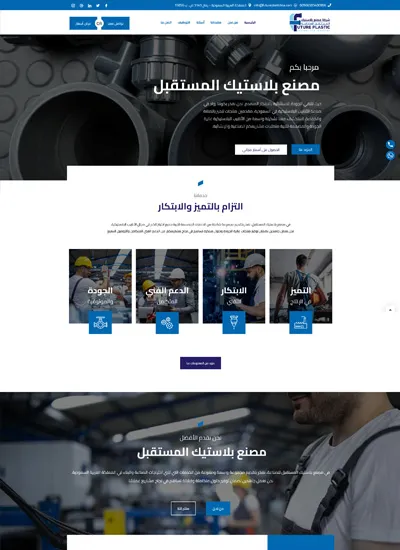
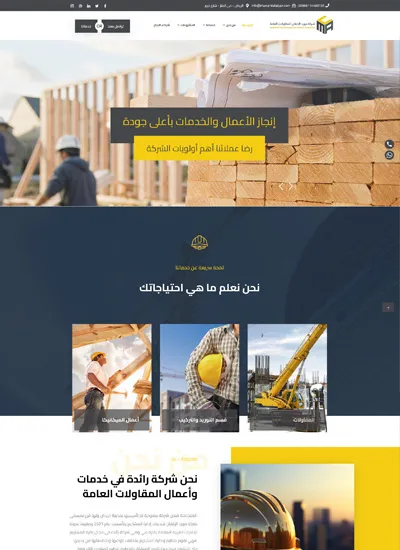
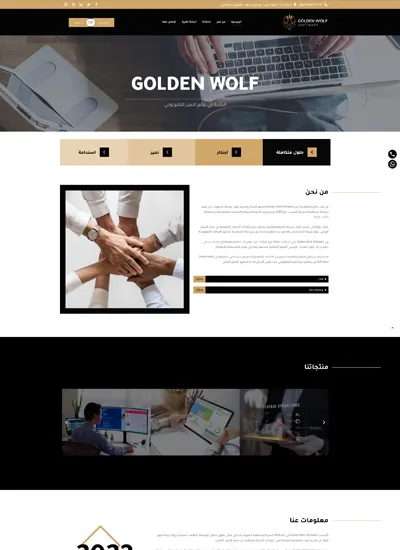
FAQ
What is the longest stage in a website project?
Usually content, because it depends on the company preparing and approving copy and images. That’s why we start it early, in parallel with design.
Can a website be launched in phases?
Yes, and we sometimes recommend it: launch the core pages first, then add the blog, case studies and extra features.
What should I prepare before the first meeting?
Your logo and identity, examples of websites you like, your list of services, your key projects and clients, and the main goal of the site.
Sources

Written from 20+ years designing websites and identities for clients in Saudi Arabia and Egypt — every tip here comes from real projects.
Want this applied to your project?
Book a free consultation — we will review your site or brand and propose a clear plan.
Book a free consultation