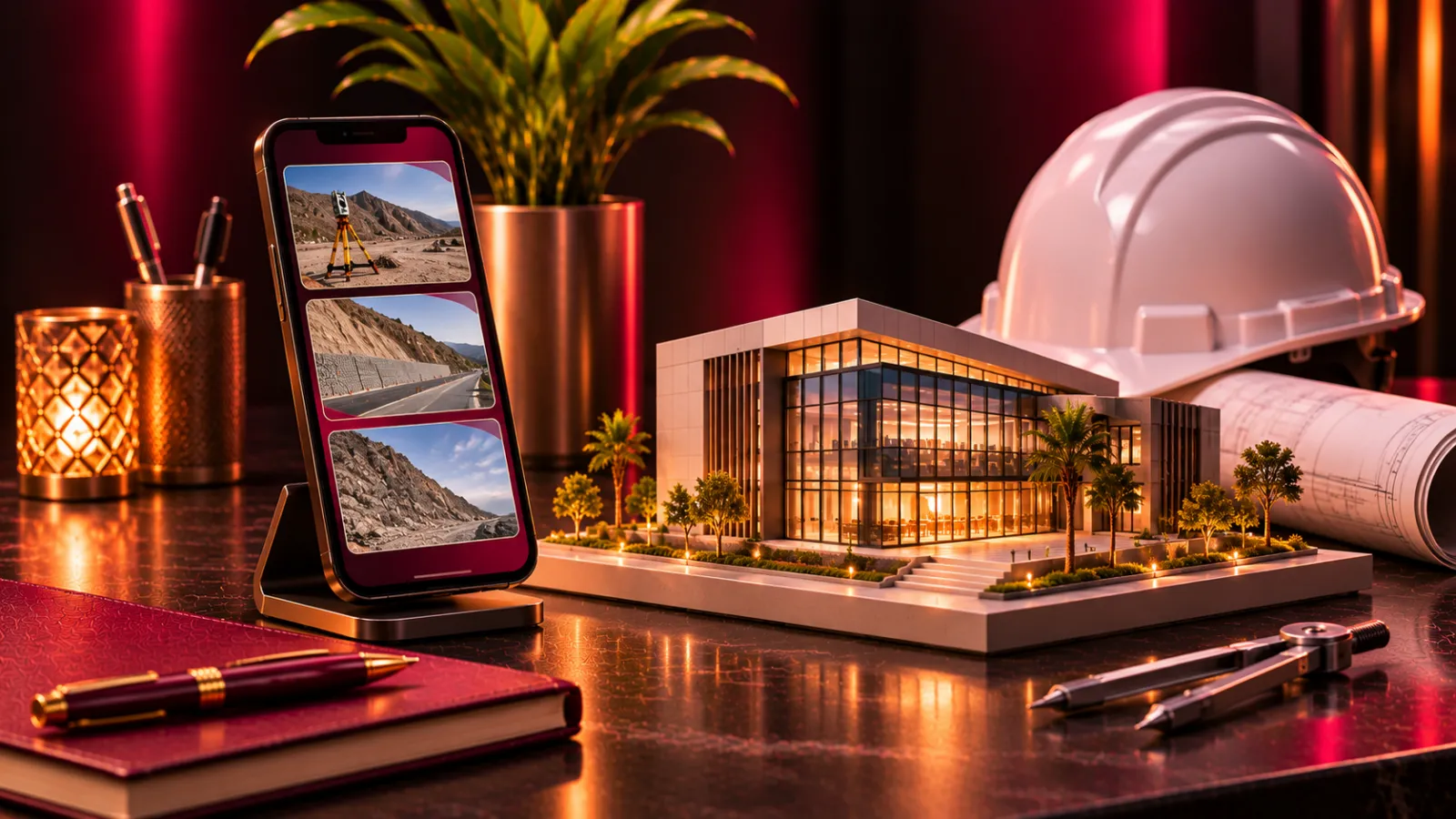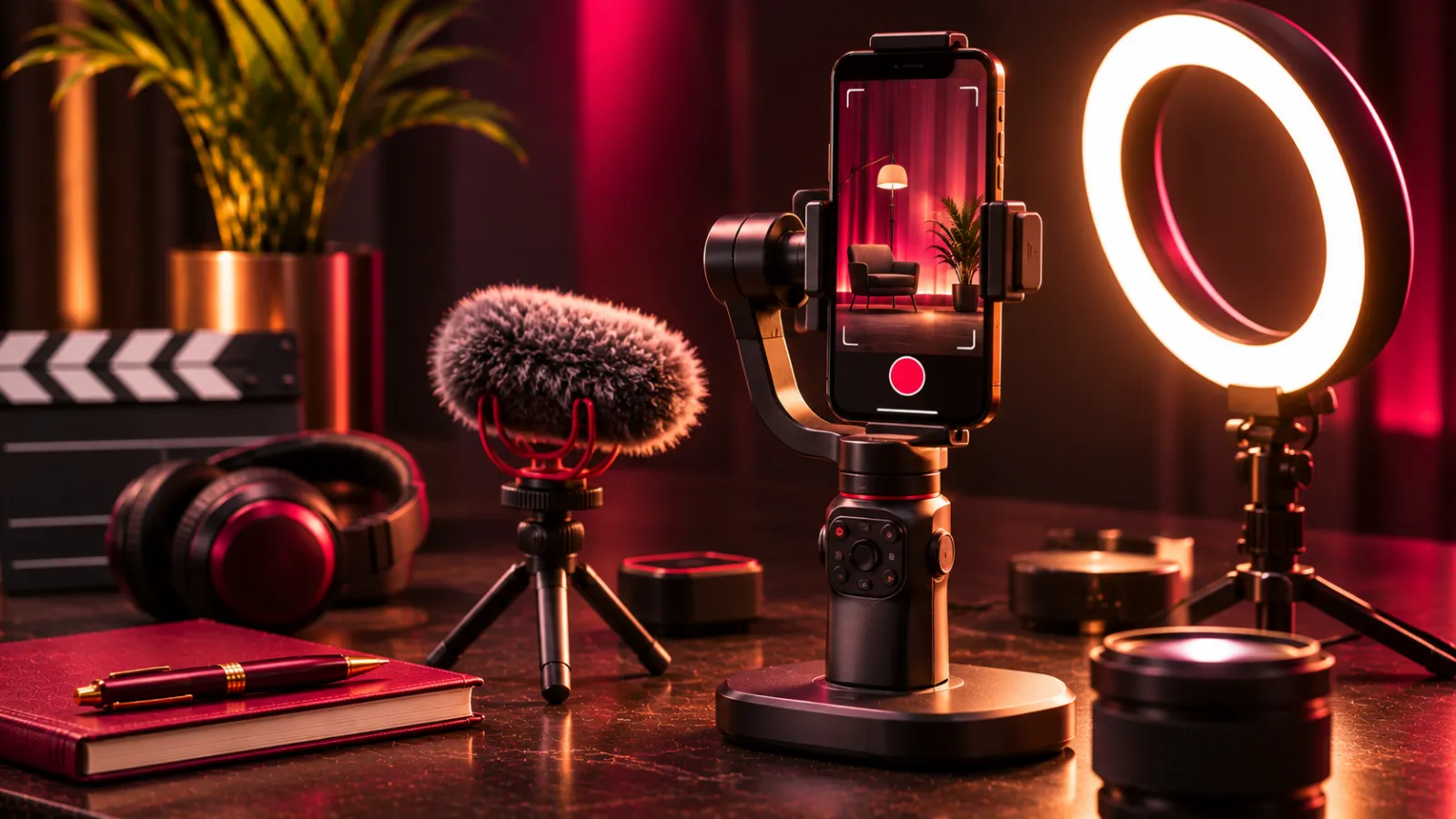
- The first three seconds decide a video’s fate; start with the hook, not the logo.
- Real footage from the workplace often outperforms polished advertising production.
- A modern phone, good lighting and a simple microphone are enough for most content.
- Captions are essential because many people watch without sound.
- Plan recurring series instead of hunting for a new idea for every video.
A few years ago video was a marketing luxury: a contract with a production company, a shoot day, weeks of editing, and one introductory video shown on the website and at exhibitions. Today the equation has changed completely. Instagram, TikTok, YouTube, Snapchat and LinkedIn all push short vertical video to the top and give it reach they don’t give to still images. Audiences have grown so used to it that they now expect it from companies too, not just from creators.
The good news is that successful short video doesn’t need a huge budget. On the contrary, many of the most successful company videos were filmed on a phone at the workplace — because they are real. In this article we explain how to build a regular short-video production system, as we do within our social media management service.
Why short video matters to your company
- Reach: platforms show short video to non-followers more than any other format — a chance to reach new audiences without paying for ads.
- Trust: seeing the place, the team and the real work builds trust that designs can’t.
- Explanation: some services are hard to explain in pictures; 30 seconds of video makes clear what would take a whole paragraph.
- Reuse: the same video works on four or five platforms, on the website and in ads.
The structure of a successful short video
| Part | Approx. length | Goal | Example |
|---|---|---|---|
| The hook | 0–3 seconds | Stop the scroll | “This mistake costs villa owners thousands every summer” |
| The promise | 3–6 seconds | Make clear what the viewer will get | “In 30 seconds I’ll show you how to avoid it” |
| The content | 6–35 seconds | Deliver the value quickly and with rhythm | Shots of the work with a short explanation |
| The close | Last 3–5 seconds | Invite a step | “Save this video, and message us for a consultation” |
The biggest mistake we see in company videos is starting with the logo and a long animated intro. Viewers don’t know you yet and won’t wait five seconds to see a logo. Start with the idea directly, and place the logo lightly in a corner or in the final seconds.
Video ideas for every sector
| Sector | Ideas |
|---|---|
| Contracting and engineering | Project progress as a timeline, explaining a construction stage, before and after, a tour of a delivered project, a piece of equipment and its role |
| Factories | The production line, quality checks, packing and shipping, the product in use |
| Clinics | The doctor answering a common question, a clinic tour, procedure steps (within the regulations) |
| Stores | Unboxing, the product in use, comparisons, preparing orders |
| Car services | Before and after, the stages of protection or polishing, explaining the difference between options |
| Tech companies | A problem and solution in 30 seconds, the product screen in use, the team |
| Events | Hall setup in time-lapse, event moments, attendee reactions |
Recurring series: the secret of consistency
Hunting for a new idea for every video is exhausting and kills consistency. The solution is series: a fixed format repeated with different content, such as “Question of the week”, where an expert answers a client’s question; “A project in 30 seconds”, showing a project each week; or “Common mistake”, correcting a misconception in the sector. A series makes planning and filming easier, makes the audience wait for the next episode, and gives the account a personality.
The basic kit: less than you think
| Tool | Why |
|---|---|
| A modern phone with a good camera | Enough for most content at 4K or 1080p |
| A small wireless microphone | Bad sound makes people leave faster than bad picture |
| A tripod and a handheld gimbal | Steady shots and smooth movement |
| A small light | For indoor shooting and filming faces |
| An editing app | Cutting, captions, licensed music, 9:16 format |
Filming tips
- Film vertically at 9:16, leaving space at the top and bottom for the platform’s interface.
- Light from the front: face the window or light source, don’t stand with your back to it.
- Many short shots: film 3–5 second clips from different angles instead of one long take.
- Movement: move the camera slowly, or move the subject in front of it, to add energy.
- Sound: film somewhere relatively quiet or use the microphone.
- Safety and privacy: on construction sites wear safety equipment, don’t film clients or beneficiaries without consent, and don’t show sensitive information.
Editing and captions
A large share of users watch video without sound, especially in public places and at work. So add clear captions in the brand typeface, in the middle of the screen away from the platform’s buttons. Keep the pace fast: cut every moment of silence or repetition. Use licensed music from the platforms’ own libraries or commercial music libraries, and avoid copyrighted music in ads in particular.
Design a static cover for each video with a short title, because that’s what shows in the account grid, and it should be consistent with the rest of the grid. Read designing posts with a consistent identity.
A practical example: one shoot day for a whole month
Suppose you run a contracting company with three projects under way. Instead of trying to film every day, set aside half a day at the start of the month for a tour of the three projects with one person carrying the phone, the microphone and a shot list prepared in advance. At each project, film: a wide shot of the site, close-ups of the work in progress, the site engineer explaining the construction stage in 20 seconds, and shots of equipment, the team and safety standards. Then, back at the office, film short answers to three frequently asked client questions.
From this material alone you can produce eight to twelve short videos for the month: three “a project in 30 seconds”, three “question and answer”, two on construction stages, one on safety and one on the team — plus dozens of stills for posts and stories. Planning the shot list in advance is what turns half a day into a month of content and makes consistency possible without filming becoming a daily burden on the team.
When is professional production worth it?
Daily phone video doesn’t remove the need for professional production in some cases: a company introductory film shown on the website, at exhibitions and in presentations; a launch video for a product or major project; paid ads with large budgets; and documenting an important project that will be used for years. The rule: professional production for “permanent” content, the phone for “daily” content. And one well-planned professional shoot day can capture material for dozens of short videos.
How to measure a video’s success
| Indicator | What it means |
|---|---|
| Viewer retention | Do people finish the video? Where do they drop off? |
| Views from non-followers | Is the video reaching new audiences? |
| Saves and shares | Is the content useful enough to come back to? |
| Profile visits and messages | Does the video lead to real interest in your company? |
If people leave in the second second, the hook is the problem. If they leave in the middle, the pace is slow. Read performance indicators.
Where to use video beyond the platforms
Don’t leave your videos locked inside social media. Put the best of them on your website’s service and project pages, as a link in your email signature, in client presentations, and on a YouTube channel organised into playlists. A video you made once can work for you for years.
Mistakes that kill views
- A logo intro that lasts five seconds.
- A horizontal video posted as a reel with black bars.
- Poor sound, or music louder than the voice.
- No captions.
- Stiff advertising content that offers no value.
- Posting a video with another platform’s watermark.
The bottom line
Short video is the platforms’ current language, and companies that master it reach wider audiences and build trust faster. Start with a strong hook, film the reality, create recurring series, add captions and measure retention. We plan and produce short video within social media management. Read also the monthly content plan, or get in touch.
Real projects we delivered

FAQ
How long should a reel be?
There’s no fixed ideal length, but videos between 15 and 45 seconds suit most company ideas. What matters is keeping viewers until the end.
Do I need a professional videographer?
Not always. For daily video, a modern phone and someone who knows the basics are enough. Major introductory videos and the company film deserve professional production.
Can I post the same video on Instagram, TikTok and YouTube Shorts?
Yes, with small adjustments: remove each platform’s watermark, and adapt the caption, cover and hashtags.
Do I have to show my face?
Not necessarily, but real faces from the team build more trust. You can start with shots of hands, work and the place, then bring people in gradually.

Written from 20+ years designing websites and identities for clients in Saudi Arabia and Egypt — every tip here comes from real projects.
Want this applied to your project?
Book a free consultation — we will review your site or brand and propose a clear plan.
Book a free consultation