
- Response time is part of the impression; set a target and hold the team to it.
- Ready replies save time, but they must be personalised for each client.
- A public complaint is a chance to show your professionalism in front of everyone.
- Move personal details to private messages; keep the apology and the solution public.
- Prepare a written crisis plan before you need it.
A customer commented on a clinic’s post: “I booked an appointment a week ago and nobody has contacted me.” Three days later the comment still has no reply, and below it are five more comments: “Same here.” It’s no longer one customer’s complaint but a public message to everyone visiting the account: “This clinic doesn’t reply.” The painful part is that the original problem was probably simple, and a single reply the same day would have turned it into proof that the clinic cares.
Community management is the least glamorous part of social media, but it has the biggest impact on reputation. In this article we explain how we organise it within our social media management service.
Types of interaction and how to handle each
| Type | Example | How to handle it |
|---|---|---|
| General enquiry | “How much is it?”, “Where are you located?” | A fast, helpful reply and an invitation to DM or WhatsApp for details |
| Positive comment | “Great work” | A short personal thank-you, not a uniform automated reply |
| Legitimate complaint | A delay, a mistake, poor service | A public apology, ask for details privately, solve it, follow up |
| Criticism without details | “Your service is bad” | A polite question about the experience to understand the problem |
| Wrong information | An untrue claim about the company | A calm correction with the facts, without arguing |
| Abuse or spam | Insults, suspicious links, ads | Hide or delete according to a published policy, and block repeat offenders |
| Specialised technical question | A medical, engineering or legal question | Pass it to the specialist, and don’t give public advice that could be wrong |
Response time: a standard you must keep
Set your standards in writing and share them with the team:
- Private messages: within one to two hours during working hours.
- Comments: the same working day.
- Complaints: a first reply within an hour, even if it’s “We’re sorry — we’re looking into it now and will come back to you.”
- Outside working hours: an automatic message stating when you’ll reply and the emergency channel if there is one.
Use the available tools: Meta Business Suite’s unified inbox for Facebook and Instagram, and quick replies and the greeting message in WhatsApp Business. Read WhatsApp marketing.
Ready replies: how not to sound automated
Ready replies save time and keep information consistent, but customers hate feeling they’re talking to a machine. The rule: the structure is ready, the details are personal. For example:
| Bad automated reply | Personalised ready reply |
|---|---|
| “Thank you for contacting us, we will reply soon.” | “Hello Ms Noura, thanks for asking about our physiotherapy sessions. We’ve sent you the details and prices privately, and we’d be happy to book you an appointment this week.” |
Build a library of replies for the twenty most frequent questions: prices, locations, opening hours, payment methods, shipping, warranty, careers and how to book. Update it whenever information changes.
The public complaint: a four-step framework
- Acknowledge and apologise: “We’re sorry about your experience — this isn’t the standard we want for our customers.” No excuses, no blaming the customer.
- Move the details to private: “We’ve sent you a message to get the order number and resolve this right away.” This protects personal data and avoids a public argument.
- Actually solve the problem: a reply without a solution increases anger. Contact the responsible department and follow up.
- Close the loop publicly: after solving it, reply to the original comment: “We’re glad we resolved this with you — thank you for your patience.” Many customers come back and write a thank-you themselves.
This framework turns a complaint into public proof that the company cares and solves problems — stronger than ten promotional posts.
What must never happen
- Arguing with a customer publicly or accusing them of lying.
- Publishing the customer’s data or order details in a public reply.
- Deleting legitimate complaints — the customer will often repost them as a screenshot somewhere else.
- Sarcastic or “clever” replies to an angry customer.
- Promises the team can’t keep.
- Giving medical, legal or engineering advice in a public comment.
A community policy: write it and publish it
Put a short policy on your website or accounts explaining what will be hidden or deleted: abuse, discrimination, personal data, spam and unauthorised ads. A published policy protects you from accusations of arbitrary deletion and gives your team a clear reference for decisions.
Crisis management: when it gets bigger
A crisis is a situation that could affect the company’s reputation widely: a complaint that spreads, a mistake in a post, a product problem, or negative news. The crisis plan must be written before it happens:
| Element | What the plan defines |
|---|---|
| Crisis team | Who decides, who writes, who approves and who speaks officially |
| Crisis levels | When the issue stays with the social team and when it escalates to management |
| First actions | Pause scheduled posts and ads, gather the facts, issue a holding reply |
| Statement templates | A holding statement, a clarification, an apology |
| Follow-up | Monitoring what’s written, regular updates, a review after the crisis |
The two most important crisis rules: speed with accuracy (a quick holding reply saying you’re looking into it, then details once confirmed), and consistency (one message across all channels, from one source).
Proactive engagement: don’t wait for people to talk to you
Community management isn’t only reactive. Active accounts take the initiative: they ask their audience questions, thank people who share their content, engage with posts by customers and partners who mention the brand, and reshare positive customer experiences with permission. This proactive engagement builds relationships and turns silent followers into ambassadors. Set aside fixed time for it every day — even fifteen minutes — after finishing the replies.
It’s also important to monitor what’s said about your brand outside your accounts: Google reviews, mentions in other people’s posts, and discussions in groups. A polite reply to a negative Google Maps review, using the same four-step framework, has a big effect on the decision of whoever reads the reviews before visiting you. Read local SEO and Google Business Profile.
Training the team
Whoever replies to customers is the company’s voice. Give them a short guide containing the tone of voice, examples of good and bad replies, up-to-date service and price information, a list of who each type of enquiry goes to, and the limits of what they can promise. Review a sample of replies together every month to keep improving.
Security and permissions
Many crises start with a permissions problem: a hacked account posting strange content, or a former employee who still has access. Protect your accounts with two-factor authentication, grant access through business management tools rather than sharing passwords, and review who has access every three months and whenever an employee leaves.
An illustrative example: a day in an online store’s inbox
On Sunday morning the community manager at an online store finds thirty messages from the weekend. They start by sorting: complaints first, then questions about existing orders, then product questions, then general comments. Two complaints about late shipping get a reply with the tracking number after checking with the courier. Five questions about sizes get a personalised ready reply with a link to the size guide. A sarcastic comment on an ad gets a polite reply clarifying the offer. And a comment containing a customer’s phone number is hidden immediately to protect their privacy, and its author is messaged. Within an hour the inbox is clear, and customers see a living, organised account.
The bottom line
Engagement is where social media tests your brand’s promises. Set a response time, prepare personalised replies, handle complaints with a clear framework, write a community policy and a crisis plan, and protect your accounts. We handle community management within social media management. Read also the complete guide to managing accounts, or get in touch.
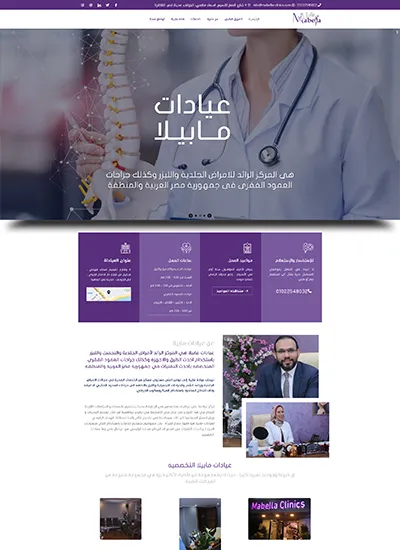
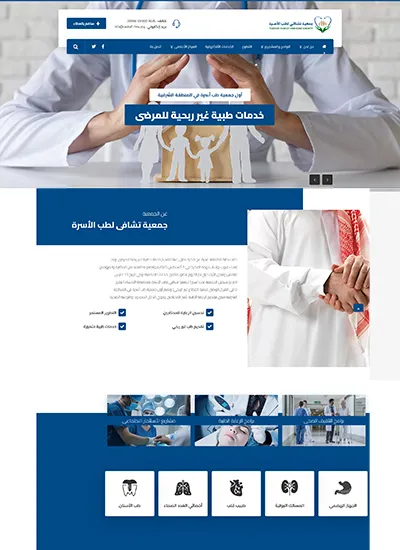
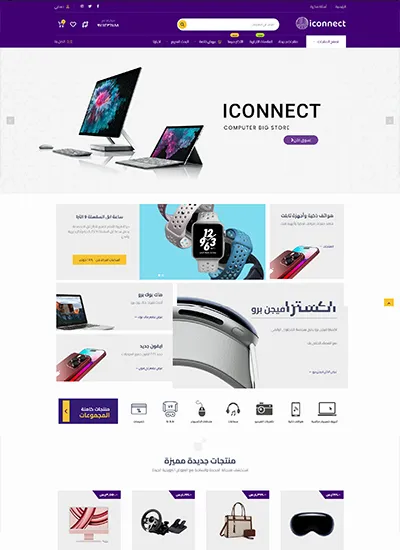
Real projects we delivered
FAQ
Should I delete negative comments?
Don’t delete legitimate criticism; answer it professionally. Only hide or delete what breaks the platform’s policy or your community policy: abuse, personal data, spam and inappropriate content.
How fast should we reply?
During working hours, ideally reply to messages within an hour or two and to comments the same day. Outside working hours, use an automatic message saying when you’ll reply.
Who should reply?
A trained person who knows the company, its services and policies, with a clear path for passing technical or financial cases to specialists.

Written from 20+ years designing websites and identities for clients in Saudi Arabia and Egypt — every tip here comes from real projects.
Want this applied to your project?
Book a free consultation — we will review your site or brand and propose a clear plan.
Book a free consultation