
- Ready-made platforms are faster and easier to start with; WooCommerce offers more flexibility and ownership.
- Calculate the total cost over two years: subscription, commissions and add-on apps versus hosting and maintenance.
- For brands that rely on content, SEO and distinctive design, WooCommerce is usually the better choice.
- For a quick start with a small team and no technical expertise, ready-made platforms fit well.
- You can start on a ready-made platform and move later, but plan how to migrate products and URLs.
“Should I open my store on Salla, Zid or WooCommerce?” We hear the question every week. There’s no single right answer; there’s an answer that suits your stage, your budget and your ambition. Here’s the comparison as we explain it to our clients.
An overview
- Ready-made Saudi platforms (such as Salla and Zid): a subscription service — you open an account, add your products, and payments, shipping and local integrations are ready to go.
- WooCommerce: an open-source plugin for WordPress, installed on your own hosting; you own everything and control everything.
The detailed comparison
| Criterion | Ready-made platforms | WooCommerce |
|---|---|---|
| Speed to launch | Very fast | Moderate |
| Technical expertise needed | Low | Moderate (or a technical team) |
| Design | Templates with limited customisation | Unlimited custom design |
| Local payments and shipping | Built in and ready | Through extensions and set-up |
| SEO and content | Good basics | Full control + a strong blog |
| Ownership | Tied to the platform | Complete |
| Cost | Monthly/annual subscription + commissions and apps | Hosting + development + maintenance |
| Custom integrations (ERP, warehouses) | Through available apps | Any integration that can be coded |
| Maintenance and security | The platform’s responsibility | Yours, or your maintenance provider’s |
When do we recommend ready-made platforms?
- A new store that wants to test the market quickly.
- A small team without technical expertise.
- Standard products that don’t need complex customisation.
- Reliance on social media rather than search for traffic.
When do we recommend WooCommerce?
- A brand that wants a distinctive design and a bespoke experience.
- Reliance on SEO and content to attract visitors.
- A store integrated with an existing company website.
- Custom integrations with internal systems, or bespoke pricing for business customers (B2B).
- A wish for complete ownership of the data and the platform.
Calculate the total cost over two years
- Ready-made platform: subscription × 24 months + expected commissions + add-on apps + design.
- WooCommerce: development and design + two years’ hosting + paid extensions + maintenance.
The figures often end up close, and the real difference becomes flexibility and ownership.
Practical scenarios
A new perfume store with fifty products: a ready-made platform such as Salla or Zid is a fast, suitable choice, with a custom storefront design in the brand’s identity and ready-made integrations for payments and shipping. The focus here is on photography and marketing, not technology.
A distributor selling to consumers and businesses at different prices: may need WooCommerce or a custom solution, because pricing by customer type, wholesale orders, and integration with accounting and inventory systems demand more flexibility than ready-made packages usually offer.
A brand with strong content and a blog that wants a store within its website: WooCommerce brings the store, content and SEO together in one system, which strengthens search visibility.
Moving between platforms
You might start on a ready-made platform and need to move later, or the reverse. Migration is possible but needs planning: moving products and images, customer and order data as far as both platforms and the regulations allow, redirecting old URLs to preserve SEO, reconnecting payments and shipping, and telling customers about any change to their accounts. So when making your first choice, think about the next two or three years, not just the launch. Read migrating your website without downtime.
What the platform doesn’t decide
The platform is a tool; success comes from things the platform doesn’t change: product quality, photography, prices, delivery speed, customer service, marketing and trust. An excellent store on a ready-made platform beats an average store on the most powerful one. So don’t spend months agonising between platforms; choose what suits your stage against clear criteria, get going, and focus on what really makes the difference.
Questions that settle the decision
- How many products will you be selling in a year’s time?
- Do you need special pricing or wholesale selling?
- Do you have an accounting or inventory system that must be integrated?
- Are content and a blog a core part of your marketing?
- Who will run the store technically?
- What is your monthly budget for subscriptions, extensions and maintenance?
From our work
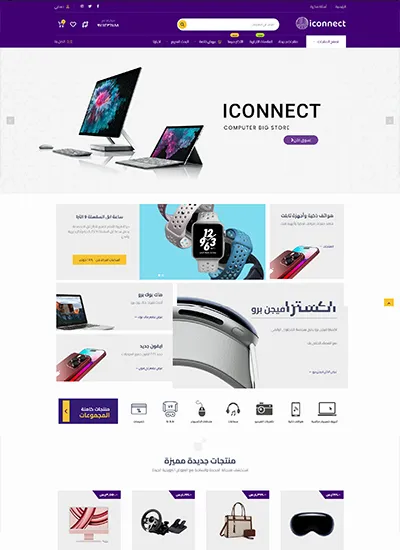
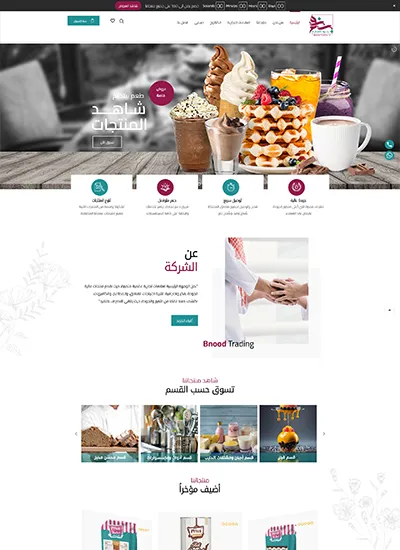
We build stores on WooCommerce and create custom storefronts to suit each client’s needs, as with Bnood and AEstore, and we help clients choose before they start. Explore our online store service.
Hidden costs in each option
Ready-made platforms look cheaper at first, but do the sums: the monthly subscription for the plan you actually need rather than the basic one, the paid apps and add-ons you’ll require, commission rates if any, and the cost of a custom storefront design. WooCommerce looks free, but do the sums there too: good hosting, paid extensions, maintenance, updates and security, and a developer’s time for every change. The fair comparison is the total cost over two years in both cases, alongside the value of the flexibility and ownership you get.
SEO on the different platforms
If much of your expected revenue will come from Google search, compare SEO capabilities: control over URLs, titles and descriptions, structured data for products, page speed, and the ability to build a blog and strong content linked to your products. WooCommerce gives complete control; the ready-made platforms have improved a great deal here, but within limits that vary from one platform to another. Read our SEO guide and structured data.
Technical support, and who carries it
On ready-made platforms, the platform handles the servers, updates and basic security, and you deal with its support team. With WooCommerce, you or your developer handle all of that. So if you choose WooCommerce, make sure you have a maintenance contract and managed hosting, so the store doesn’t become a technical burden that distracts you from selling.
What about an app?
Some ready-made platforms offer a mobile app for your store on certain plans, a useful feature for stores with repeat customers. With WooCommerce you can build an app that connects to the store through APIs. But don’t let an app drive your choice of platform at the start; most new stores need a fast mobile web store first, then assess an app once the base of repeat customers is clear. Read app or website.
The practical summary
A ready-made platform for a quick start and simple operations, WooCommerce for flexibility, ownership and content, and custom development for very particular cases. Choose based on your own answers, not on what your competitor uses.
Advice from our experience
We’ve seen stores launch successfully on ready-made platforms and then move to WooCommerce once they grew and needed customisation, and we’ve seen stores start with complex, expensive solutions before selling a single product. The rule we recommend: start with the simplest solution that meets your first year’s needs to a high standard, while making sure you can export your data later. Put your energy into the product, marketing and customer service, because they’re what ultimately decide success.
Content before platform
Whatever the platform, prepare before launch: consistent photos for every product, original descriptions, a logical product categorisation, written shipping, returns and privacy policies, and an About page that tells the brand’s story. This content moves with you if you ever change platform, and it’s what makes the real difference to conversion and SEO. Platforms get replaced; good content is an asset that compounds.
Questions we hear often
Can the store be connected to my accounting system? On most platforms, yes, through ready-made or custom integrations, though how easy it is depends on the system. Ask before you choose, not afterwards.
Can I sell digital products and services? Yes, on both, with differences in flexibility and delivery methods.
Do I own my customer data? Check the platform’s terms and whether you can export product, customer and order data.
The right decision is the one that lets you sell quickly today and grow confidently tomorrow, without the platform locking you into its limitations.
The bottom line
Start on the platform that suits your stage, and plan for the future. If you’d like a neutral opinion on your case, book a consultation or explore our online store service. Also read how to start a store in Saudi Arabia.
Real projects we delivered

FAQ
Can I move my store from Salla or Zid to WooCommerce later?
Yes, products and customers can usually be migrated, but URLs change and need 301 redirects to preserve SEO, so it’s best to plan the move early.
Which is better for SEO?
WooCommerce gives you more control over URLs, content, structured data and a fully integrated blog, while ready-made platforms provide good basics with less control.
Is WooCommerce free?
The plugin itself is free, but you need hosting and a domain and may need paid extensions for payments and shipping, as well as design and maintenance.

Written from 20+ years designing websites and identities for clients in Saudi Arabia and Egypt — every tip here comes from real projects.
Want this applied to your project?
Book a free consultation — we will review your site or brand and propose a clear plan.
Book a free consultation