- Start with specific products and a clear audience before building a huge catalogue.
- Register your business properly and document your store according to the relevant authorities’ requirements.
- Offer local payment methods (mada, Apple Pay and buy-now-pay-later options).
- Make shipping and the returns policy clear before purchase.
- Product photography and store speed on mobile decide most sales.
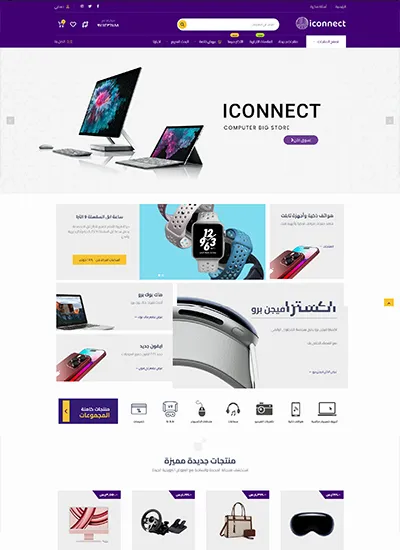
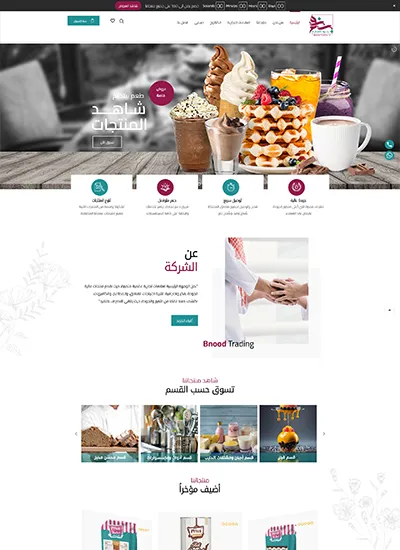
A new online store opens in Saudi Arabia every day, and many of them close within months. The difference between a store that grows and one that stalls is rarely the product alone; more often it’s planning, experience and trust. We’ve designed stores such as Bnood and iConnect Store, and this is the roadmap we recommend.
Decide what you’re selling, and to whom
- What problem does your product solve?
- Who is the buyer? (Individuals, businesses, restaurants…)
- Why would they buy from you rather than a competitor or the big marketplaces?
- Does your margin leave room for shipping and marketing costs?
The Bnood store, for example, supplies shops and restaurants with bakery and confectionery supplies; a clear audience means clear design and marketing.
The regulatory side
Ecommerce in Saudi Arabia is governed by the E-Commerce Law and usually requires: registering the business (a commercial registration or freelance document, depending on the case), displaying the store’s details and contact information, and clear returns and privacy policies. Check the current requirements with the Ministry of Commerce and the Saudi Business Center. The details are in our guide to the regulatory requirements for online stores.
Choose your platform
| Option | Advantages | Limitations |
|---|---|---|
| Ready-made Saudi platforms (Salla, Zid) | Fast launch, built-in payments and shipping, local support | Limited customisation, subscription fees and commissions |
| WooCommerce on WordPress | Full flexibility, custom design, ownership, strong SEO | Needs hosting and maintenance |
| Shopify | Strong globally | Arabic support and local payments need setting up |
The full comparison is in Salla and Zid or WooCommerce?
Payment
Saudi shoppers expect mada and Apple Pay, and many prefer “buy now, pay later” options. Every missing payment method means buyers walking away. Read our guide to payment gateways.
Shipping and returns
Choose your couriers, the cities you cover, shipping costs and times, your free-shipping threshold and a clear returns policy. Show them on the product page and in the basket, not on a hidden page. Read our shipping guide.
Design and the buying experience
- A home page that shows categories, best sellers and offers.
- Product pages with multiple photos, a description, specifications and reviews. Read product page design.
- Easy search and filtering.
- Checkout in as few steps as possible, with guest checkout.
- High speed on mobile.
Launch and marketing for your first 100 orders
- Your existing customers and contacts: a launch discount code.
- Social media with content showing the product in use.
- Google Shopping ads and ads on direct purchase keywords.
- WhatsApp Business for quick replies. Read marketing on WhatsApp.
- Asking your first buyers for reviews.
Measure and improve
Conversion rate, average order value, abandoned baskets, traffic sources. Read reducing abandoned baskets.
What budget does a store need at the start?
The budget for launching a store isn’t limited to its design. Think in five lines: the platform and design (a ready-made platform subscription or custom store development), content (product photography and descriptions), operations (payment gateway fees, couriers and packaging), marketing (ads for the first months and social content), and the stock itself. Many new stores spend most of the budget on design and have too little left for marketing, so the beautiful store sits without visitors. The right balance sets aside a clear share for the first three months of marketing and improvement. Read Salla and Zid or WooCommerce.
Common mistakes when launching a store
- Launching with lots of products and poor photos: twenty products with excellent photos beat two hundred with bad phone pictures.
- No clear policies: shipping, returns and warranty aren’t written down, so the customer hesitates.
- Limited payment methods: Saudi shoppers expect mada, Apple Pay, cards and perhaps instalments.
- Ignoring mobile: most orders come from phones.
- No one answering questions: unanswered WhatsApp messages kill orders.
- Launching without tracking: you don’t know where buyers came from or where visitors drop off.
Your store and your brand
A store that looks like a stock template used by hundreds of others doesn’t build loyalty. A clear visual identity, photography in a consistent style, branded packaging, and emails and thank-you messages in one tone of voice all make customers remember you and come back. In a market crowded with stores, standing out in experience and brand is what justifies your prices and reduces your dependence on discounts. Read product photography and product page design.
When should you expand?
After your first hundred orders you’ll have real data: the best-selling products, the channels that convert best, the recurring questions and the reasons for returns. That data decides your next step: widening the range in the successful category, improving the weaker product pages, increasing the budget for the best channel, or adding features such as subscriptions and loyalty. Expansion based on data is far less risky than expansion based on enthusiasm.
From our work
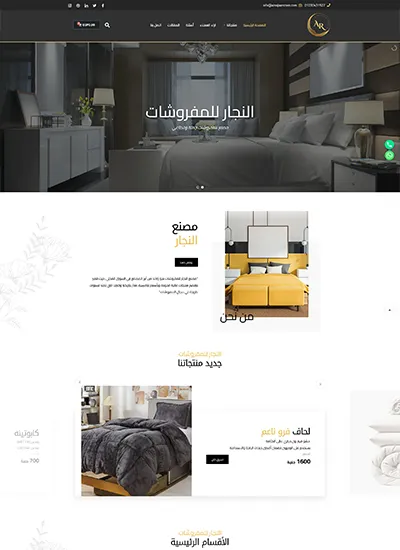
We’ve built stores such as Bnood, iConnect Store and Al Najjar, integrating payment gateways and couriers and preparing product pages for mobile. Explore our online store service.
Your store, social media and WhatsApp
In Saudi Arabia and Egypt, many sales start on Instagram, Snapchat or TikTok and finish in the store or on WhatsApp. So connect the channels: a product catalogue on Instagram and Facebook linked to the store, direct product links in stories and posts, WhatsApp Business for quick pre-purchase questions, and order confirmation and follow-up messages. The store is where purchases and trust are completed; social media is where discovery happens. Read marketing on WhatsApp and paid social ads.
Customer service: your edge over the big stores
You won’t always beat the big stores on price or delivery speed, but you can beat them on personal attention: quick, friendly replies, honest advice before purchase, follow-up after delivery and flexible problem-solving. A customer who feels looked after comes back and recommends you, and that’s the cheapest marketing there is.
Metrics to track from week one
| Metric | What it tells you |
|---|---|
| Conversion rate | The share of visitors who buy; if it’s low, review trust, prices and product pages |
| Average order value | Are offers and complementary products increasing basket size? |
| Basket abandonment rate | Is there a barrier in shipping or payment? |
| Customer acquisition cost | How much do you spend on ads per order? |
| Repeat purchase rate | Do customers come back? It’s an indicator of the quality of the whole experience |
Read our GA4 guide to set up ecommerce tracking from day one.
The first thirty days after launch
In the first week, focus on your first customers: contact each one after delivery, ask about their experience and request a review. In the second week, analyse where visitors leave and fix the biggest barrier. In the third week, try a small ad campaign on your best product. In the fourth week, compare the results and decide where to put next month’s budget. This short learning cycle matters more than any long plan you wrote before launch.
Start with a store, or sell on social media first?
Some businesses start by selling through Instagram and WhatsApp to test demand, then move to a store when orders grow and managing them by hand becomes exhausting. That’s a reasonable path for trial products. But a store gives you advantages manual selling can’t: secure online payment, visibility in search, organised customer and sales data, greater trust from new buyers, and the ability to sell while you sleep. The longer you delay building the store, the longer those advantages take to build up.
A successful store isn’t built in launch week but in the months that follow: continuous improvement, listening to customers and decisions based on the numbers. Start on a solid foundation, let the data guide you, and keep the customer at the centre of every decision.
The bottom line
A successful store is a clear product + regulatory trust + easy payment and shipping + a fast mobile experience + continuous marketing. Explore our online store design service or talk to us about your store.
Real projects we delivered
FAQ
Do I need a commercial registration to open an online store in Saudi Arabia?
Online trading usually requires a commercial registration or a freelance document depending on the activity, along with compliance with the E-Commerce Law. Check the Saudi Business Center and the Ministry of Commerce for the latest requirements.
Which platform is best for my store?
Ready-made platforms such as Salla and Zid suit a quick start, while WooCommerce suits anyone who wants flexibility, a custom design and full ownership. Read our detailed comparison.
How long does it take to launch a store?
From two weeks for a simple store on a ready-made platform to 6–10 weeks for a custom store with integrations.
Sources

Written from 20+ years designing websites and identities for clients in Saudi Arabia and Egypt — every tip here comes from real projects.
Want this applied to your project?
Book a free consultation — we will review your site or brand and propose a clear plan.
Book a free consultation