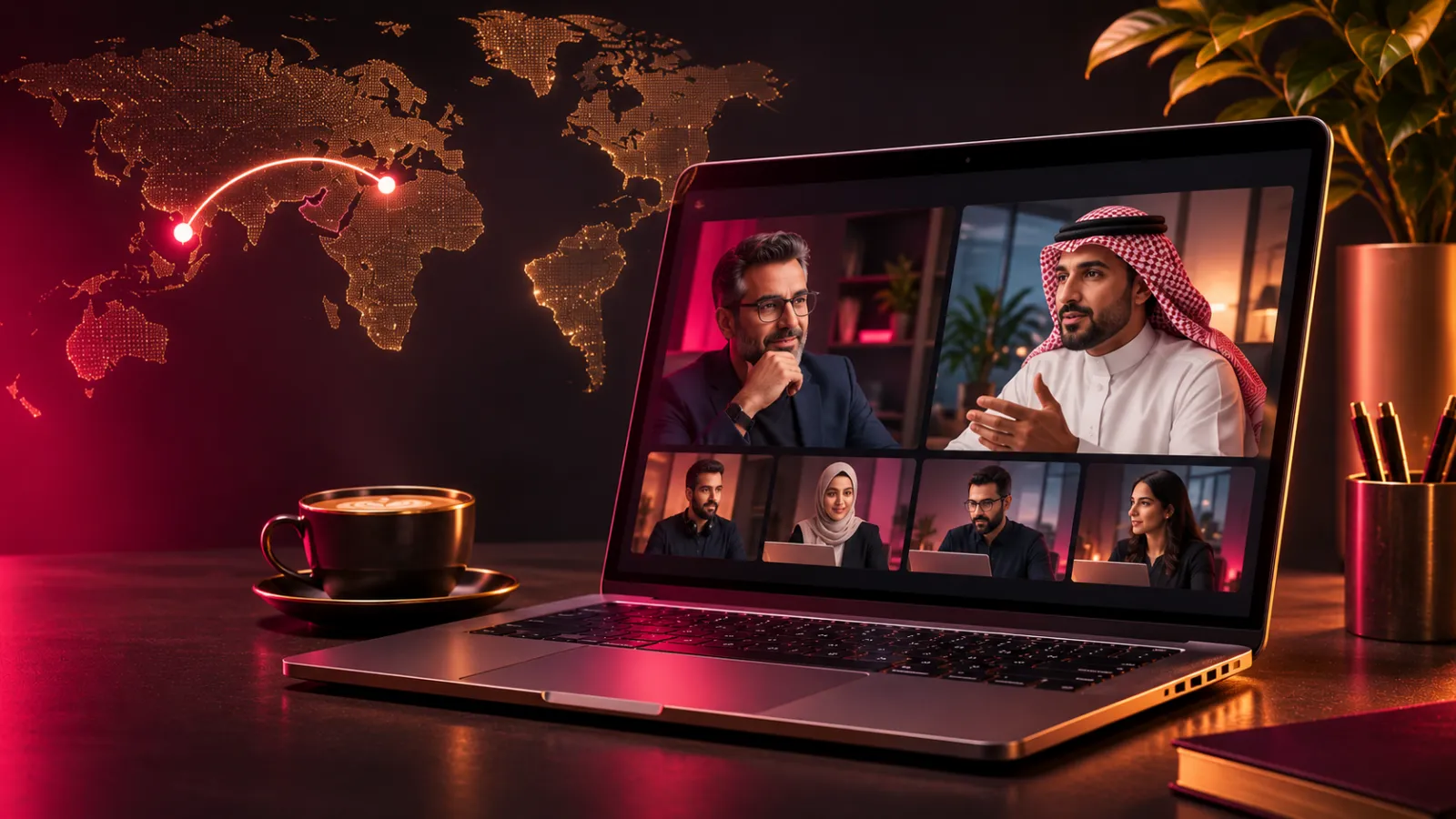
- Remote work succeeds when the process is clear, not when the office is nearby.
- A short weekly Zoom meeting + a project WhatsApp group + a clear review tool.
- Appoint a single decision-maker on your side.
- A contract with a scope of work, phases and payments tied to deliverables.
- Live work and references are the best evidence of a reliable agency.
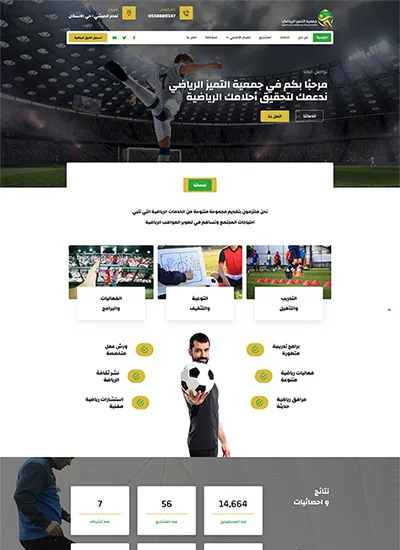
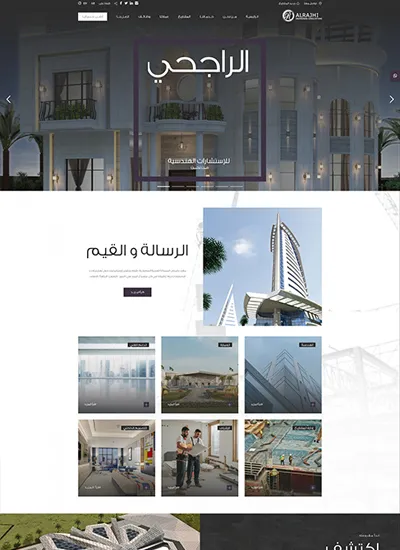
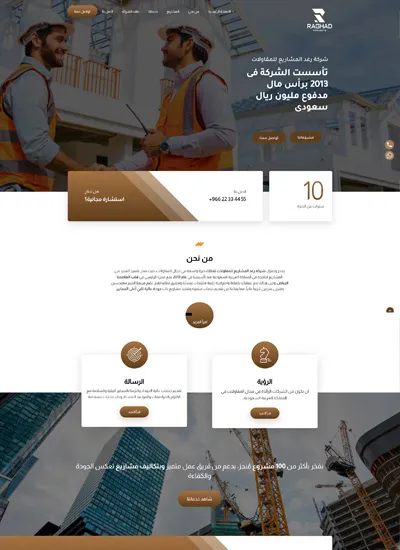
A company in Riyadh needs a website and identity, and the best proposal it received came from a team in Cairo. Hesitation is natural: how will I keep track? What if they don’t understand me? What if they disappear after the first payment? We hear these questions often, and most of our Saudi clients — from Al Rajhi Engineering Consultants to Raghad Projects and the Sports Excellence Association — have worked with us entirely remotely. Here’s what makes it work.
Why do companies choose a remote agency?
- Expertise before geography: access to a specialist team with long experience in your sector.
- Cost: better value for the same or higher quality.
- Speed: stable teams with proven processes.
- Cultural understanding: an Arab team that understands the Saudi market and its language.
The foundations of success
A clear start
An hour-long discovery meeting on Zoom, followed by a written scope of work: pages, languages, deliverables, timeline and what’s required from you.
A steady rhythm of communication
| Channel | Use |
|---|---|
| Weekly meeting (20–30 minutes) | Reviewing progress and decisions |
| Project WhatsApp group | Quick questions and updates |
| Preview link for the design/website | Reviewing on your own device |
| Approvals and official files |
A single decision-maker
The thing that delays projects most: five people giving conflicting feedback. Appoint one person to collect the feedback and approve.
Organised reviews
Gather feedback into one list per round, with screenshots, instead of scattered messages.
A contract and payment stages
Payments tied to clear deliverables protect both sides, with an invoice and a documented transfer.
Red flags
- No live work you can visit.
- Refusing to meet on video.
- Asking for the full amount upfront.
- No contract or written scope of work.
- The domain and hosting in the agency’s name rather than yours.
Read the full list in how to choose a web design company.
How we work remotely
- A free consultation on Zoom or WhatsApp within 24 hours.
- A written proposal and scope of work.
- A project manager and a project WhatsApp group.
- Live preview links at every stage.
- A recorded handover and training meeting.
- Post-launch support by WhatsApp and email.
The remote working tools we use
Remote work succeeds through tools and rhythm, not good intentions. Video meetings for the key stages (discovery, design presentations, reviews), one official messaging channel for day-to-day communication, a shared folder for files and content, live preview links for designs and the website during the work rather than static files, and a single feedback document that collects all the changes. This organisation lets a client in Riyadh or Jeddah follow their project moment by moment, as if the team were in the next office.
Time zones and holidays
Between Egypt and Saudi Arabia there’s a one-hour difference, and working days overlap for most of the week, which is what makes working between the two countries smooth. But watch for different public holidays and Ramadan working hours, and plan critical stages away from them. Agreeing reply hours and emergency channels in advance prevents anxiety on sensitive days such as launch day.
Trust and guarantees
A natural worry when working with a distant agency: will I get what I paid for? The practical guarantees: a detailed contract with the scope and phases, payments tied to deliverables, full ownership of the domain, hosting and files in your name from the start, reviewing live past work, and speaking to past clients. A reliable agency welcomes these guarantees because they protect it too. Read how to choose a design company.
When is a remote agency not right for you?
If your project needs frequent on-site presence, such as ongoing photography at a location, installing signage or intensive in-person training, you may need a local partner for that part while the identity, design and development stay remote. Many of our projects combine the two: we work remotely on the digital side and coordinate with a photographer or printer local to the client.
From our work
Since 2005 we’ve worked for clients in Saudi Arabia from our base in Egypt. Our Saudi projects include Madarat, Saudi AI, Happiness Makers and dozens of websites for construction and engineering companies. See our clients in Saudi Arabia.
How do you start with a remote agency?
Start with an introductory video meeting to explain what you need, ask for a detailed written proposal, review similar live work, then begin with a defined first phase if you want to test the way of working before committing to a large project. Many of our long-standing client relationships began with a small project and grew once the client was confident in how we work and our commitment.
What sets a good remote agency apart?
A good remote agency makes up for the distance with clarity: it explains before it builds, documents every decision, shows progress continuously, asks when it doesn’t understand instead of assuming, and keeps to its deadlines. Most importantly, it understands your market: its language, culture, regulations and customers’ expectations. An agency that has worked with Saudi clients for years knows that a Saudi website needs local payment methods, Saudi phone numbers and professional language suited to the audience, and that Ramadan and holidays change the rhythm of work.
Questions to ask in the first meeting
- How many projects have you delivered for clients in my country, and can I speak to one of them?
- Who is the account manager I’ll be dealing with day to day?
- What are your working hours and communication channels?
- How will I follow the project’s progress?
- What happens after handover if I need an urgent change?
Our clients’ experience
Many of our clients in Saudi Arabia have never met us face to face, yet our relationship with some of them has lasted for years and several projects. The secret isn’t distance but commitment: clear deadlines we keep, regular communication, and quality you can see in live websites. We make sure clients feel the team is as available to them as if it were in the same city.
Contract and payments
In remote work, a detailed contract matters more than ever. Define the scope in detail, the phases with their dates, payments tied to deliverables (a deposit, then after design approval, then after launch), the number of revision rounds, ownership, the post-launch support period and how disputes are resolved. And put every account (domain, hosting, email) in your name from the start, so your assets stay under your control whatever the distance.
Language and market
Choose an agency that writes your website content in language your local audience understands, and that knows the payment, shipping and regulatory landscape in your country. An agency that has worked in the Saudi market for years saves you explaining the obvious details, and suggests solutions proven with similar companies. Distance disappears when communication is clear and the commitment is real; start with a clearly scoped project and judge the experience for yourself.
Frequently asked questions
Can you visit us? Visits can be arranged for large projects, but most stages of the work run efficiently remotely.
How do I make sure the files and accounts are mine? By registering everything in your name from the start and stating ownership in the contract.
What if I need an urgent change after launch? Agree an emergency channel and response time in advance as part of the support contract.
Are prices lower than local agencies? They can sometimes be more competitive, but choose on quality, experience and commitment, not price alone.
We welcome any question before you start, because clarity at the beginning is the foundation of trust throughout the project — and a successful remote partnership is built on trust, clarity and visible results at every stage.
The bottom line
Distance is no longer an obstacle; clarity is everything. Choose an agency with live work and a transparent process, appoint a decision-maker, and keep a steady rhythm of communication. Book a Zoom meeting to get acquainted.
Real projects we delivered
FAQ
Is the time difference a problem?
Between Egypt and Saudi Arabia the difference is one hour or none, depending on daylight saving, and most working hours overlap.
How can I feel confident before signing?
Visit live websites the agency has designed, ask to speak to a past client, and start with a small, clearly defined phase.
How does payment work?
Usually in instalments tied to phases (start, design approval, launch) by documented bank transfer against an invoice.

Written from 20+ years designing websites and identities for clients in Saudi Arabia and Egypt — every tip here comes from real projects.
Want this applied to your project?
Book a free consultation — we will review your site or brand and propose a clear plan.
Book a free consultation