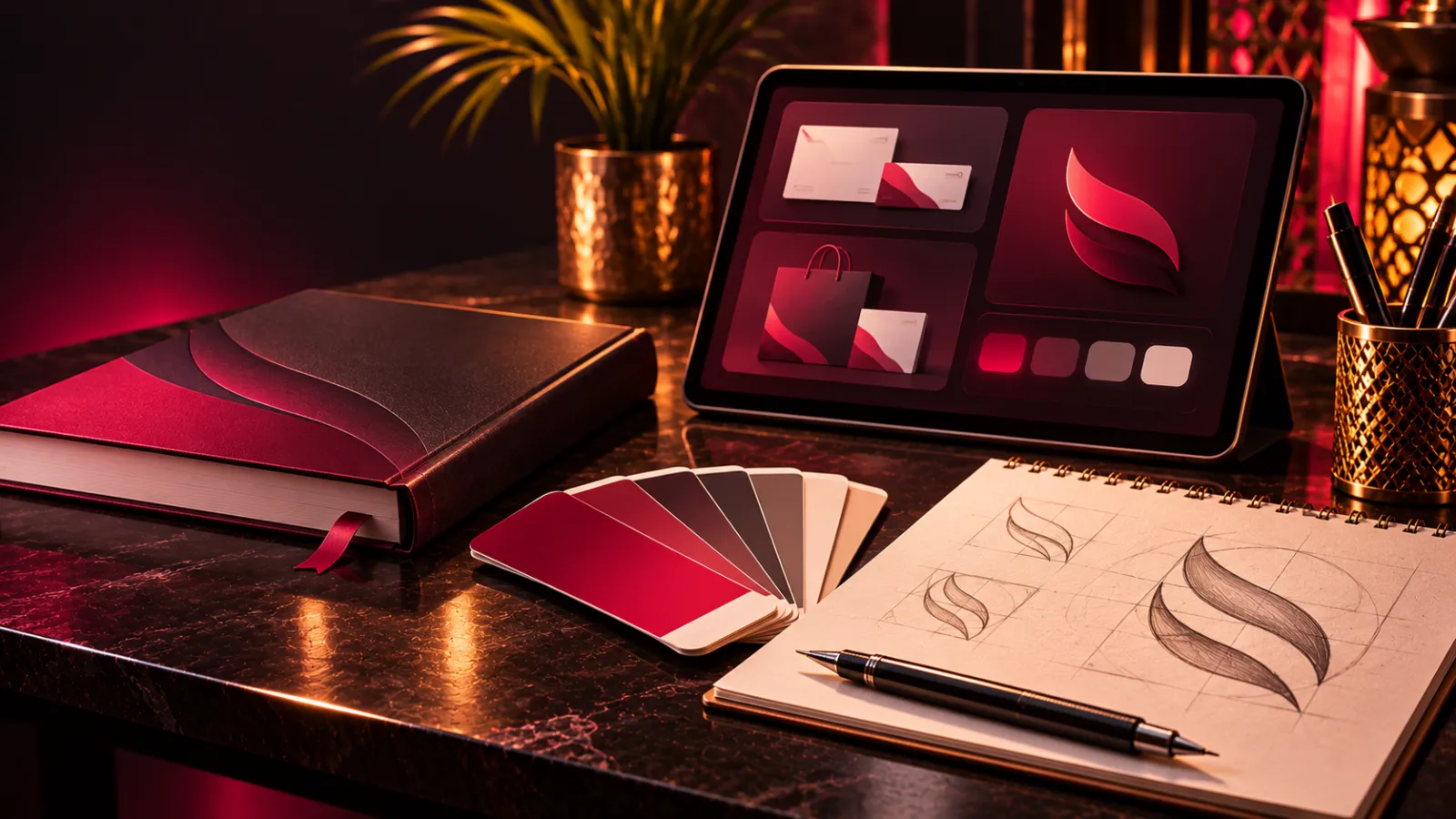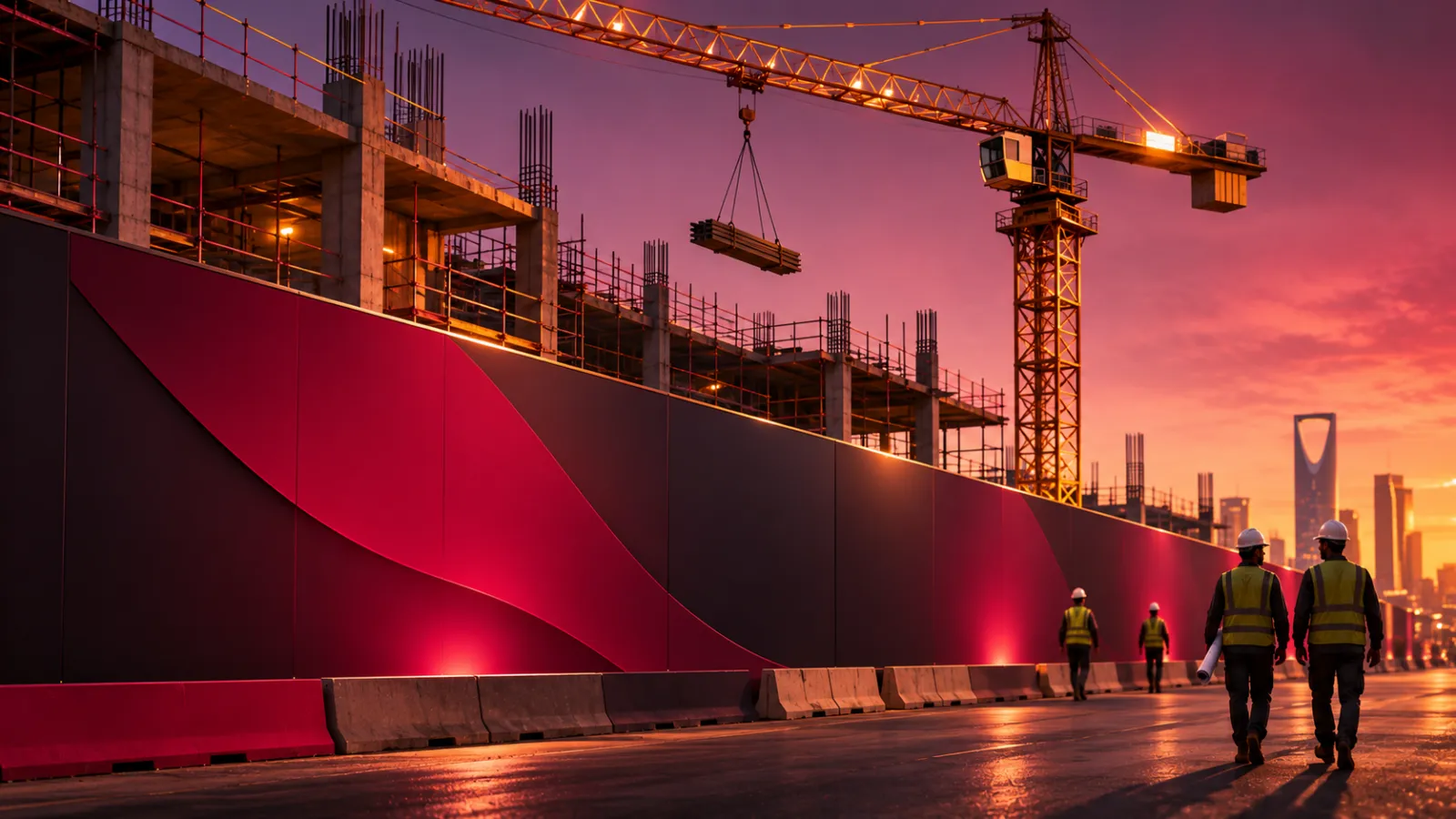
- A construction identity is seen from a distance: a simple, bold logo and high-contrast colours.
- Think about field applications from the start: project boards, helmets, hi-vis vests, plant and vehicles.
- The company profile and technical proposal templates are essential for tenders.
- Avoid clichés (a crane, a helmet, a building) unless they’re presented with a genuinely different idea.
- Consistency between the site, the office and the website builds the image of a large company.
Construction is a sector where clients judge with their eyes before they read a single document. A smart project board on a site hoarding, plant in matching colours, a crew in uniform wearing helmets with the logo — all of it says “this is an organised company” before anyone opens the profile. We’ve designed identities for companies such as Concrete Towers, Arkan Al Etihad, Kawkab Al Ibtikar and Al Watad Architecture, and this is what we’ve learnt.
What makes a construction identity succeed
It reads from a distance
The logo will appear on a board several metres wide and on a helmet a few centimetres across. Simple shapes, heavy strokes and minimal detail.
It conveys solidity and trust
Geometric lines, sharp angles and heavy weights suggest strength. A more human touch can be added if the company works in residential projects and fit-out.
It stands apart from the clichés
Thousands of logos use a building, a crane or a helmet. If you use a symbol, give it a different idea, or rely on a strong letterform or abstract shape instead.
Colours built for the site
The colour must stay clear under dust and sun and on metal. A distinctive high-visibility accent with a dark primary colour is a winning formula.
The applications that make the difference
| Area | Applications |
|---|---|
| Office | Business cards, letterheads, invoices, stamps, folders, email signature |
| Construction site | Project board, safety signage, hoardings, site cabins |
| Team | Helmets, hi-vis vests, uniforms, ID cards |
| Fleet | Cars, plant, lorries |
| Sales and tenders | Company profile, technical proposals, bill of quantities templates |
| Digital | Website, social media, project photography |
The company profile: your most important marketing document
In tenders and with major clients, the profile is your “first interview”. It must be well organised, use real project photographs and be a sensible file size that opens on a phone. Read our guide to company profile design.
Identity and website together
When a project owner sees your board and then searches for you on Google, they should find the same identity on your website. Read our guide to construction company website design.
Common mistakes
- A logo with gradients that can’t be printed on metal or fabric.
- An Arabic name in a decorative script that can’t be read from a distance.
- No single-colour version for engraving and low-cost printing.
- A differently designed board for every project.
The identity on site
A construction company’s identity is seen in the field far more than on screens. The site hoarding is a huge billboard that stays in front of passers-by for months or years; the project board is seen by owners, authorities and competitors; helmets, vests, vehicles and plant move around the city every day. These applications must be designed carefully: colours that work on large surfaces and in bright sunlight, a logo legible from a distance, clear contact details and website address, and fixed standards applied on every project. A tidy hoarding with a clear identity tells passers-by that this company is organised; a tattered hoarding with a faded logo says the opposite.
Don’t forget safety: the identity must sit alongside approved safety colours and signage rather than clash with them, and project boards must include the legally required information in an orderly way within the identity’s design.
Identity and recruitment in construction
The construction sector competes fiercely for engineers and skilled technicians. A strong identity and a well-kept digital presence make a company more attractive to talent: an engineer would rather join a firm that looks organised and successful, shows its projects with pride and cares about its image. Smart uniforms, tidy site offices and an active LinkedIn page are all part of your “employer brand”. Read LinkedIn for companies.
Identity in tenders and prequalification
When you bid for contracts, evaluators read dozens of submissions. A prequalification file designed in the company’s identity, with consistent templates, high-quality photographs of real projects and well-organised tables, is easy to read and leaves an impression of discipline — exactly what committees look for in a contractor they’ll trust with a project. Read digital identity and tenders.
From our work
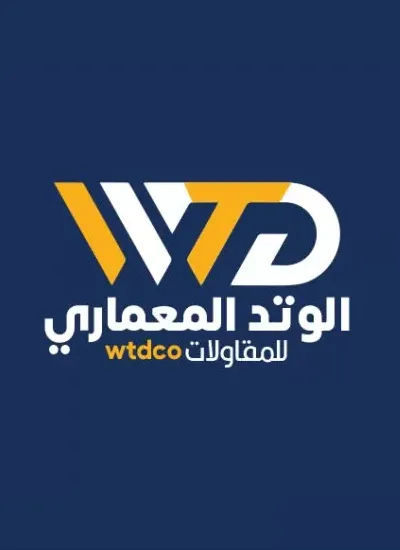
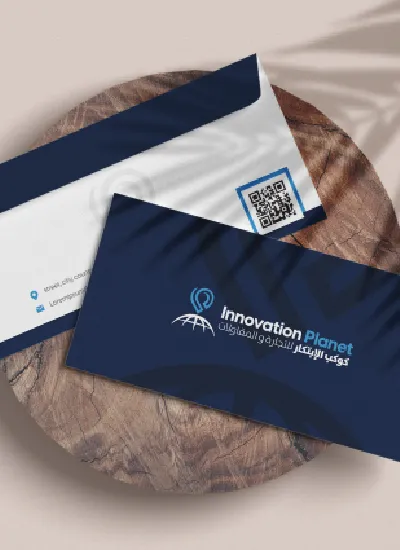
We’ve designed identities for a number of construction and engineering firms, including Concrete Towers General Contracting, Kawkab Al Ibtikar Contracting, Al Watad Architecture and Arkan Al Etihad. On every project we test the identity on the hoarding, the helmet, the vehicle and the sign — not just on the business card and the screen.
The costliest mistakes in construction branding
The most expensive mistakes aren’t in the design but in the application. A logo with fine detail that can’t be read on a hoarding from twenty metres away. A light colour that fades in the summer sun within months. A thin typeface that disappears when embroidered on a uniform. A long horizontal logo that doesn’t fit on a helmet. So test the identity in real conditions before approving it: print a sample on the hoarding material, ask for an embroidery sample, and place the logo on a helmet and a vehicle at actual size. These tests cost little and save you from reproducing expensive materials later.
Identity for multi-activity contractors
Many contractors expand into related activities: maintenance, operations, building materials, property development. This raises a question: do we use the same identity for everything, or sub-brands? The common answer is a master brand with sub-brands that share core elements (the symbol, colour or typeface) and differ in details that distinguish each activity. This preserves the strength and trust of the parent name while making the nature of each business clear to clients.
The construction company’s digital identity
An identity that looks strong on a hoarding must work just as well on a small screen: a LinkedIn profile picture, a website favicon, a project post on Instagram, an email signature. That’s why we always design a simplified version of the symbol that works in a small square, social templates for project posts, and website pages that show projects in large images befitting the scale of the work. Read website design for construction companies and social media for construction companies.
Rolling out the identity in an established company
If the company is already running several projects, there’s no need to change everything in a day. Start with digital (website, accounts, email, templates) because it’s the fastest and most visible, then everyday stationery (business cards, letterheads, proposals), then new projects with their hoardings and boards, then vehicles and uniforms as they’re naturally replaced. That way the company moves to the new identity over a few months, with the cost spread out and without chaos.
Identity and trust with government bodies
Government and semi-government bodies in Saudi Arabia deal with many contractors and judge seriousness by the details: documents in a consistent company identity, correspondence from an official email address, orderly project boards, and a website that clearly presents projects and certifications. A consistent identity here isn’t decoration but a message of institutional discipline. As Vision 2030 projects expand and project owners raise their standards, that message has become part of the competitive edge of any contractor aiming for bigger projects.
Questions to ask a designer about a construction identity
- Have you designed identities for construction companies before, and can I see their applications in the field?
- Will you test the logo on a hoarding, a helmet and a vehicle before approval?
- Does the project include templates for the prequalification file and proposals?
- Will you deliver files suitable for large-format printing and embroidery?
Practical summary for contractors
Start with a simple, strong identity that reads from a distance and works on site materials; document it in guidelines that include specifications for hoardings, vehicles and uniforms; roll it out gradually from digital to the field; and make the prequalification file, profile and website one continuous extension of it. This investment shows its value in every tender and every project you hand over. A strong identity on site advertises your company on every street you work in — see how our construction identities are applied on our work page.
The bottom line
A strong construction identity works in the dust just as well as in the boardroom. Design it for field applications from day one and apply it with discipline. Explore our visual identity service or see identities we’ve designed for contractors.
Real projects we delivered
FAQ
Should a construction logo include a building or a crane?
Not necessarily, and the overuse of these symbols makes logos look alike. What matters more is a strong, simple shape that conveys solidity and trust and can be read from a distance.
Which colours suit construction companies?
Strong dark colours with a distinctive, high-visibility accent (yellow, orange, red, blue) are common because they stand out on site, but the most important thing is to stand apart from your competitors.
What are the core applications of a construction identity?
Business cards, letterheads and invoices, the project board, helmets and vests, vehicle and plant livery, the company profile, and templates for technical and financial proposals.

Written from 20+ years designing websites and identities for clients in Saudi Arabia and Egypt — every tip here comes from real projects.
Want this applied to your project?
Book a free consultation — we will review your site or brand and propose a clear plan.
Book a free consultation