
- Your LinkedIn company page is part of your qualification file with large companies and organisations.
- Professional content based on expertise and projects outperforms greetings and offers.
- Management and employee profiles reach more people than the company page itself.
- Two or three posts a week, consistently, are enough to build a strong presence.
- LinkedIn ads cost more but target job titles and sectors most precisely.
In B2B sales, hardly anyone makes a decision without looking you up. The project manager who received your proposal opens LinkedIn to see: does this company have a page? How many people work there? What has it posted recently? Who runs it? An HR director at a large company looks for a training or technology supplier the same way. In Saudi Arabia in particular, LinkedIn has become a core platform for the professional audience, where news of projects, appointments and partnerships is published daily.
Yet many companies treat LinkedIn as a recruitment platform only: a page with an old logo and a one-line description, and a job ad from a year ago as the last post. This article explains how to turn the page into a sales and reputation tool, as we do in our social media management service.
Step 1: A 100% complete company page
A complete page isn’t a cosmetic detail; it’s the first thing someone looking for you sees. Check every element:
| Element | What’s needed |
|---|---|
| Logo | A clear square version on a suitable background, from the official identity files |
| Cover image | A design in the company identity showing what you offer, or a real photo of a project or the team |
| Tagline | One sentence saying what you do and for whom |
| About | Clear paragraphs: who you are, services, sectors, year founded, cities |
| Website | A correct link to the official site |
| Industry, size and location | Accurate data consistent with your registration and website |
| Main button | Visit website or contact us |
| Showcase pages | Optional, for a major service or division |
Make sure the description, colours and logo match your website and profile. Read visual consistency across channels.
Step 2: Which content works on LinkedIn?
LinkedIn’s audience arrives in a work mindset. What catches their attention is what helps them in their work or convinces them of your expertise. The most successful content types for companies:
- Short case studies: client, challenge, solution, result — with real photos from the project.
- PDF documents (carousels): slides explaining steps, a comparison or common mistakes; this format usually gets good engagement.
- Expert opinion: commentary on a new regulation or a sector trend, in clear professional language.
- Company achievements: a project handover, a new certificate, a partnership, an exhibition.
- Team and culture: appointments, promotions, training, a workday; this attracts candidates and builds trust.
- LinkedIn articles: short versions of your blog articles with a link to the full piece.
What usually performs poorly: generic greetings with no message, direct advertising offers, and designs crowded with text.
Step 3: The power of personal profiles
One of LinkedIn’s most important facts is that posts from people usually get more reach than posts from pages. So the CEO, department heads and engineers are the company’s real ambassadors. What do they need to do?
- Keep an up-to-date profile: a professional photo, a clear headline, and the current company linked to its page.
- Share company posts with a personal comment, not just a silent repost.
- Write a personal post from time to time about an experience or a lesson from a project.
- Engage with clients’ and partners’ posts with useful comments.
The company can make this easier by providing ready images and suggested copy, but it’s always best when each person adds their own voice.
Step 4: Publishing rhythm
| Day | Suggested content |
|---|---|
| Sunday | A project or case study |
| Tuesday | A tip or an educational PDF document |
| Thursday | The team, culture or company news |
Two to three high-quality posts a week are enough for most companies. What matters most is keeping it up for months, because LinkedIn’s effect is cumulative.
Step 5: Engagement and network building
LinkedIn is a network of relationships before it is a publishing platform. Set aside time each week to engage with current and potential clients’ posts, congratulate partners on their achievements, and reply to every comment on your posts. When someone from a target company engages with your content, it’s an opportunity for a gentle professional connection — not a direct sales message.
Step 6: LinkedIn ads
The big advantage of LinkedIn ads is professional targeting: you can reach “procurement managers at contracting companies in Riyadh” or “IT managers at banks”. But they cost more than other platforms, so:
- Use them for high-value offers: a consultation, an assessment, a downloadable guide.
- Target a narrow, precise audience rather than a broad one.
- Try Lead Gen Forms to reduce the steps.
- Track the quality of leads, not just their number.
Read the guide to paid ads.
How do you measure success on LinkedIn?
| Indicator | What it means |
|---|---|
| Page visits and their source | Are people looking for you? |
| Engagement rate per post | Is the content useful to your audience? |
| New followers by industry and job title | Are you attracting the right audience? |
| Clicks to the website | Does content lead to a next step? |
| Messages and requests | The actual business result |
LinkedIn page analytics show your followers’ breakdown by industry, job title and location; review them monthly to make sure you are building the audience you want to sell to.
Example: turning one case study into two weeks of content
Suppose your company handed over an important project this month. Instead of a single post saying “the project has been delivered”, the project can become a full series on LinkedIn. On day one, the company page publishes a short case study: the client (with permission), the challenge and what you delivered, with the best photos. On day three, the project manager writes a personal post about the hardest technical decision the team faced and how it was solved, tagging the company page. The following week the company publishes a five-slide PDF titled “Five lessons from project X” that generalises the value to the whole sector. Then the CEO posts thanks to the team and the client, with a group photo from the handover site.
Four posts from one project, each from a different angle and in a different voice, all building the same message: this is a company that delivers and knows what it’s doing. This is what we call repurposing content, and it’s the main secret to staying consistent without exhausting the team. The same material can also become a blog article, a website page and a slide in the company profile.
Arabic or English on LinkedIn?
In Saudi Arabia the professional audience works in Arabic and English together, and the choice depends on your target audience. Government bodies and local companies engage strongly with well-written Arabic content, while multinationals and some tech sectors lean towards English. Practical solutions: post in Arabic with a one-line English summary, alternate between the two languages depending on the post type, or create a Showcase page in a different language if you have two entirely different audiences. What matters is that the language is polished either way; language mistakes on a professional platform hurt your image more than anywhere else.
Common mistakes
- A company page with no cover image or a one-line description.
- Employees not linking their profiles to the company page, so the headcount looks smaller than it is.
- Posting the same square Instagram design with short copy and no professional context.
- Posting job ads only.
- Sending direct sales messages to everyone who accepts a connection request.
The bottom line
LinkedIn is your company’s storefront for decision-makers. A complete page, regular professional content based on real projects, and an active management team sharing its views are enough to make your name familiar before you ask for the meeting. We handle this within social media management; you can also read B2B content marketing and choosing platforms, or get in touch.
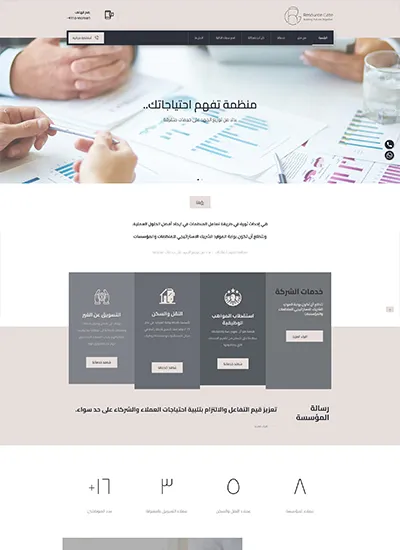
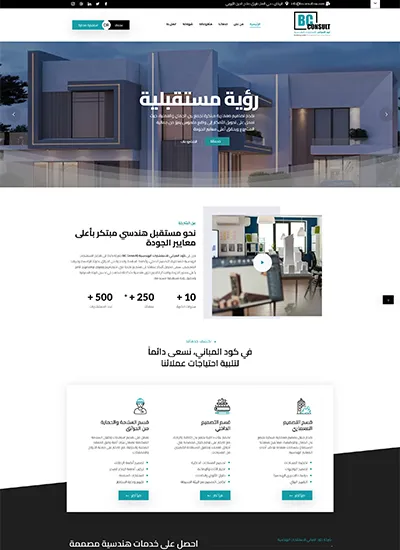
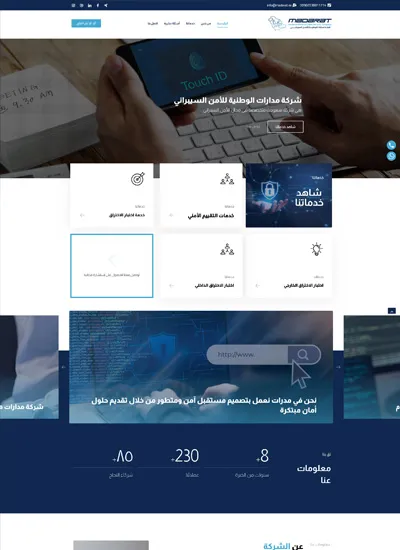
Real projects we delivered
FAQ
Is LinkedIn important for small companies?
Yes, if your clients are companies or organisations. A complete page and regular activity make a small company look professional and stable when people look it up.
Should I post from the company page or the manager’s account?
Ideally both: the company page for official content, and management accounts for sharing opinion and expertise and resharing company content with a personal comment.
Should I write in Arabic or English?
It depends on the audience. In Saudi Arabia the professional audience engages with both; many companies post in Arabic with an English summary, or alternate between the two.
How much do LinkedIn ads cost?
The cost per click is usually higher than on other platforms, but it reaches decision-makers precisely. Start with a small test budget for one campaign with a clear goal.

Written from 20+ years designing websites and identities for clients in Saudi Arabia and Egypt — every tip here comes from real projects.
Want this applied to your project?
Book a free consultation — we will review your site or brand and propose a clear plan.
Book a free consultation