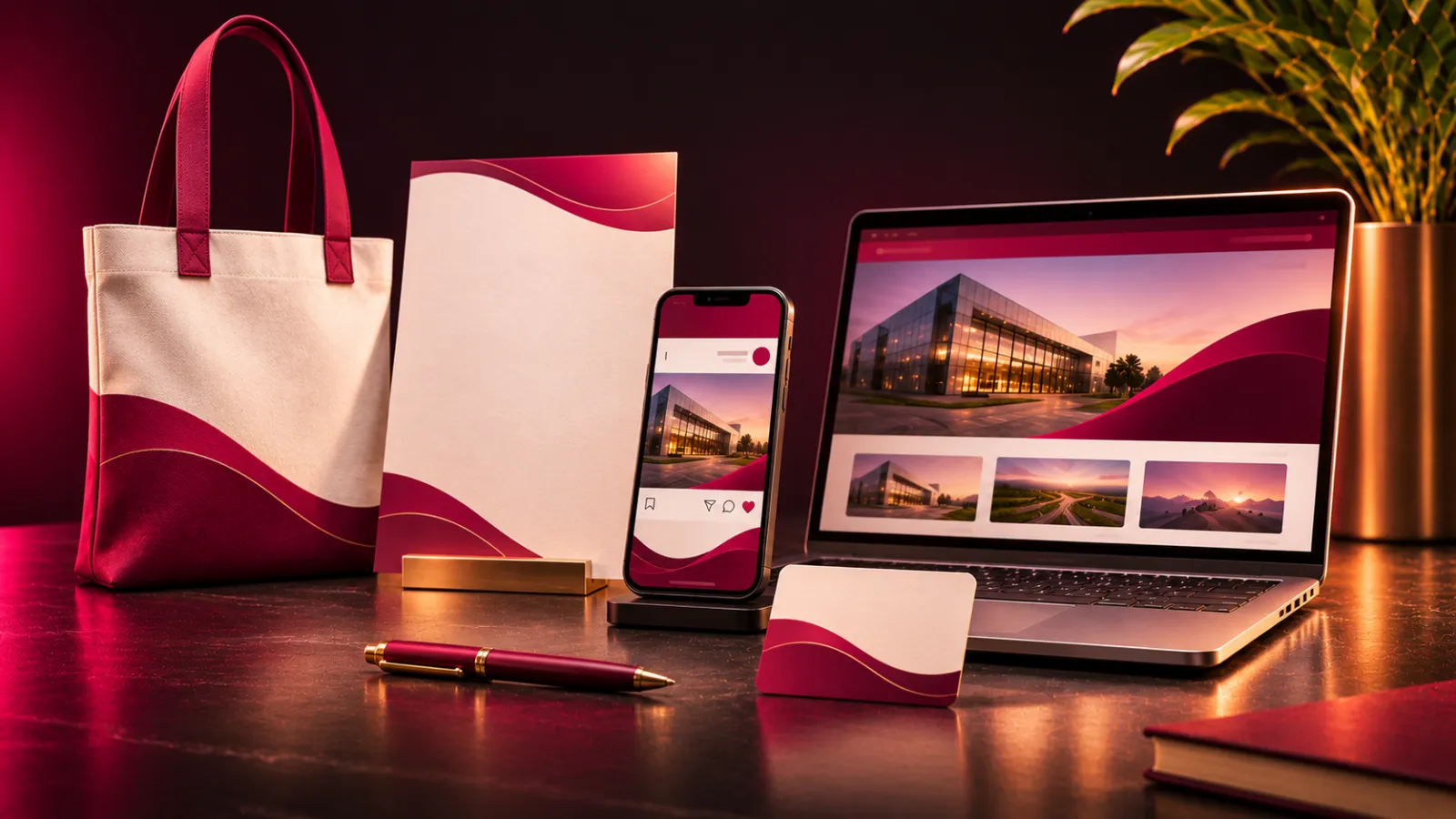
- Recognition comes from consistent repetition of the same visual and verbal signals.
- Define the fixed elements: logo, colours, typefaces, photographic style, tone.
- Ready-made templates and brand guidelines are the two core tools of consistency.
- Appoint someone to review every piece of material before it’s published.
- Review every touchpoint at least once a year.
Think of the big brands you know: you can recognise their ads from a distance before you read the name. The secret isn’t just budget, but consistency: the same colours, typefaces, style and tone everywhere, for years. The good news is that consistency doesn’t need a big budget; it needs a system and discipline.
What should stay fixed?
| Element | The rule |
|---|---|
| Logo | Official versions only, never altered or stretched |
| Colours | Specific codes and proportions of use |
| Typefaces | Approved Arabic and Latin typefaces in specific weights |
| Photographic style | Real photos? Cinematic scenes? What kind of lighting? |
| Icons and elements | One style (line or solid) |
| Tone | Formal or friendly, and how you address people |
The channels that must be consistent
- Website: the core reference for your digital identity.
- Email: signatures, templates and system messages.
- Social media: profile pictures, covers and posts. Read social media and your brand identity.
- Print: business cards, letterheads, invoices, the company profile.
- Presentations: an approved template for sales.
- Signage, vehicles and uniforms.
- Your Google listing and directories.
The tools of consistency
- Brand guidelines: clear rules with examples. Read the components of brand guidelines.
- A central file library: one folder with the logos, templates and typefaces.
- Ready-made templates: for posts, presentations and documents.
- A brand owner: someone who reviews before publication.
- An annual review of every touchpoint.
Common mistakes
- Every employee keeping their own version of the logo.
- Changing a colour “slightly” to suit a photo.
- Using default computer fonts in presentations.
- Seasonal campaigns with an identity completely separate from the brand.
Why does consistency break down over time?
Most companies start with a consistent identity, which then gradually comes apart without anyone deciding it should. A new marketing hire designs a quick post in another typeface. A new branch prints a sign at a local printer in a slightly different colour. A salesperson edits the presentation template to add a partner’s logo. A freelance designer redraws the logo because they couldn’t find the original file. Each small change looks innocent, but two years later the company finds itself with five versions of its logo, ten colours and a different style on every channel. Consistency isn’t achieved once; it has to be protected continuously.
Verbal consistency: the other side of identity
Identity isn’t only visual. Does your company write its name the same way everywhere? Does it describe its services with the same terms? Does it address customers in the same way on the website, in email and on social media? Is the tone of replies to customers the same across customer service staff? Verbal consistency makes the company feel like one personality the customer knows, and strengthens recognition in search and answer engines, because the information about it matches across every source. Write a small glossary: the company’s official name in Arabic and English, the approved service names, how you address people, and the words you use and avoid.
Digital consistency: the small details
| Element | What to standardise |
|---|---|
| Favicon | The logo symbol, clearly legible at a small size |
| Profile pictures | The same symbol on every platform |
| Usernames | The same name on every platform where possible |
| Sharing images | A consistent design when website links are shared |
| Email signatures | One template for every employee |
| Google listing | Name, address and phone matching the website |
| System messages | Order and form confirmations in the same tone and identity |
Consistency, branches and agents
The more a company expands geographically or through agents and distributors, the greater the risk of fragmentation. The answer: a ready-made identity pack for every branch or agent, containing the files, templates and rules for what they need, with a central approval route for any new material — plus periodic visits or reviews of points of sale and signage. Major brands do this with discipline, which is why their branch in any city feels like the same place.
Consistency doesn’t mean rigidity
The fear about consistency is that it will make everything dull and samey. But the world’s strongest brands are highly consistent and highly fresh at the same time: campaigns change, photos are renewed and messages evolve, while the backbone stays fixed. Consistency gives you creative freedom within a known framework, so people recognise your new campaign as yours immediately. Read designing posts with a template system.
How do you measure consistency?
Gather twenty recent pieces of material your company has produced across different channels (posts, presentations, invoices, pages, signs, emails) and lay them side by side. Do they look like they come from one company? How many break the guidelines? Repeat the test every six months and you’ll see whether consistency is improving or eroding.
From our work
When we hand over a complete digital identity, we hand over the tools of consistency with it: the guidelines, the file library, ready-made templates for presentations, social media and documents, and consistent signatures. In social media management, as with the accounts of Al Marsad Al Makani, we protect consistency ourselves every day in every post. Read the components of brand guidelines. In the end, consistency is a form of respect for the customer: it tells them this is an organised company that knows who it is.
A practical plan to restore consistency
- Gather all current material from every channel in one place.
- Define the official version of each element (logo, colours, typefaces).
- Set up a central file library with the official versions and templates.
- Update the digital channels first (website, accounts, signatures).
- Replace print and signage gradually as old stock runs out.
- Appoint a brand owner to approve any new material.
- Review every six months.
This plan restores consistency within a few months without big, sudden costs.
Consistency and AI
Answer engines and AI models gather information about your company from multiple sources. If your name, description and services match on your website, Google, LinkedIn and directories, a clear and accurate picture of you forms. If they conflict, you may get an inaccurate description or not be mentioned at all. Consistency today isn’t only visual; it’s informational too. Read SEO, AEO and GEO.
Frequently asked questions
Who is responsible for consistency in a small company? One person, even part-time, who holds the files and approves material.
Do I need full brand guidelines? A short, clear guide is enough to start, and can grow with the company.
Our experience protecting consistency
With every identity we deliver, we hand over the system that protects it: the guidelines, the library, ready-made templates for presentations, social media and documents, and consistent signatures. In the accounts we manage, such as Al Marsad Al Makani’s, we protect consistency daily in every post, because a strong brand is built through consistent repetition year after year. We suggest our clients carry out a six-monthly review of every touchpoint, gathering material, comparing it against the guidelines and correcting what has drifted before it piles up. Start with an inventory of your current material this week, and you’ll know where you stand and what needs correcting first.
Consistency and rapid growth
Fast-growing companies are the most prone to fragmentation: new employees every month, new suppliers, branches and campaigns. At exactly this stage, the guidelines, the library and a brand owner become a necessity rather than a luxury, because every new person may unintentionally add their own version of the brand. Make the identity part of your onboarding programme for new staff, just like your working policies.
A last tip on consistency
If you can start with only one thing, start with a central file library containing the official versions of the logo, templates and typefaces, and share it with everyone who designs or publishes in your company’s name. That step alone prevents most causes of inconsistency.
The bottom line
Consistency turns design into a brand. Fix the core elements, prepare the templates and appoint someone to guard them. If your channels are fragmented today, a complete digital identity rebuilds them as one system. Explore the service.
Real projects we delivered
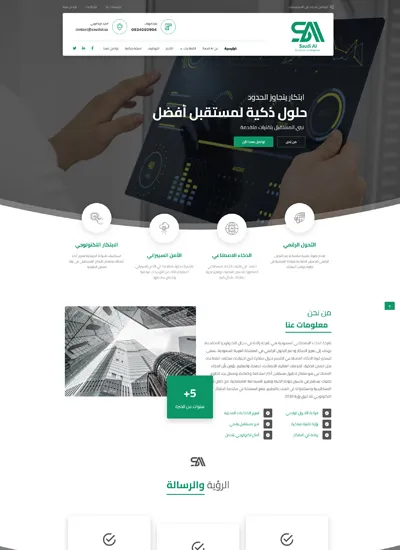
FAQ
Does consistency mean every design looks the same?
No; it means they belong to one family. Content and composition can vary while colours, typefaces and core elements stay fixed.
Which channel is most prone to inconsistency?
Social media and internal presentations, because many people design for them in a hurry.
How do I keep consistency with suppliers?
Send the brand guidelines and official files with every order, and ask for a review before printing or publishing.
Sources

Written from 20+ years designing websites and identities for clients in Saudi Arabia and Egypt — every tip here comes from real projects.
Want this applied to your project?
Book a free consultation — we will review your site or brand and propose a clear plan.
Book a free consultation