
- Conversion rate = the number of desired actions ÷ the number of visitors; measure it first.
- Find the leaks with the numbers, then understand the reason by watching sessions and asking customers.
- The biggest gains usually come from a clear message, trust, easy contact and speed on mobile.
- Change one element at a time and measure the effect.
- Continuous improvement compounds: 10% here and 15% there add up to a big difference.
Suppose your website receives 3,000 visitors a month and 30 of them get in touch (1%). To double your customers you have two routes: double the traffic to 6,000 — expensive in ads, or months of SEO — or raise the contact rate to 2%. The second route is usually faster and cheaper, and it’s called conversion rate optimisation (CRO).
What is a “conversion” on your website?
Any action that brings you closer to a customer: a call, a WhatsApp message, a form submission, a quote request, a profile download, an appointment booking, or a purchase in the store. Define the most important action first, then the secondary ones.
Measure the path and find the leaks
| Stage | Service website example | Store example |
|---|---|---|
| Arrival | Visiting the service page | Visiting the product page |
| Interest | Scrolling to the work/pricing section | Adding to basket |
| Intent | Clicking the contact button | Beginning checkout |
| Conversion | Submitting the form/starting a chat | Completing the purchase |
Where is the biggest drop? That’s where you start. Read our GA4 guide.
Understand the reason
- Watch sessions: recordings and heatmaps reveal where visitors hesitate.
- Ask customers: “What nearly stopped you getting in touch?”
- Test it yourself on mobile: complete the journey as a customer.
- Review recurring questions on WhatsApp; every repeated question is something missing from the page.
Fifteen proven improvements
Clarity
- A headline that says what you offer and to whom, on the first screen.
- Real photos of your work instead of stock images.
- Prices, ranges or “from” prices where possible.
Trust
- Client logos and case studies close to the contact button.
- Real numbers (years, projects).
- Complete contact details and a real address.
- FAQs that address objections.
Easy contact
- A sticky WhatsApp button on mobile with a pre-filled message. Read marketing on WhatsApp.
- A short form (3–4 fields).
- Buttons with clear action verbs.
- A thank-you page that explains the next step and when it will happen.
Performance
- Loading in under three seconds on mobile. Read our speed guide.
- Removing annoying pop-ups.
- Dedicated landing pages for ads. Read landing pages.
- For stores: clear shipping and easy payment. Read reducing abandoned baskets.
Test and measure
Change one element (the headline, the button, or the position of testimonials), measure for long enough, then keep the better version. Over time, small improvements add up to a big difference.
Improving conversion on service websites
On service company websites, the conversion is usually a contact request, a quote request, a call or a WhatsApp message. What raises it most: a clear offer at the top of the page (what you offer and to whom), trust evidence close to the contact button (clients, projects, verified figures), a short form with few fields, a visible WhatsApp button on mobile, service pages that answer the customer’s questions before they ask, and a thank-you page explaining what happens next. Sometimes the biggest improvement lies outside the website: how quickly the sales team responds to enquiries.
Improving conversion in online stores
In stores, conversion is affected by every step: the product page (photos, description, reviews, shipping information), the basket (transparent costs) and checkout (payment methods, speed, guest checkout). Sometimes the best improvements are outside the pages altogether: a clearer returns policy, a lower free-shipping threshold or interest-free instalments. Read the product page and reducing basket abandonment.
Qualitative data: listen to your visitors
The numbers tell you where visitors leave, but not why. To find out: watch anonymised session recordings (with privacy-respecting tools and in line with the regulations), ask departing visitors a short question, read customers’ questions on WhatsApp and email, ask the sales team about recurring objections, and ask five people from your audience to try the website in front of you. You’ll discover problems you never thought of, such as a button that doesn’t look clickable, or a term the customer doesn’t understand.
Conversion optimisation mistakes
- Copying what another website did without understanding your own audience.
- Changing several elements at once, so you don’t know what made the difference.
- Judging a test after a few days and a handful of visits.
- Focusing on button colour while neglecting the offer and trust.
- Improving low-traffic pages instead of the important ones.
An example: improving a service page
A web design service page attracts good traffic but few enquiries. Analysis reveals: the headline is generic, there’s no past work on the page, the form is at the bottom with eight fields, and there’s no WhatsApp button on mobile. The improvements: a headline that names the result and the audience, a strip of real work beneath it, a “Request a quote” button at the top that opens a three-field form, a sticky WhatsApp button, and an FAQ section that answers questions about price and timing. Each improvement is applied separately where possible, and its effect measured over enough weeks. Read landing pages.
When should you start optimising conversion?
If your website’s traffic is very low, focus first on attracting visits through SEO and ads, because tests need enough data to give reliable results. But apply obvious fixes (a long form, no WhatsApp, a slow page) straight away; you don’t need a test to know they help.
Conversion and speed
Every extra second of page load reduces the chance a visitor stays long enough to see the offer. So improving speed is a core part of conversion optimisation, especially on mobile and on landing and checkout pages. Read website speed.
The practical summary
Measure the path, find the biggest leak, understand its cause from the numbers and visitor behaviour, then apply one improvement and measure its effect. Repeat the cycle every month, and the small improvements will add up to a big difference in the number of customers without spending more on traffic.
Conversion and trust
Many conversion problems are really trust problems: the visitor is interested but unsure. Trust evidence in the right place (near the contact and payment buttons) raises conversion noticeably: client logos with permission, verified figures, genuine reviews, photos of the team and the work, clear guarantees and complete contact details. Read how a digital identity builds trust.
From our work
We design pages from the start around the conversion goal: a clear offer, trust evidence, easy contact on mobile and precise tracking. After launch, we review the data and suggest improvements. Explore website design and online stores.
Frequently asked questions
What’s a good conversion rate? It varies widely by sector, type of conversion and traffic source; compare your website with itself over time.
Do I need paid tools? You can start with free tools such as GA4 and session-recording tools with free plans.
How long before results appear? Some obvious fixes show within weeks; precise tests need enough traffic.
Every visitor who reached your website cost you effort or money; conversion optimisation makes sure that effort isn’t wasted. Start with your most-visited pages, where the effect of any improvement is greatest.
A final word
Conversion optimisation isn’t a set of technical tricks but a deeper understanding of your customer: What do they want? What worries them? What gets in their way? Each answer becomes an improvement, and each improvement brings you more customers from the same traffic. The best improvements often come from listening to what customers say in messages and calls, not from guesswork in meetings. Take one step today, measure its effect after two weeks, then move on to the next; small, continuous improvement always beats big, sporadic change that’s never measured or built on.
The bottom line
Before you pay for more traffic, make your current traffic work. Measure, understand, improve, repeat. Ask for a free review of your website.
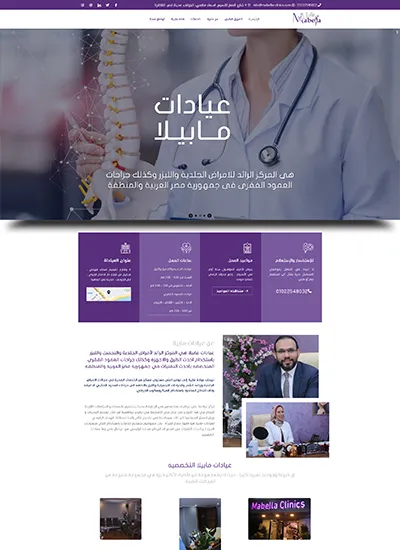
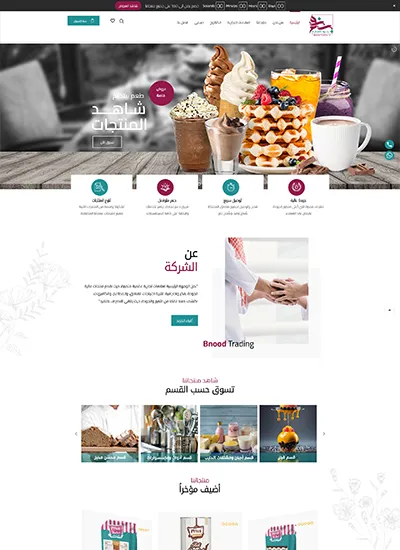
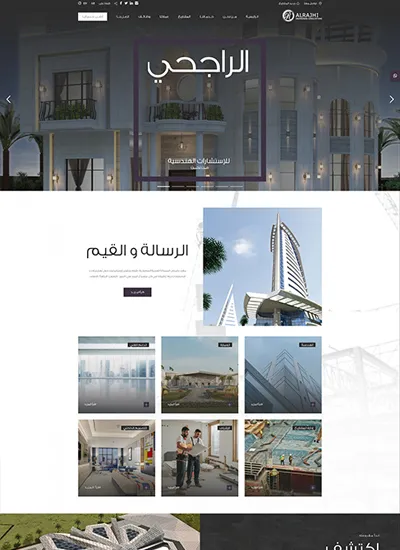
Real projects we delivered
FAQ
What’s a good conversion rate for a company website?
It varies widely by sector, traffic source and the type of action; what matters is knowing your current figure and improving it, not comparing it with general benchmarks.
Do I need paid tools?
You can start with free tools: GA4 for measuring paths, and session recordings and click maps in tools such as Microsoft Clarity.
How long before I see results?
Obvious improvements can show within weeks; precise tests need enough traffic for the results to be reliable.
Sources

Written from 20+ years designing websites and identities for clients in Saudi Arabia and Egypt — every tip here comes from real projects.
Want this applied to your project?
Book a free consultation — we will review your site or brand and propose a clear plan.
Book a free consultation