- Saudi clients search for you on Google and LinkedIn before any meeting; your digital presence is your first presentation.
- Dialect, terminology, currency, timing and contact numbers must be adapted for the Saudi market.
- Trust is built with a commercial registration, a local address and real work — not generic slogans.
- A dedicated landing area for the Saudi market beats a generic page that addresses every market.
- Start with an integrated foundation — identity, a bilingual website, business email, a profile and LinkedIn — then expand.
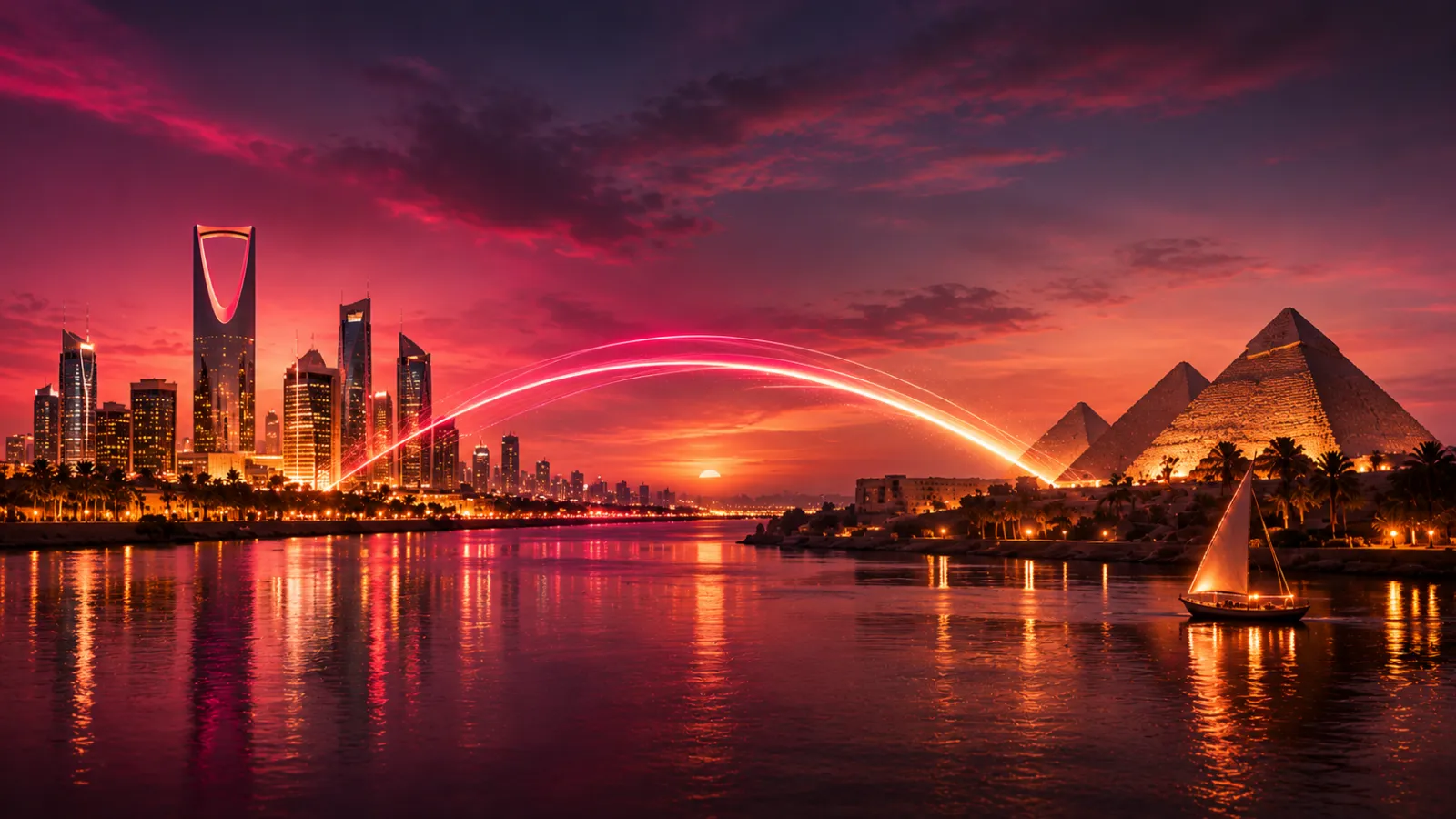
In recent years hundreds of Egyptian companies have turned to the Saudi market: engineering offices, software companies, factories, clinics and service firms. The reason is clear: Vision 2030 projects have created huge demand for expertise, and the cultural and linguistic closeness makes the move easier than to any other market. Yet many of these companies discover months later that proposals don’t turn into contracts, and that the Saudi client “takes the file and never replies”. In many cases the reason is neither price nor quality, but the first impression left by their digital presence.
In this guide, drawing on our experience since 2005 working with clients in both Egypt and Saudi Arabia, we explain what needs to change in your digital identity before you knock on the Saudi market’s door, and how to prioritise if your budget is limited.
Why do Saudi clients judge your digital presence first?
Buyers in Saudi companies — especially in government and semi-government projects and large corporates — follow supplier qualification procedures. Before the first meeting they search for your company on Google, open your website on their phone, check your LinkedIn page, and may send you an email just to see which address you reply from. Each of these touchpoints sends a signal: is this a stable, professional company that can be relied on for years, or a small office trying its luck?
The problem is that many Egyptian companies built their digital presence for the local market: a website in Egyptian dialect or with prices in pounds, Egyptian phone numbers only, generic images from free stock sites, and email on Gmail. That may be enough in Egypt, but in Saudi Arabia it tells the client: “we’re not really here”.
What needs adapting? A quick review table
| Element | Common situation | What the Saudi market needs |
|---|---|---|
| Language and tone | Egyptian colloquial, or literally translated Arabic | Clear, professional Modern Standard Arabic with the sector terminology used in the Kingdom |
| Currency and prices | Pounds, or no currency | Saudi riyals, mentioning VAT where relevant |
| Contact details | Egyptian numbers only | A Saudi number or a WhatsApp Business line that answers during Saudi working hours |
| Address | Cairo only | The address of your office or partner in the Kingdom if any, and a Google Maps listing |
| Examples and portfolio | Local Egyptian projects | Work in similar sectors, highlighting any Saudi or Gulf client |
| Gmail or Yahoo | Business email on the company domain with a unified signature | |
| Calendar | Friday–Saturday weekend, Cairo time | Respecting working days and hours in the Kingdom and its seasons |
| Documents | An old profile in Word format | An updated PDF profile in the company identity, including registrations and certificates |
1. Visual identity: adjust or rebuild?
You don’t have to change your logo just because you’re entering a new market. But honestly ask three questions: is the logo clearly legible in Arabic and English? Does it look modern next to recently founded Saudi competitors with strong identities? And do you have brand guidelines that ensure everything you send out looks like it comes from one company? If the answer is “no” to two or more, updating is far cheaper than losing an impression you won’t get again. Read when you need a rebrand and visual consistency across channels.
2. The website: pages that speak directly to Saudi Arabia
The website is the reference everyone comes back to. Don’t settle for adding the line “we serve Saudi Arabia” to the home page. What actually works:
- A service page for each major market or city where needed (Riyadh, Jeddah, the Eastern Province), with real content rather than duplicates.
- Case studies written as “challenge, solution, result”.
- A polished English version; many buyers at large companies work in English. See our bilingual website guide.
- Excellent speed and mobile experience; most first visits come from phones.
- Local SEO aimed at Saudi search phrases, plus visibility in answer engines. Read SEO, AEO and GEO.
3. Business email and LinkedIn
Business email is not a luxury. Many organisations won’t accept proposals from a free email address, and some corporate mail systems send such messages to spam automatically. Link your email to the company domain and set up SPF, DKIM and DMARC records. Details in domains and business email. LinkedIn, meanwhile, is the leading platform for finding suppliers in professional sectors in the Kingdom: a complete company page, regular posts about your projects, and up-to-date personal profiles for the management team.
4. The profile and qualification file
In Saudi Arabia the company profile is requested at almost every step: registering as a supplier, bidding for a tender, or simply an introductory meeting. Keep it concise (12–20 pages), in the company identity, with an introduction, services, projects with real photos, the team, certificates and local contact details. Details in company profile design.
5. The legal entity and official signals
If you establish a Saudi branch or entity, show it clearly: the commercial registration number, the national address and the VAT number on invoices. These are not administrative details but trust signals that procurement officers look for. If you work through a local partner, mention the partnership transparently. To start the procedures, see the Saudi Business Center and the Ministry of Investment.
Recurring mistakes when expanding
- Translating the Egyptian site as is: examples, prices and terminology stay local, so they lose relevance.
- Exaggerated claims: “the first in the Middle East” without proof weakens trust with an audience that likes to verify.
- Generic images: foreign office scenes that look nothing like the region’s workplaces. Photograph your team and projects.
- Slow replies: a WhatsApp message unanswered for a whole day undoes everything you built.
- Ignoring the seasons: Ramadan and public holidays change the rhythm of decisions; plan your campaigns around them.
Questions the Saudi buyer is asking while browsing your site
Try reading your website through the eyes of a procurement manager at a Riyadh contracting company or a marketing manager at a Jeddah startup. Within a minute or two they will be looking for answers to these questions:
- Have they worked in my sector before? Put sector examples somewhere obvious, and don’t mix them with everything else.
- Do they really exist? The address, the team, real photos of the office and years of experience.
- How will we communicate day to day? Contact channels, working hours, and who the account manager is.
- What happens after delivery? Support, maintenance and warranty, written clearly.
- Can I trust them with my data? A privacy policy, a secure HTTPS connection and business email.
Every question your website doesn’t answer turns into hesitation, and hesitation in B2B sales usually means choosing a clearer competitor.
A practical 6-week plan
| Week | Task |
|---|---|
| 1 | Review the current identity, decide what to update, and gather real work and photos |
| 2 | Write Arabic and English content aimed at the Saudi market |
| 3–4 | Design and build the website pages, case studies and local contact page |
| 5 | Business email, profile, LinkedIn page and Google Maps listing |
| 6 | Launch, measurement, and a first introductory campaign on LinkedIn or Google |
How do you measure the success of the new presence?
Track simple numbers every month: visits from the Kingdom in Google Analytics, the number and source of contact requests, the reply rate to your emails, and views of your LinkedIn company page. If visits rise but requests don’t, the problem is usually the clarity of the offer or how easy it is to get in touch; read conversion rate optimisation.
The bottom line
The Saudi market doesn’t need you to pretend to be a Saudi company; it needs you to show you are serious, present and ready to commit: professional language, real work, local contact details and a consistent digital presence at every touchpoint. That is exactly what we offer in our complete digital identity service: we build your identity, website, email, profile and social media as one system. See our work for clients in Saudi Arabia and Egypt or get in touch to start with a review of your current presence.
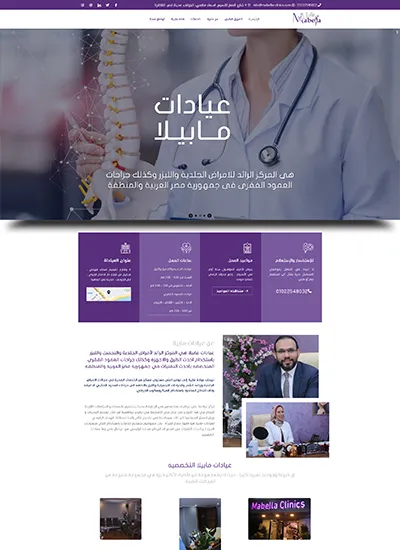
Real projects we delivered
FAQ
Do I need a separate website for the Saudi market?
Not necessarily. One bilingual website with pages dedicated to the Saudi market (services, examples, local contact) is usually enough, and it keeps your SEO strength on one domain.
Should I use a .sa domain?
A .sa domain gives a strong local signal but has special registration conditions. Many companies start with a .com domain plus Saudi pages, then add .sa once they establish a local entity.
What builds the most trust with a Saudi client?
Real work for Saudi clients or in a similar sector, with clear contact details and a Saudi number or WhatsApp that replies quickly.
How long does preparing the digital presence for expansion take?
An integrated project (adapted identity, website, email, profile, LinkedIn) usually takes 4 to 8 weeks, depending on how ready the content is.
Sources

Written from 20+ years designing websites and identities for clients in Saudi Arabia and Egypt — every tip here comes from real projects.
Want this applied to your project?
Book a free consultation — we will review your site or brand and propose a clear plan.
Book a free consultation