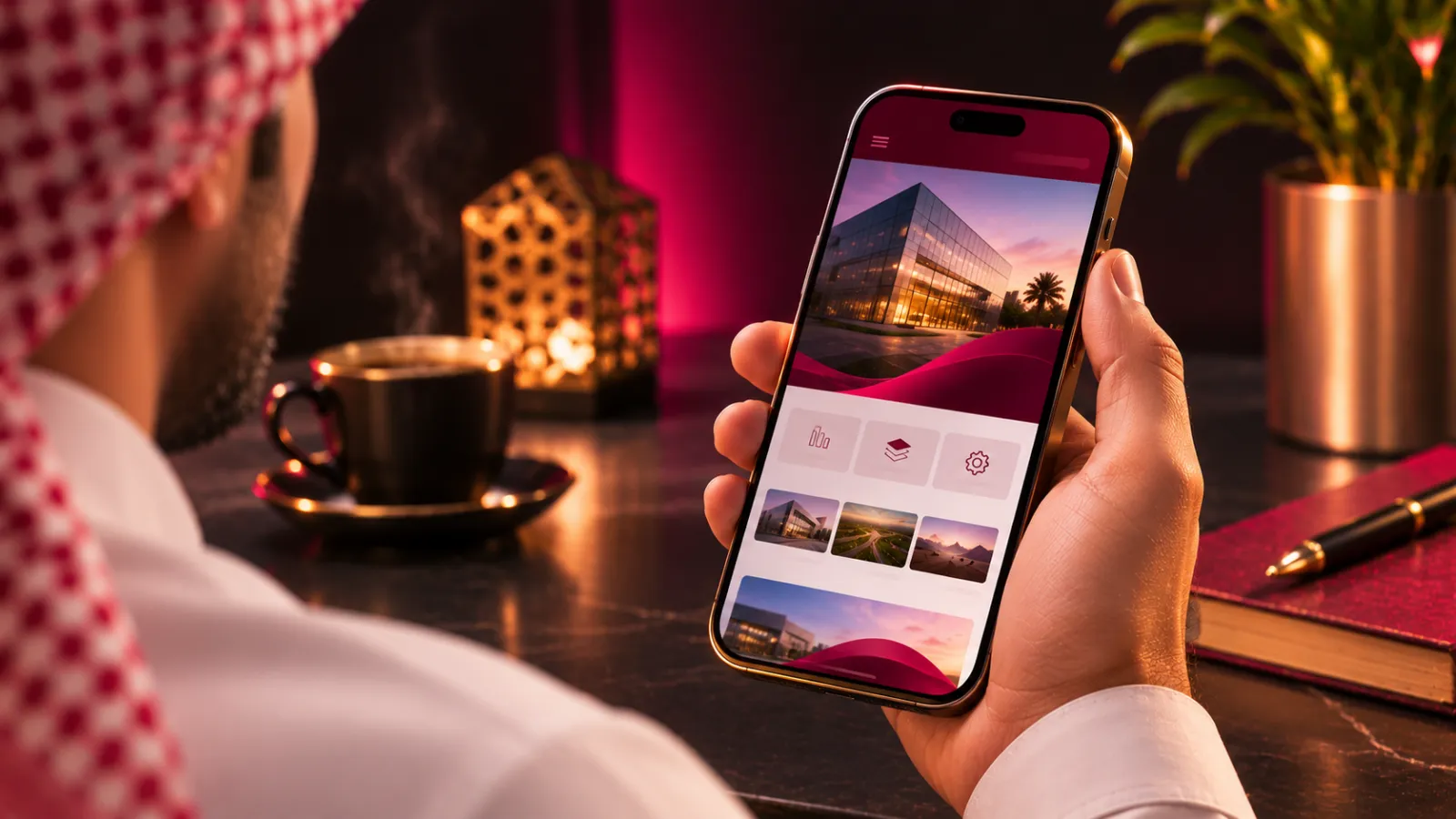
- The first impression of a website forms in seconds and affects how the content itself is judged.
- Digital trust is built from design quality, real evidence, transparency and consistency.
- Live work and case studies naming real clients are the strongest trust signal.
- Small details (official email, an address, policies) make a big difference.
- Contradictions between channels destroy trust faster than you can build it.
Imagine you’re looking for a law firm, a contractor or an information security company. You have two websites in front of you: the first is elegant and organised, with real client names, projects you can visit and a team with faces and names. The second has an old design, stock photos and generic phrases. Even if both companies are equally competent, you’ll call the first. That’s digital trust, and it’s built deliberately.
How do customers decide to trust?
Web credibility research shows that people judge an organisation’s credibility from how its website looks and is organised, from evidence that it’s a real organisation, and from how easy it is to contact. These judgements are fast and often unconscious.
The four layers of digital trust
The visual layer
- A consistent, professional identity.
- Real, high-quality photos.
- An organised design that’s fast on mobile.
The evidence layer
- Live work and verifiable links — as on our client pages.
- Case studies with clear stories.
- Real numbers: years, projects, clients.
- Certifications and accreditations.
The transparency layer
- A real address, phone number and official email.
- The team, with names and faces.
- How you work, and prices or price ranges.
- Privacy policies and terms.
The consistency layer
The same name, logo and message on the website, accounts, email, profile and Google listing. Any contradiction — a different phone number, an old logo, an abbreviated name — raises doubt.
Signals that destroy trust
| Signal | What the customer concludes |
|---|---|
| Obvious stock photos | They have no real work |
| “The best” and “the leading” without proof | Empty marketing talk |
| A “Not secure” warning in the browser | A neglected or risky website |
| Last updated years ago | Has the company stopped trading? |
| Only a personal WhatsApp number | A disorganised company |
The sectors most sensitive to trust
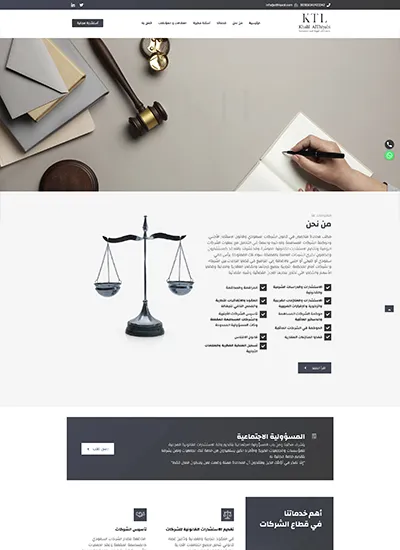
- Law and consultancy: as on the website of Khalil Al Thiyabi Law Firm.
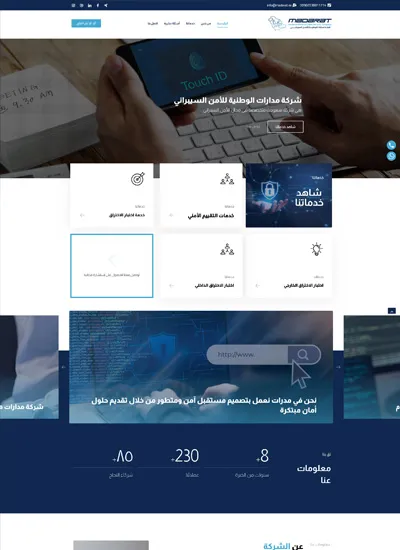
- Cybersecurity and technology: as with Madarat.
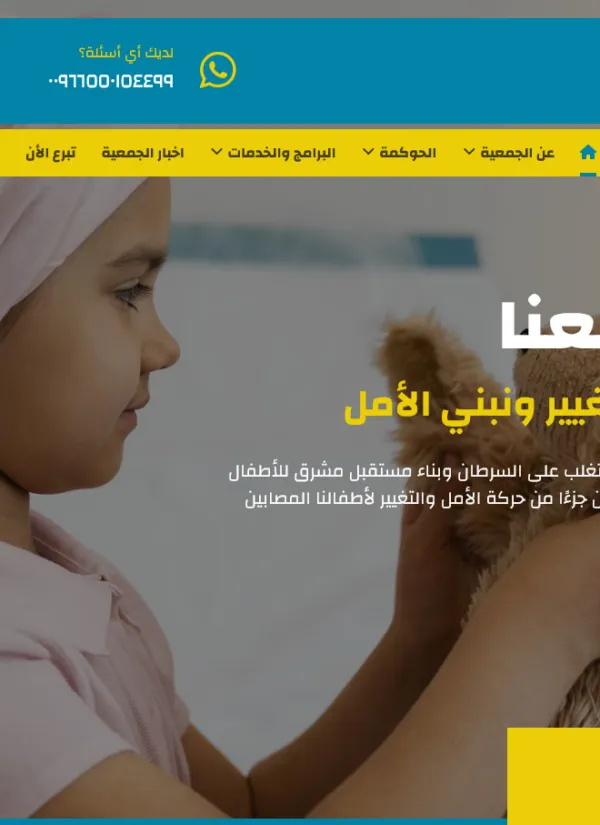
- Charities and giving: as with Basmat Tafaul. Read charity website design.
- Medicine and health.
A trust checklist
- Does the company name and official logo appear the same way everywhere?
- Is there real work that can be verified?
- Are the contact details complete and official?
- Is the website secure, fast and up to date?
- Are the accounts active and consistent with the website?
- Is the profile current?
Trust in the first seconds
User experience research suggests that first impressions of a website form very quickly, and that design quality and organisation are among the first things a visitor uses to judge a company’s credibility. That means a customer decides whether to keep reading almost before reading anything, based on: does the website look modern and organised? Are the photos real and high quality? Is the text legible? Does it work smoothly on mobile? You can’t persuade a visitor who left after three seconds, however strong your content. So design isn’t a luxury; it’s the gateway to trust. Read Arabic user experience.
Trust at every touchpoint
Trust isn’t built on the website alone. The customer passes through several touchpoints: an ad or a post, then the website, then your Google listing and its reviews, then LinkedIn, then the first email, then the profile, then the meeting, then the proposal. Every touchpoint adds to trust or subtracts from it. An excellent website with a Gmail address subtracts. A beautiful profile with figures that differ from the website subtracts. A LinkedIn account whose last post was two years ago subtracts. A complete digital identity makes sure every touchpoint adds and none subtracts. Read consistency across channels.
Trust and pricing transparency
One of the biggest worries in professional services: is the price fair? Will extra costs appear? You don’t have to publish detailed prices if your services are bespoke, but transparency about how you price builds trust: explain the factors that determine the price, give approximate ranges where possible, and make clear what the proposal includes and what it doesn’t. A customer who understands how you price trusts your proposal more. Read the cost of website design.
Trust in a crisis
Real trust is tested when problems arise: a delay, a mistake or a public complaint. A company that admits it, apologises and fixes it quickly and transparently sometimes comes out of the problem with more trust than before. Ignoring, denying or deleting complaints destroys what took years to build. Read managing engagement and complaints.
How do you measure trust?
- The share of visitors who get in touch from the website.
- Your average Google rating and the number of reviews.
- The number of customers who mention reading about you before contacting you.
- How quickly deals close.
- The share of returning and referring customers.
From our work
In trust-sensitive sectors such as cybersecurity (Madarat), health (Mabella Clinics) and consultancy (Maad Al Jazeera), we build the digital identity around trust signals: real work, a visible team, clear details, technical security and consistency at every touchpoint. Explore the complete digital identity. Trust is built slowly and destroyed quickly, so protect every touchpoint as if it were the first.
Trust and technical security
Technical signals are part of trust: a secure HTTPS connection with no warnings, a fast, stable website that doesn’t go down, forms that work and confirm receipt, email that reaches the inbox rather than spam, and a clear privacy policy. Customers may not know the technical terms, but they notice a “Not secure” warning or a form nobody answers immediately. Read email authentication.
Trust and real faces
People trust people more than logos. Real photos of the founder and team with their names and roles, a personal message from management, and a short video of the team at work all turn the company from an anonymous entity into people you can deal with. In the Saudi and Gulf market, the personal relationship is a core part of the buying decision, and real faces shorten the start of that relationship.
Trust in the Saudi market
Saudi customers, especially companies and public bodies, check thoroughly before doing business: they look for the commercial registration, the address, past work in the Kingdom, reviews and a LinkedIn presence. They often ask people they know about the company too. A consistent, honest digital presence makes this checking work in your favour, and shortens the trust-building stage that can take months in traditional dealings. Read entering the Saudi market.
Our experience building trust
In every project we ask: what specifically worries this company’s customers? In cybersecurity the worry is competence and confidentiality; in health, expertise and privacy; in construction, commitment to quality and deadlines; in stores, the product, payment and returns. Then we make the answer to that worry visible on the website, in the profile and on the accounts, with real evidence rather than generic phrases. That’s how a digital identity becomes more than an attractive look: it becomes a tool that removes the obstacles in front of the customer’s decision. Start with the trust checklist in this article, and fix the first three weaknesses you find.
Trust and reviews
Genuine reviews on Google and elsewhere are among the strongest trust signals, because they’re your customers’ words, not yours. Ask for them when the customer is satisfied, reply to every review respectfully, and feature the best on your website with their authors’ permission. One honest review with specific details is stronger than dozens of marketing phrases. Read local SEO and reviews.
A last word on trust
Don’t promise what you can’t deliver — not on the website, in an ad or in a proposal. A small promise you always keep builds deeper trust than a big promise that stumbles. And a customer who found exactly what you promised becomes your best advert.
The bottom line
Digital trust isn’t a campaign but a result: a consistent identity, real evidence, transparency and professional details. A complete digital identity builds these layers together. Explore the service or read consistency across channels.
Real projects we delivered
FAQ
What’s the most important trust signal on a service company’s website?
Real evidence: verifiable past work, well-known clients, case studies and complete contact details.
Is beautiful design enough to build trust?
It helps a lot with the first impression, but without honest content and evidence it stays superficial.
How do I build trust if my company is new?
Show your team’s experience, trial or early work with clients’ approval, transparency about prices and process, and clear guarantees.
Sources

Written from 20+ years designing websites and identities for clients in Saudi Arabia and Egypt — every tip here comes from real projects.
Want this applied to your project?
Book a free consultation — we will review your site or brand and propose a clear plan.
Book a free consultation